This guide covers the most important monuments in Athens, including ancient temples, archaeological sites, and historic landmarks you can visit today.
Athens is one of the world’s oldest continuously inhabited cities, and its landmarks span more than 3,000 years of recorded history. From the Acropolis crowning the city skyline to ancient marketplaces, Roman monuments, and walkable historic neighborhoods, Athens offers an unusually dense concentration of must-see sights within a compact city center.
Unlike many lists that focus only on ancient ruins, this guide includes monuments, neighborhoods, and historic sites that still shape how Athens is experienced today. Each location listed below is accessible to modern travelers and relevant for trip planning.
Skip Ahead To My Advice Here!
Top Landmarks And Attractions In Athens, Greece
A pearl on the shores of the Aegean, Athens is a city with awe-inspiring monuments and a rich past.
The earliest human settlement in the area of modern Athens dates back to the Neolithic period, around the 4th millennium BCE. Its recorded history gdatesback ato3,400 years ago. Athens is one of the oldest cities in the world. Of course, visiting this magnificent city requires a reliable and well-prepared plan.
ATHENS LANDMARKS
Here are the most famous Athens landmarks you must see; below is detailed information on each.
1. The Acropolis Of Athens
2. Acropolis Museum
3. National Archaeological Museum
4. Ancient Agora Of Athens
5. Erechtheion
6. Hadrian’s Library
7. Kerameikos
8. Panagia Kapnikarea Church
9. Panathenaic Stadium
10. Roman Forum Of Athens
11. Theatre Of Dionysus
12. Hadrian’s Arch
13. Odeon Of Herodes Atticus
14. Parthenon
15. Stoa Of Attalos
16. Temple Of Athena Nike
17. Temple Of Hephaestus
18. Temple Of Olympian Zeus
19. Monastiraki
20 Mount Lycabettus
21. Piraeus
22. Plaka
23. Syntagma Square
24. National Gardens
25. Philopappos Hill
26. Vouliagmeni Lake
27. Tomb of the Unknown Soldier
Let’s embark on this journey through time, shall we?
Ancient Monuments And Archaeological Sites In Athens
Athens boasts iconic archaeological landmarks such as the Acropolis, the Parthenon, and the Ancient Agora, preserving its rich history and captivating visitors with its ancient city allure.
Below is a quick-reference overview of major Athens landmarks, including their locations, types, and visit contexts.
Key Monuments And Archaeological Sites In Athens At A Glance
This overview helps travelers compare Athens’ most important monuments and archaeological sites, including what each is, where it is, and how long to allow for each visit.
| Landmark | Type | Historical Period | Location Area | Suggested Visit Time |
|---|---|---|---|---|
| Acropolis | Archaeological Site | 5th century BCE | Acropolis Hill | 2–3 hours |
| Ancient Agora | Marketplace & Civic Center | 6th century BCE | Monastiraki | 1–2 hours |
| Temple of Olympian Zeus | Temple Ruins | 6th century BCE–2nd century CE | Syntagma Area | 45–60 minutes |
| Acropolis Museum | Museum | Archaic–Roman periods | Makrygianni | 1.5–2 hours |
| Panathenaic Stadium | Historic Stadium | 4th century BCE | Pangrati | 45–60 minutes |
How To Plan A 1-Day Ruins & Monuments Route In Athens
Visitors can walk to the Acropolis, Ancient Agora, Temple of Olympian Zeus, Hadrian’s Arch, and the Roman Forum, all within 20–30 minutes of one another. Start at the Acropolis in the morning (when crowds and heat are lower), then walk via Dionysiou Areopagitou pedestrian street toward the Ancient Agora, looping back through Monastiraki and Hadrian’s Arch before ending at the Roman Forum near Syntagma.
Most major monuments in Athens are within walking distance of one another in the historic center. Travelers can realistically visit several archaeological sites, museums, and city landmarks in a single day without relying on transport.
1. The Acropolis Of Athens
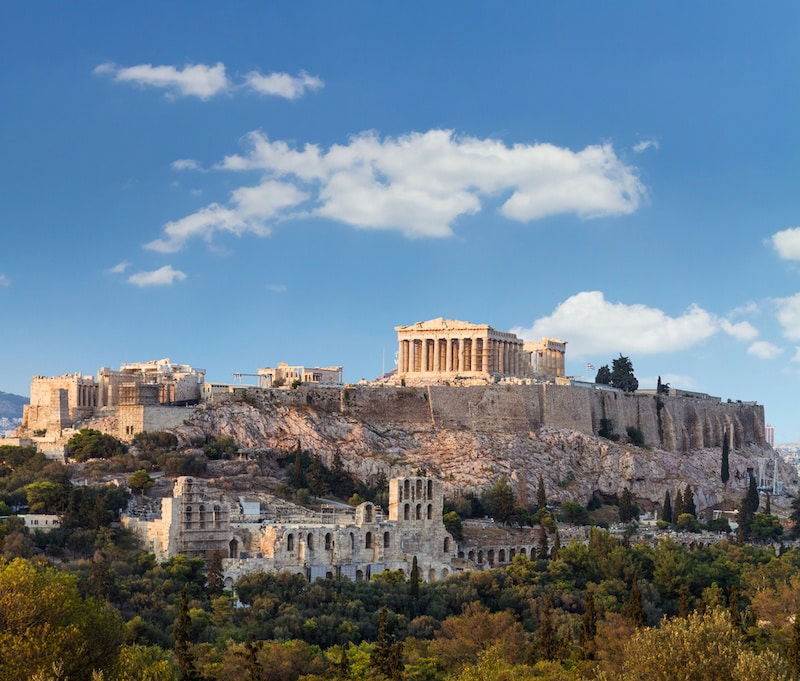
The Acropolis of Athens is a hilltop in the city and contains numerous historic buildings. In late antiquity, it was a significant religious and political center.
As a UNESCO World Heritage Site, the Acropolis should be seen by every history enthusiast. Since it’s near major attractions, you can start your journey into Athens’ past at the Acropolis.
2. Acropolis Museum
The Acropolis Museum houses thousands of artifacts spanning ancient Greece and the Roman Era. The Acropolis Museum is a public museum overseen by the Greek Ministry of Culture and welcomes more than a million visitors each year.
The museum is on the southeastern slope of Acropolis Hill, near the ancient “sacred rock.” It offers an unmatched glimpse into the area’s past and is an ideal base for exploring the rest of Athens. The famous Parthenon is a ten—to fifteen-minute walk away.
3. National Archaeological Museum
Those interested in the history of the Ancient Greeks can visit the National Archaeological Museum. Its collections were established in the early 19th century, and the museum building opened to the public in 1889. It is one of the largest museums in Greece, with over 10,000 artifacts, and is open daily, with reduced hours on Mondays.
4. Ancient Agora Of Athens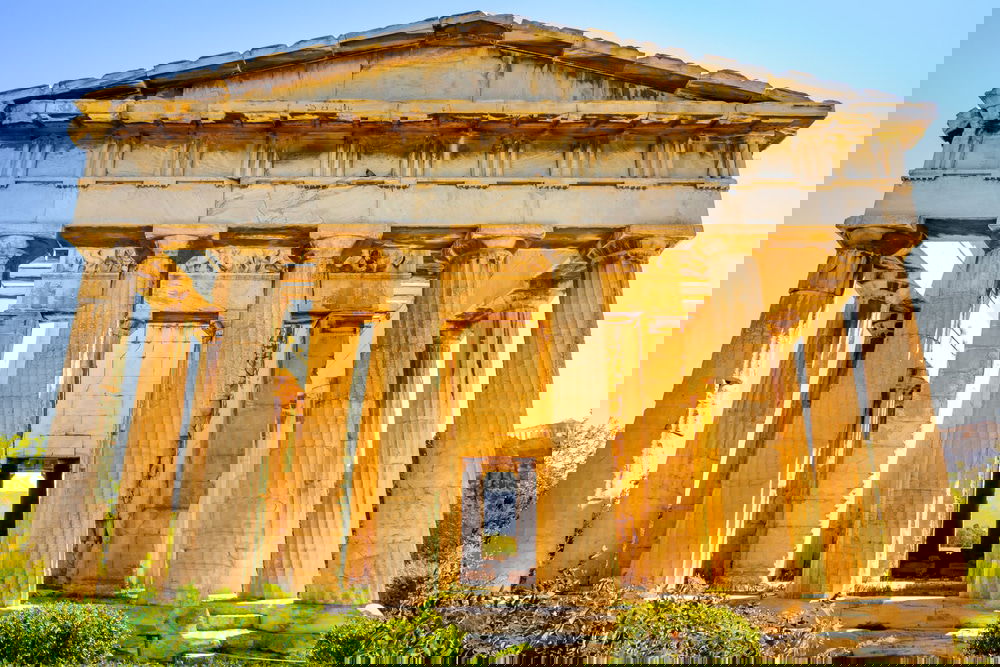
With a history dating back to the 6th century BCE, the ancient Agora of Athens is one of the finest examples of an Ancient Greek Agora. We suggest that you stroll through the historic streets of the marketplace and check out the inspiring monuments built by one of the most advanced civilizations of its time.
The Agora includes paved walkways, religious monuments, administrative buildings, and a former law court. It also has a Roman-era addenda, such as a small temple on the south side.
5. Erechtheion
Unfortunately, the Acropolis and the Parthenon’s fame have overshadowed a majestic sanctuary, the Erechtheion. The structure is located on the north side of the Acropolis and was once dedicated to the goddess Athena. It was also the center of the religious cult of Athena and Poseidon-Erecehtheus.
The construction of the Erechtheion took fifteen years and was finished in 406 BCE. During the Byzantine period, it was converted into a three-aisle basilica.
When the Franks invaded the city, they used the Erechtheion as a palace, and the structure retained its residential status throughout the Turkish period.
At the Erechtheion, you can witness the majesty of ancient Greek architecture, combined with later Byzantine, Frankish, and Turkish additions.
6. Hadrian’s Library
Hadrian was known for numerous structures throughout the empire. He may be among the emperors who commissioned the most buildings and monuments.
Hadrian melded the ancient world by building new arches, temples, walls, and libraries. One of these libraries, Hadrian’s Library, is in the heart of Athens today.
The building was completed in 132 CE and was later supplemented by additional buildings in Athens. Today, several churches and structures were built between the 5th and 12th centuries CE.
7. Kerameikos
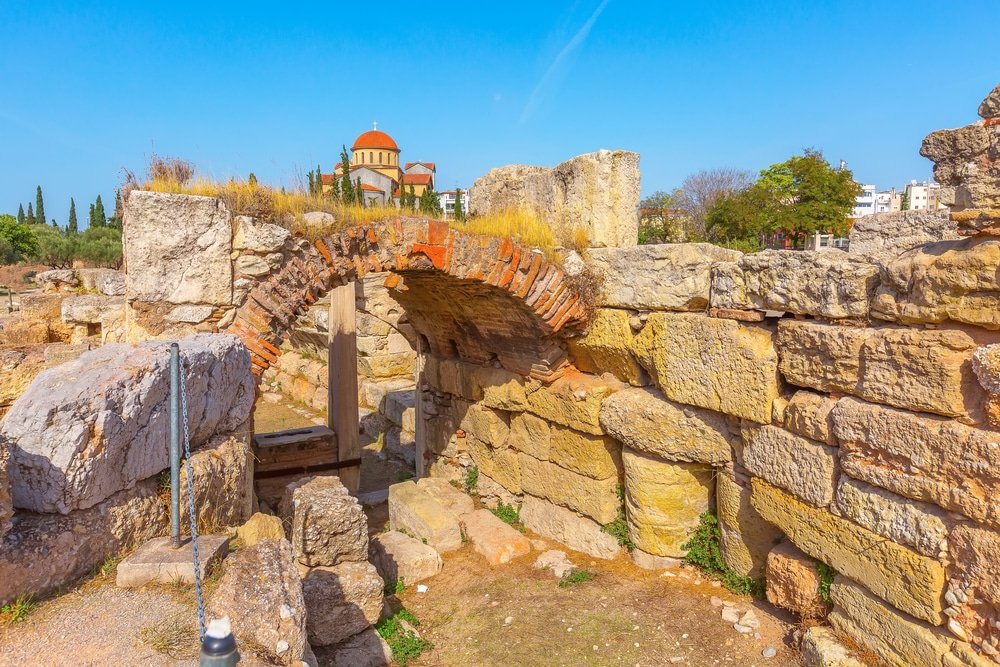
Kerameikos is one of the most significant yet unknown archaeological sites in Athens. It served as a cemetery between the 9th century BCE and the Roman period. Also, because the areawas composeds of clay mud, the inner parts of Kerameikos housed the potters’ quarter.
The area had a thriving pottery business; because of the nearby cemetery, most pieces produced by local potters were funeral-related. Interestingly, the English word “ceramic” comes from this quarter’s name.
8. Panagia Kapnikarea Church
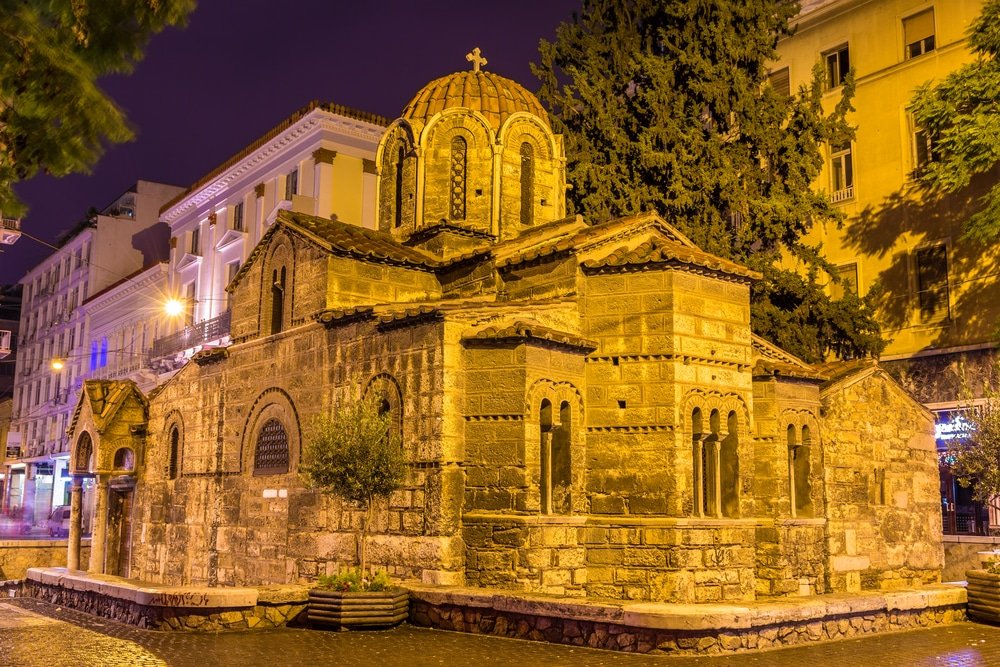
One of the most significant Byzantine-era churches, Panagia Kapnikarea Church, offers a fascinating glimpse into Athens’s colorful past. Here, you can admire the beauty of Byzantine architecture and its intricate mosaics. There are also many nearby cafés and restaurants where we recommend stopping for coffee or a meal.
9. Panathenaic Stadium
Originally built in the 4th century BCE, the Panathenaic Stadium hosted the Panathenaic Games, a religious festival and athletic competition.
This stadium also hosted the first modern Olympic Games. Today, the stadium hosts various cultural events throughout the year and poffersvisitors wany IInstagram-worthy photos
10. Roman Forum Of Athens
Combining the fascinating ancient history of Greece and Rome, the Roman Forum of Athens is an important attraction built in the first century CE. The forum served as Athens’ commercial and administrative center during the Roman period. Although it’s in ruins today, the forum offers valuable insights into Roman history and culture.
11. Theatre Of Dionysus
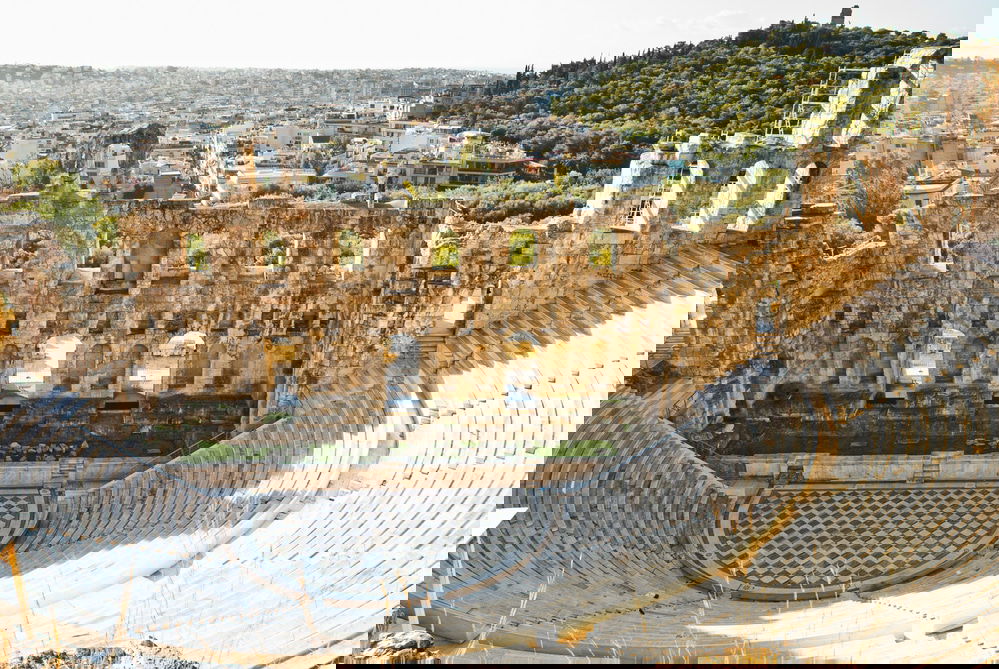
The Theatre of Dionysus is another famous theatre in Athens. Built on the southern slope of the Acropolis hill, it was originally part of the sanctuary of Dionysus Eleuthereus.
The theatre could host up to 15,000 spectators and was used for performances. Today, the theatre is one of the most important archaeological sites in the Western world and forms part of the Acropolis archaeological complex, a UNESCO World Heritage Site.
Brands We Use And Trust
Famous Monuments In Athens You Can Visit Today
Athens’ monuments always captivate travelers with their timeless beauty. The Parthenon, Temple of Olympian Zeus, and Hadrian’s Arch are majestic testaments to ancient Greece’s architectural prowess and cultural heritage.
12. Hadrian’s Arch
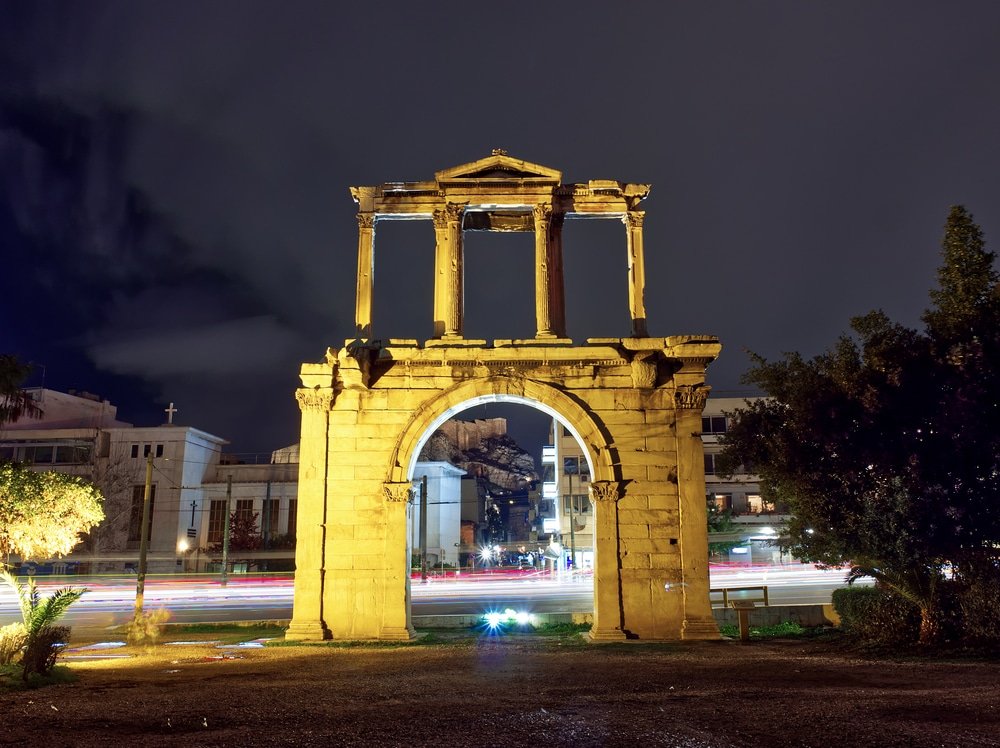
Also known as Hadrian’s Gate, Hadrian’s Arch is a monumental gateway founded in the early 2nd century CE. Emperor Hadrian built the structure as the formal gateway to Athens. The 18-meter-high arch is among the most recognizable Roman monuments in Athens and one of the best-known structures commissioned during Hadrian’s reign.
Did you know that you can see Hadrian’s Arch for free? If you want a closer look, you can purchase a ticket to the Temple of Olympian Zeus, which also houses many artifacts that offer fascinating insights.
13. Odeon Of Herodes Atticus
One of Athens’s most popular tourist attractions, the Odeon of Herodes Atticus is located on the southwest slope of the Acropolis. The wealthy Roman senator Herodes Atticus initially built the structure in memory of his wife, Regilla.
When it was first built, the Odeon of Herodes Atticus could host up to 5,000 spectators and had a cedar wood roof. Nevertheless, a fire in the 4th century destroyed it. The Odeon of Herodes Atticus was restored in the 1950s to host events, including concerts, plays, and performances.
14. Parthenon
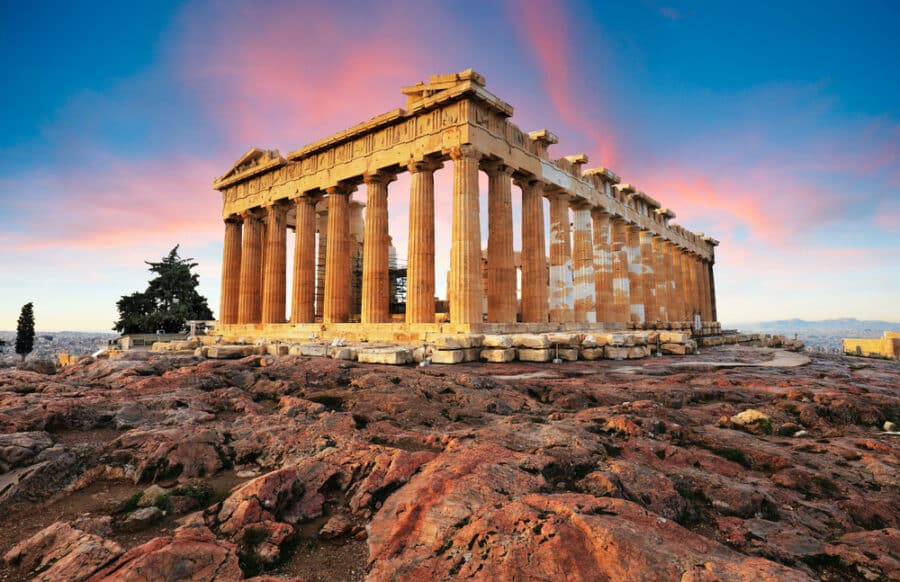
Parthenon was a temple dedicated to the Goddess Athena. It was built between 447 and 438 BC, during the height of ancient Greek civilization. The structure has become a symbol of philosophy, Western civilization, and Ancient Greece.
15. Stoa Of Attalos
Built and named after King Attalos II of Pergamon, the Stoa of Attalos is a covered walkway in the Agora of Athens. The building on the Stoa is now a museum that houses an exhibit on the Stoa of Attalos.
16. Temple Of Athena Nike
Among Athens’s most popular tourist attractions, the Temple of Athena Nike was built around the mid-5th century BCE. It was built by Callicrates, who also designed many monuments in Athens, including the Parthenon. The temple is adorned with scenes depicting the Persian Wars.
17. Temple Of Hephaestus
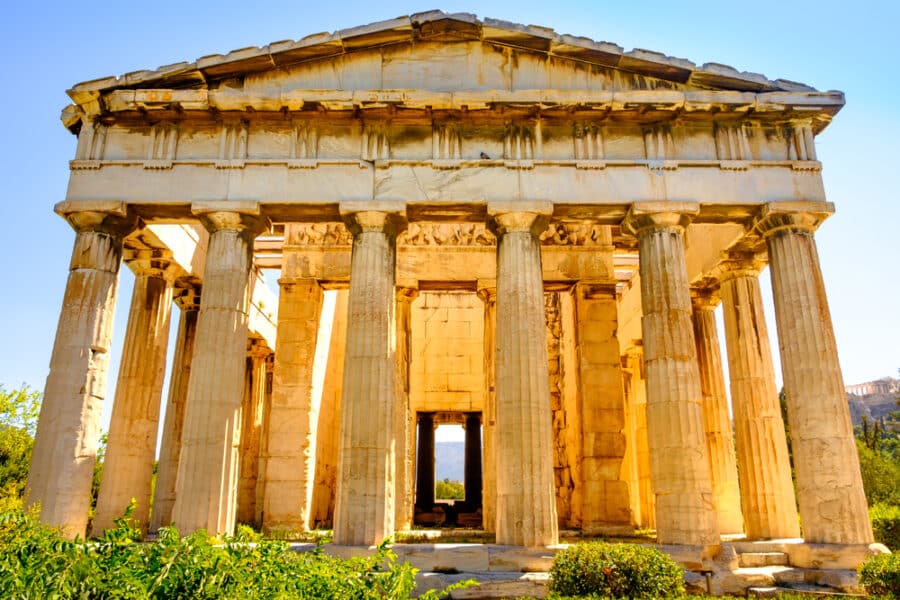
The Temple of Hephaestus is a significant Doric temple in the Agora of Athens. The structure, finished in the 5th century BCE, was dedicated to Hephaestus, the god of fire and metalworking. The temple is considered one of the best-preserved examples of ancient Greek architecture and stands within the Ancient Agora archaeological site.
18. Temple Of Olympian Zeus
The Temple of Olympian Zeus is a gorgeous structure in the heart of Athens. Its construction began in the 6th century BCE, yet didn’t finish until the first century CE.
One of the largest temples in the ancient world, the Temple of Olympian Zeus boasted 104 columns. Over the centuries, the temple fell into ruin and was extensively quarried for building materials; today, only a small number of its original columns remain standing.
Must-See Landmarksin then Athens City Center
Some of Athens’s landmarks, such as the historic Plaka neighborhood and the vibrant Monastiraki Square, will appear along your travels.
19. Monastiraki
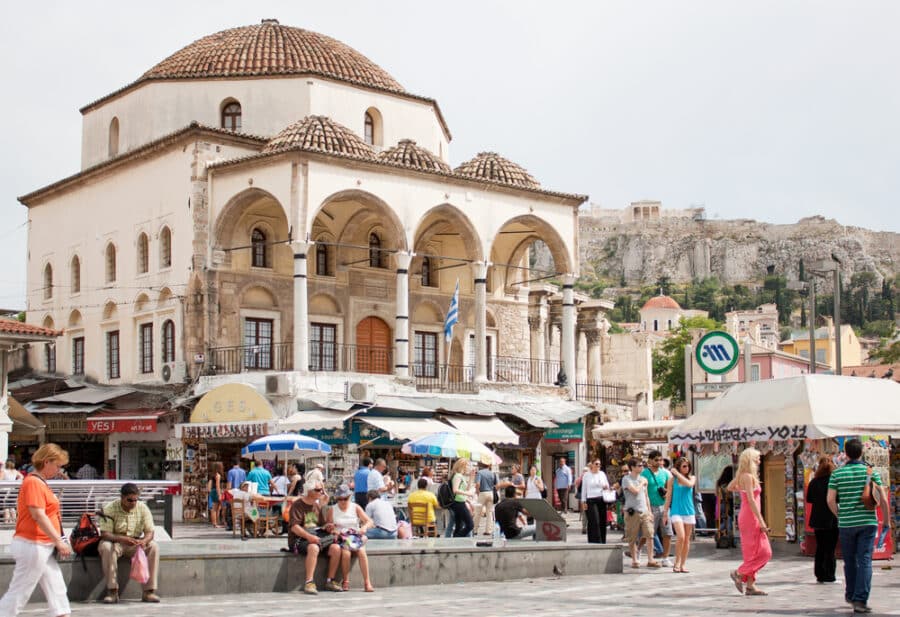
Monastiraki is an iconic neighborhood in the heart of Athens known for its restaurants, cafés, and tavernas, where you can enjoy a traditional Greek meal.
The area also has a flea market offering a variety of souvenirs and memorabilia. In addition to the complex, you can visit the ruins of well-known structures, such as Hadrian’s Library and the Ancient Agora.
20. Mount Lycabettus
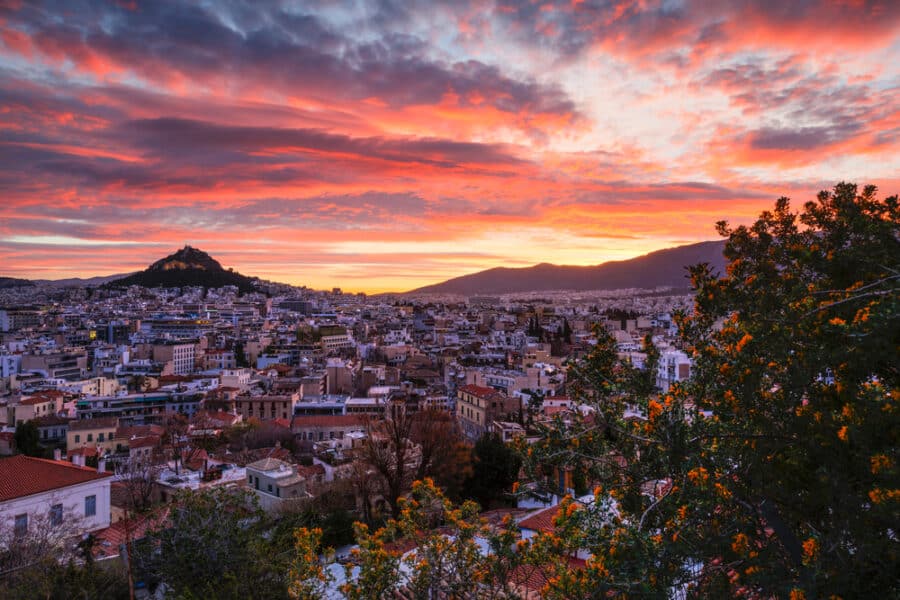
Mount Lycabettus is a limestone hill surrounded by pine trees and residential neighborhoods. Known as one of Athens’s highest points, the mountain is an unforgettable attraction for those seeking to discover the city’s natural beauty.
21. Piraeus
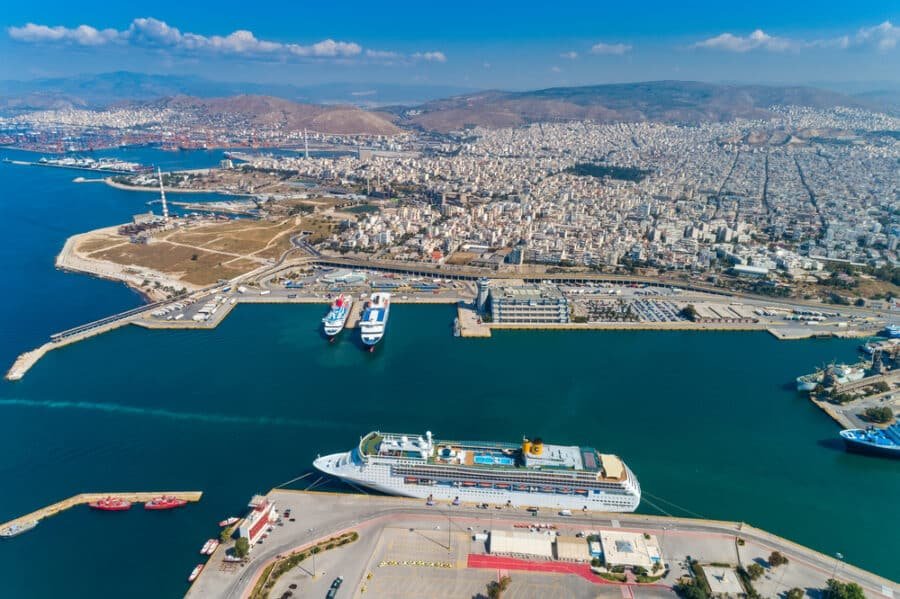
The historic city of Piraeus is a famous port city with cultural and economic significance. In addition to the ruins of ancient temples and buildings, Piraeus is home to many restaurants, cafés, and shopping districts.
A perfect day in Piraeus would start with exploring the city’s historical monuments, continue with a visit to the local shopping scene, and end with traditional Greek dishes.
22. Plaka
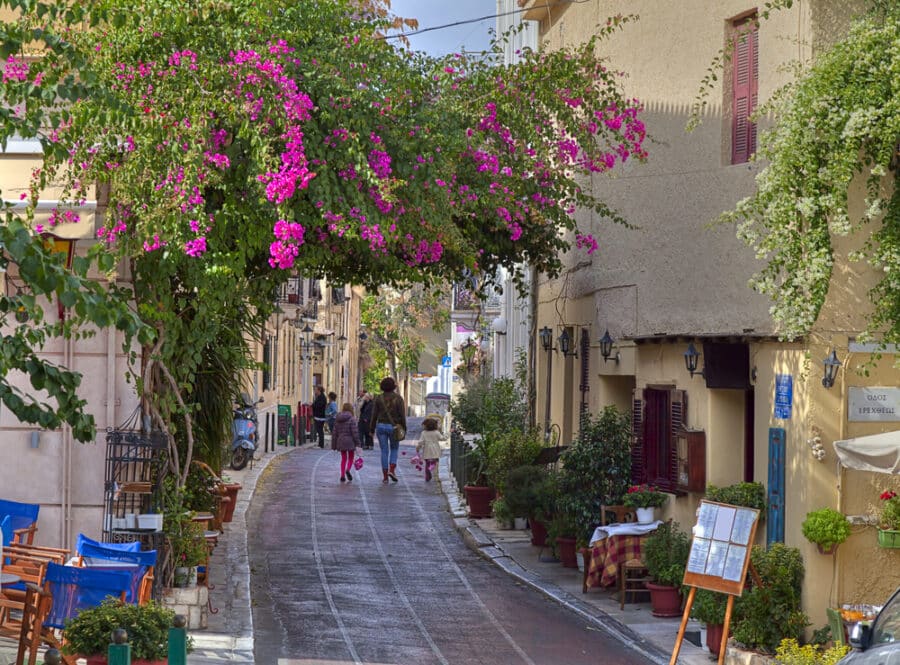
Plaka is a picturesque small neighborhood in Athens known for its whitewashed houses, narrow streets, and traditional tavernas. It is a wonderful place to take in the authentic Greek atmosphere, explore shops, and visit local restaurants.
Plaka also has a historical ambiance. The neighborhood is located just below the Acropolis.
23. Syntagma Square

Located in front of the Old Royal Palace, Syntagma Square is one of Athens’s most significant attractions. It is culturally and historically significant to Greeks, as it symbolizes freedom and a revolutionary spirit.
Syntagma Square offers an authentic experience and is a top spot for a cup of coffee at one of the cafés around the square, as well as for seeing the Evzones guard.
Best Athens Landmarks For Families And Kids
Athens offers fantastic landmarks for families to enjoy together—the National Gardens, Philopappos Hill, and many more spots that offer fun-filled adventures for all ages.
24. National Gardens
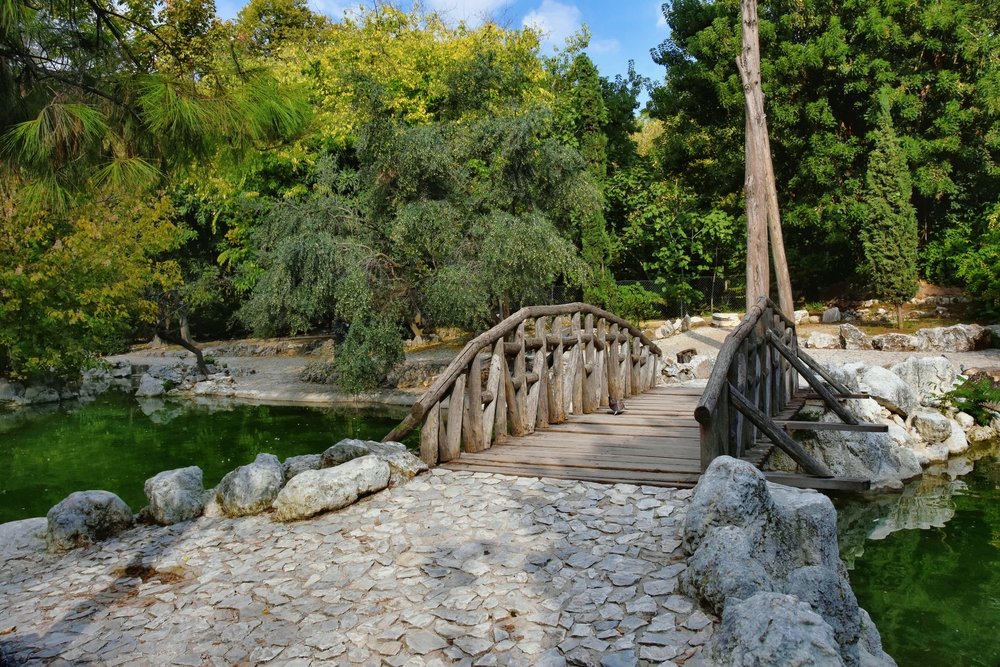
After visiting museums and natural monuments, the National Garden of Athens might be a great spot to rest and unwind. The 38-acre public park includes a small zoo that children love.
If you visit Athens in June, you can have an opportunity to attend the music festival “Athens Gardens Festival.” Since entry to the National Garden is free, you canbringe the kids here without paying.
Seasonal cultural events are occasionally held in the gardens, but schedules and festival names vary by year; please check locally.
25. Philopappos Hill
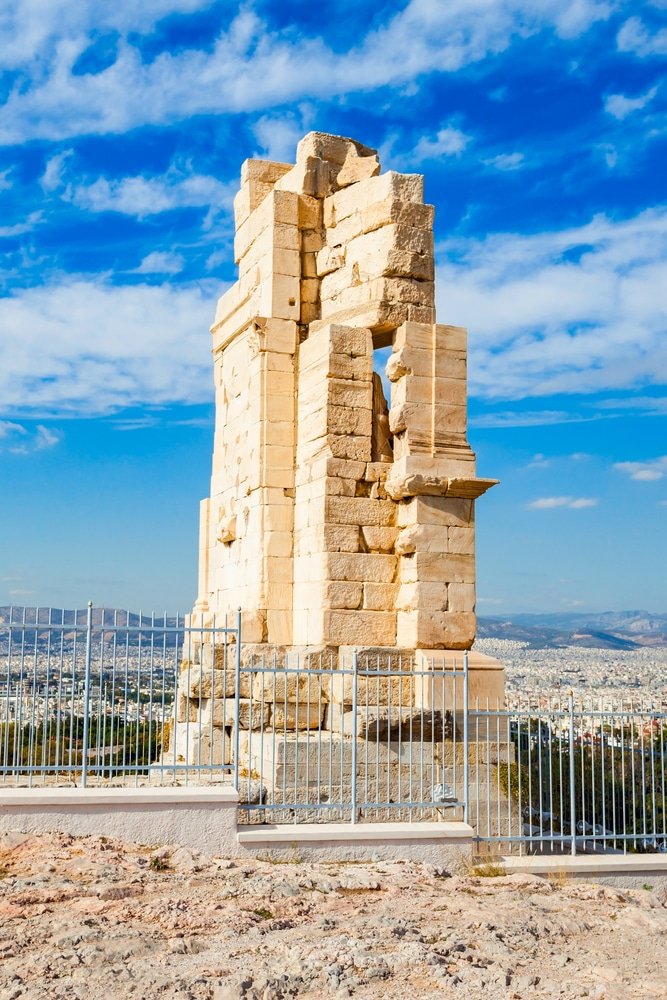
A small hill in Athens, Philopappos Hill, is a beautiful spot for those seeking a clear view of the city. The location is particularly favored by walkers, runners, joggers, and urban explorers.
The hill was named after a Commagenean prince, Philopappus, who lived in the 2nd century CE. Those interested in the city’s history might want to visit the tomb of Philopappus or nearby Nymphs’ Hill and Pnyx Hill.
26. Vouliagmeni Lake
Vouliagmeni Lake, or Limni Vouliagmenis in Greek, is a natural brackish lake with healing properties. The lake, surrounded by pine trees and a sandy beach, offers swimming in its naturally warm, mineral-rich waters, with facilities focused primarily on bathing and relaxation rather than organized water sports.
Around the lake, there are several hotels, restaurants, and cafés where we suggest you unwind after a tiring day. It’s also a wgreatspot tfora family picnic.
27. Tomb Of The Unknown Soldier
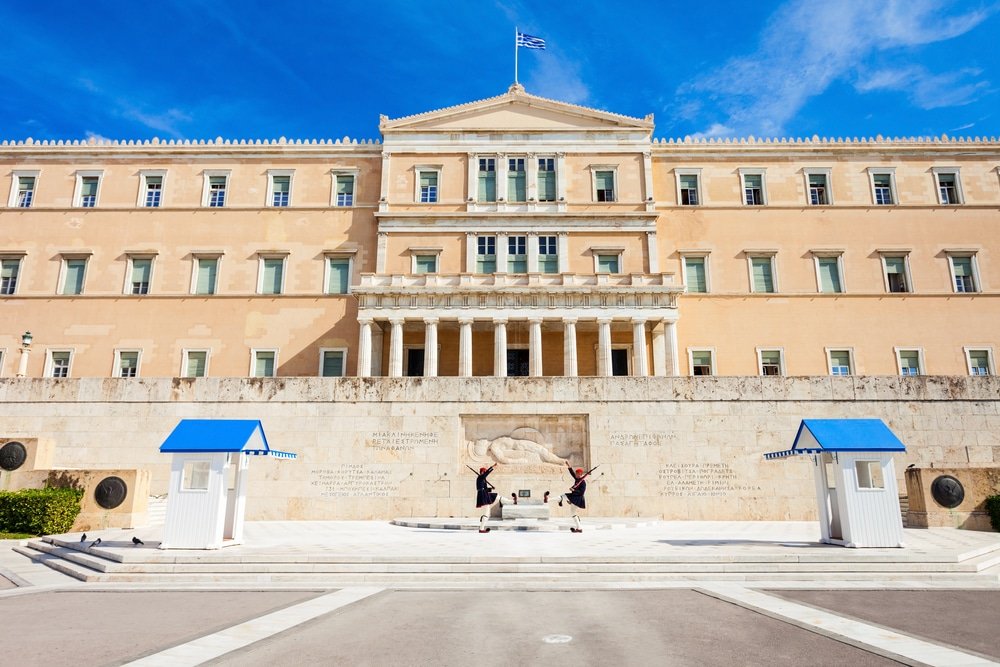
When you’re in Athens, make sure to check out the Tomb of the Unknown Soldier. It’s not just any monument; it’s a powerful tribute to all the Greek soldiers who’ve fallen in battle without ever being identified. You’ll find it right in front of the Hellenic Parliament building in Syntagma Square, and trust me, it’s hard to miss.
The tomb itself is pretty striking, with a sculpted figure of a laying soldier. It’s simple yet solemn, prompting you to reflect on the sacrifices made in wars.
What’s notable about this spot is the changing-of-the-guard ceremony. The Evzones, guards in traditional uniforms, change every hour with an elaborate routine that’s pretty fascinating to watch. They do this 24/7, rain or shine, which isa pretty impressive dedication.
It’s a place that offers a bit of history and a glimpse into modern Greek traditions, all rolled into one. Whether you’re a history buff or just looking to see something uniquely Athenian, the Tomb of the Unknown Soldier is definitely worth a visit.
Plus, it’s a great opportunity for some memorable photos – remember to be respectful, as it is a solemn military site.
Why So Many Ancient Ruins Survive In Athens Today
Athens sits on bedrock that preserves ruins better than many other ancient cities. Unlike sites buried deep or beneath modern cities, many of these ruins remain visible because they were constructed of durable marble and limestone and have been preserved by centuries of reverence and reconstruction.
Combined with modern archaeological practice and ongoing conservation, this means travelers can experience both grand temples and intimate ruins in the same day.

No spam. Unsubscribe at any time.
FAQs
ATHENS LANDMARKS AND HISTORICAL SITES FAQs
What is Athens famous for?
Athens is famous for its ancient landmarks, its role as the birthplace of democracy, and its influence on philosophy, art, and Western civilization.
What are the most famous ancient landmarks in Athens?
The most famous ancient landmarks in Athens include the Acropolis, the Parthenon, the Ancient Agora, the Temple of Olympian Zeus, and the Theatre of Dionysus.
What ancient buildings in Athens are still standing?
Well-preserved ancient structures in Athens include the Parthenon, the Erechtheion, the Temple of Hephaestus, and Hadrian’s Arch.
Which Athens landmarks are located in the city center?
Central Athens landmarks include Syntagma Square, Monastiraki Square, the Roman Forum, Hadrian’s Library, and the Plaka neighborhood.
Which Athens landmarks are best for photography?
The Acropolis, Parthenon, Mount Lycabettus viewpoints, the Temple of Hephaestus, and Philopappos Hill are among the best spots for photography.
Are Athens landmarks suitable for children?
Family-friendly sites include the Acropolis Museum, the National Gardens, Philopappos Hill, the Panathenaic Stadium, and open-air archaeological sites with ample space to explore.
Which historical sites in Athens are wheelchair-accessible?
Accessibility varies by site. The Acropolis offers step-free access via a lift when operational, while museums such as the Acropolis Museum and National Archaeological Museum are fully accessible.
Are Athens landmarks open year-round?
Most major landmarks remain open year-round, though hours may be reduced in winter and on public holidays.
What is the one Athens landmark you should not miss?
The Acropolis and the Parthenon are the most essential landmarks to visit, offering an unmatched historical and cultural context.
How far apart are the main archaeological sites in Athens?
The Acropolis, Ancient Agora, Temple of Olympian Zeus, Roman Forum, and Hadrian’s Arch are all within roughly 15–30 minutes’ walk of each other in the historic center, making them easily visited on a single itinerary.
Do you need a guided tour to understand Athens’ ancient ruins?
Guided tours are optional—many sites include interpretive signage—but guided tours enhance context, especially at the Acropolis, Ancient Agora, and Roman Forum.
What is the best time of day to visit Athens’ ruins?
Early morning or late afternoon is best to avoid midday crowds and heat, especially from April to October.
So, now that you have this guide to the NS landmarks, which ones will you explore first?