Munich’s beer halls and stunning architecture make it a fantastic destination, but the real magic of Bavaria lies beyond the city limits. With excellent public transportation, well-maintained roads, and Germany’s famous Autobahn, taking day trips from Munich is easy and rewarding.
After spending years exploring every corner of Bavaria and beyond, I’ve compiled this comprehensive guide to the 21 most spectacular day trips from Munich. From world-famous castles to hidden alpine gems, I’ll help you discover experiences that perfectly match your travel style, whether you prefer history, nature, or culture.
🚀 Quick Summary
- Best Castle Day Trip: Neuschwanstein Castle (2 hours) – Walt Disney’s inspiration
- Easiest Day Trip: Dachau Concentration Camp (30 minutes) – Important historical site
- Best Alpine Experience: Garmisch-Partenkirchen (1.5 hours) – Perfect for outdoor enthusiasts
- Most Beautiful Town: Rothenburg ob der Tauber (3 hours) – Medieval charm preserved
- Best International Day Trip: Salzburg, Austria (1.5-2 hours) – Mozart’s birthplace
- Best Lake Destination: Chiemsee (1 hour) – The “Bavarian Sea” with island palaces
- Best Value Bayern Ticket Trip: Nuremberg (1.5 hours) – Rich history and architecture
As a Bavaria veteran who’s personally experienced every destination on this list, I’m excited to share insider tips on making the most of your day trips from Munich. Let’s dive into these unforgettable adventures!
1. Neuschwanstein Castle

- Distance from Munich: 120 km (75 miles)
- Travel Time: 1 hour 45 minutes by car, 2.5 hours by train and bus
- Optimal Transportation: Guided tour or train/bus combo
No list of day trips from Munich would be complete without the iconic Neuschwanstein Castle. King Ludwig II of Bavaria commissioned this 19th-century Romanesque Revival palace and later inspired Walt Disney’s Sleeping Beauty Castle. Perched dramatically on a rugged hill above the village of Hohenschwangau, it’s one of the most photographed buildings in Germany and draws over 1.4 million visitors annually.
When I visited last autumn, I found that arriving early (before 10 AM) significantly reduced wait times. You can only tour the inside with a guided tour, so I recommend booking tickets online at least 2-3 days in advance — these tours sell out quickly during peak season!
From Munich, take a train to Füssen (2 hours), then bus 78 to Hohenschwangau (10 minutes). Once there, you can walk up to the castle (40 minutes uphill), take a shuttle bus (€3), or splurge on a horse-drawn carriage (€7 uphill). The moderate hike offers spectacular views of the Bavarian Alps and Lake Alpsee.
For the best photo opportunity, visit Marienbrücke (Mary’s Bridge), which spans the Pöllat Gorge and offers the classic postcard view of the castle. Just be aware the bridge can get crowded and may close during winter or inclement weather.
Insider Tip: Combine your visit with the nearby Linderhof Palace (Ludwig’s smaller but equally lavish palace) for a full “Mad King Ludwig” experience. Many tour operators offer combined tours to both castles in a single day.
Read Also: Things to Do in Munich
2. Dachau Concentration Camp Memorial

- Distance from Munich: 20 km (12 miles)
- Travel Time: 30-45 minutes by train or car
- Optimal Transportation: S-Bahn train (S2) and bus
While not a typical “tourist attraction,” Dachau Concentration Camp Memorial Site provides a sobering and essential historical education. Established in 1933, it was the first Nazi concentration camp and served as a model for all subsequent camps during the Holocaust. Today, the memorial is dedicated to the 41,500 people who died there and the over 200,000 who were imprisoned.
The memorial is open daily from 9 AM to 5 PM (except December 24th), and admission is free. When I visited, the audio guide (€5) was extremely helpful in understanding the significance of various areas. Guided tours in English provide valuable context about camp life and prisoners’ experiences.
To get there, take the S2 train from Munich’s central station to Dachau, then bus 726 directly to the memorial entrance (the journey takes about 45 minutes). The site’s extensive grounds include reconstructed barracks, the maintenance building housing the museum, several religious memorials, and the former crematorium area.
This is not an easy emotional visit but an important one. I recommend setting aside at least 3-4 hours to fully process everything. Remember to be respectful throughout your visit — this is a memorial site, not a tourist attraction.
Visitor Advice: Wear comfortable shoes as you’ll walk quite a bit. The site maintains a solemn atmosphere, so keep the conversation quiet and respectful. Photography is permitted in most areas but without flash.
3. Salzburg, Austria

- Distance from Munich: 145 km (90 miles)
- Travel Time: 1.5-2 hours by train or car
- Optimal Transportation: Train (direct connections hourly)
Cross an international border and immerse yourself in the musical heritage of Salzburg, Austria. This elegant baroque city is Mozart’s birthplace and the filming location for “The Sound of Music.” A 1.5-hour train ride from Munich makes for an incredible international day trip with direct trains running hourly.
Start exploring Salzburg’s UNESCO-listed Old Town (Altstadt), filled with stunning baroque architecture. Visit Mozart’s birthplace on Getreidegasse, a busy shopping street with distinctive wrought-iron guild signs. Then climb (or take the funicular) to the imposing Hohensalzburg Fortress for panoramic views over the city and surrounding Alps.
The magnificent Mirabell Palace and Gardens offer beautiful photo opportunities (and yes, these are featured in “The Sound of Music”). I suggest stroll along the Salzach River, crossing the pedestrian Makartsteg bridge with its thousands of love locks.
Salzburg’s compact center makes it perfect for exploring on foot. When hunger strikes, try authentic Austrian cuisine at one of the many restaurants in the old town. Don’t leave without sampling the famous Mozartkugel chocolate treats or enjoying coffee and Sachertorte at a traditional café.
Money-Saving Tip: The Bayern Ticket (around €25) covers your round-trip train journey from Munich as well as all public transportation in both cities on the same day. This makes it one of the most economical international day trips!
4. Nuremberg
- Distance from Munich: 170 km (105 miles)
- Travel Time: 1-1.25 hours by train
- Optimal Transportation: Train (ICE or regional)
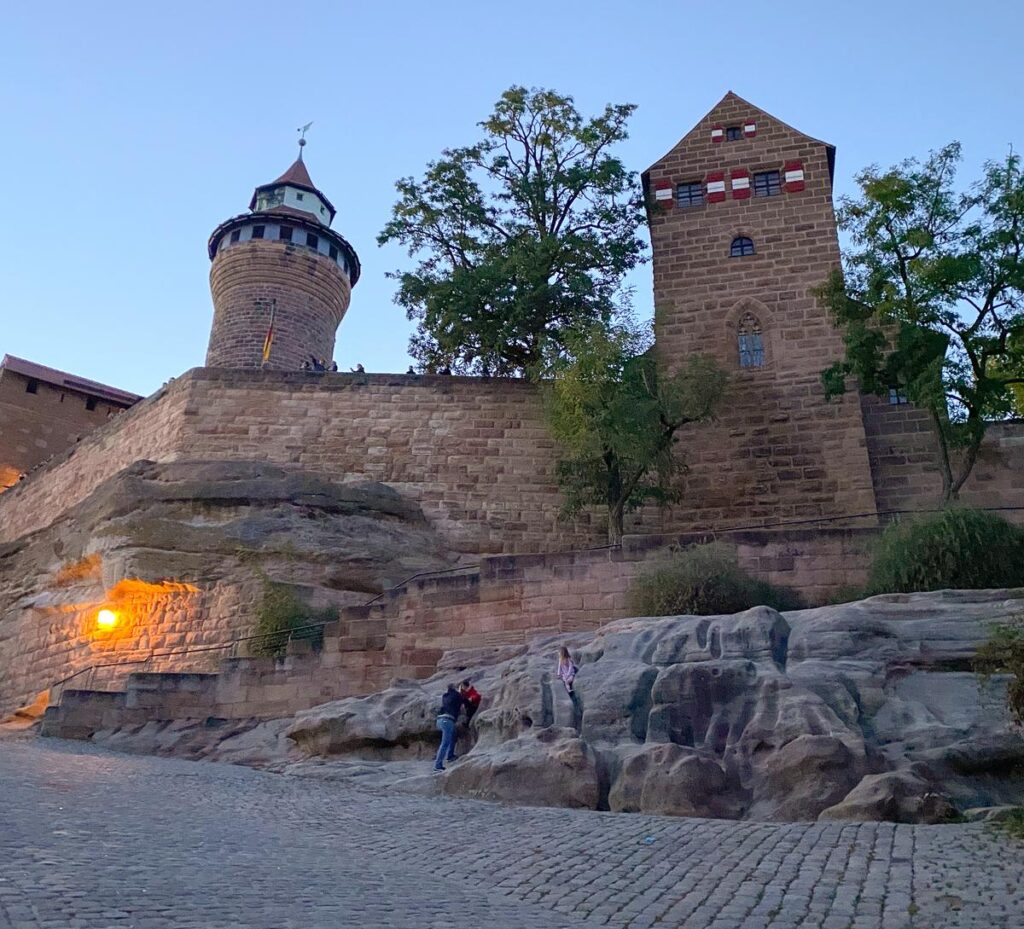
Nuremberg (Nürnberg in German) offers a fascinating blend of medieval history and 20th-century significance. Despite heavy bombing during WWII, the city has been meticulously restored and now showcases stunning architecture alongside important historical sites. Fast ICE trains from Munich reach Nuremberg in just one hour, making it perfect for a day trip.
Begin visiting the imposing Nuremberg Castle (Kaiserburg), which dominates the skyline. This medieval fortification offers remarkable city views and houses interesting museum exhibits about the castle’s history. The climb to the castle is steep but rewarding, with picturesque streets and half-timbered buildings along the way.
Make your way to the central Market Square (Hauptmarkt), where the beautiful Frauenkirche (Church of Our Lady) stands. If you visit between late November and December 24, you’ll find one of Germany’s most famous Christmas markets here. Don’t miss the “Beautiful Fountain” (Schöner Brunnen) with its golden ring that’s said to bring good luck when turned.
For 20th-century history, the Nazi Party Rally Grounds and the Documentation Center provide critical insights into the rise of Nazism. The Nuremberg Trials Memorial, located in Courtroom 600 of the Palace of Justice, preserves the site where Nazi war criminals were tried after WWII.
When hunger strikes, try the famous Nuremberg sausages (Nürnberger Rostbratwürste), which are smaller than typical German sausages and usually served in sets of six, eight, or twelve with sauerkraut and mustard.
Traveling With Kids? Visit the Nuremberg Toy Museum (Spielzeugmuseum), fitting for a city historically centered on toy manufacturing. It showcases toys from different eras, from simple wooden dolls to modern playthings.
5. Garmisch-Partenkirchen

- Distance from Munich: 89 kilometers (55 miles)
- Travel Time: 1.5 hours by train or car
- Optimal Transportation: Train or car
Garmisch-Partenkirchen is an alpine paradise at the foot of Germany’s highest peak, the Zugspitze. Originally two separate towns that merged for the 1936 Winter Olympics, this destination offers spectacular mountain scenery and outdoor activities year-round, just 1.5 hours from Munich.
During summer, the area becomes a hiking haven with trails suitable for all ability levels. I highly recommend the Partnach Gorge (Partnachklamm), a natural wonder where you’ll walk along pathways carved into the rock as the Partnach River rushes 80 meters below. The eerily beautiful gorge with its towering walls is spectacular in any season.
Take the cable car to the Alpspitze or Zugspitze peaks for panoramic mountain views without strenuous hiking. The views of the Bavarian Alps and nearby Alpine lakes are breathtaking. If you’re visiting in winter, enjoy world-class skiing and snowboarding at several resorts in the area.
Wander through the charming town center, particularly along Ludwigstrasse in Partenkirchen, where you’ll find beautifully painted houses (Lüftlmalerei) and traditional Bavarian architecture. The Olympic Ski Stadium is worth a visit for sports enthusiasts and hosts the famous New Year’s ski jumping competition annually.
Best Photo Spot: Head to the small St. Anton church for a classic postcard view of the town with the mountains as a backdrop. Early morning or late afternoon light delivers the most stunning photographs.
6. Rothenburg ob der Tauber

- Distance from Munich: 250 km (155 miles)
- Travel Time: 2.5-3 hours by car or train
- Optimal Transportation: Car or guided tour
Step back to Rothenburg ob der Tauber, a perfectly preserved medieval town that looks straight out of a Brothers Grimm fairytale. Though it’s one of the longer day trips from Munich (about 3 hours each way), its enchanting beauty makes the journey worthwhile. If you’re short on time, consider joining an organized tour combining Rothenburg with other Romantic Road stops.
Rothenburg’s intact city walls, which you can walk along for scenic views, have helped preserve its medieval character for centuries. The town miraculously survived WWII largely intact and features some of Germany’s best-preserved medieval architecture, including colorful half-timbered houses, cobblestone streets, and imposing stone gates.
Don’t miss the iconic Plönlein Corner, one of Germany’s most photographed spots. This picturesque intersection features a small yellow half-timbered house with a fountain and is particularly charming early in the morning before the crowds arrive.
Visit the Medieval Crime and Justice Museum for fascinating (if somewhat macabre) insights into historical legal practices. Climb the Town Hall Tower for panoramic views over the red-tiled rooftops and surrounding countryside. In December, the town transforms into a winter wonderland with one of Germany’s most atmospheric Christmas markets.
Be sure to try the local specialty, Schneeballen (“snowballs”) – round pastries made of shortcrust dusted with powdered sugar or covered with chocolate. Though they look pretty, locals admit they’re more about tradition than taste!
Time-Saving Tip: If driving, start early from Munich (7-8 AM) to reach Rothenburg before the tour buses arrive around 11 AM. This gives you a more peaceful time to explore before the midday crowds.
7. Linderhof Palace
- Distance from Munich: 100 km (62 miles)
- Travel Time: 1.5 hours by car
- Optimal Transportation: Car or guided tour
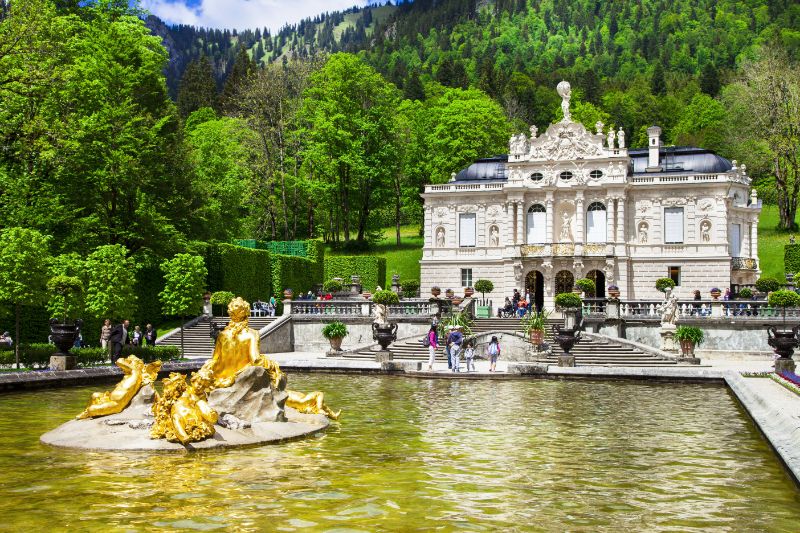
Linderhof Palace may be the smallest of King Ludwig II’s three palaces, but what it lacks in size is opulence and charm. Unlike the unfinished Neuschwanstein, Linderhof was in fact completed during Ludwig’s lifetime and was his favorite residence. Set in the beautiful Ammergau Alps, it’s a magnificent example of rococo architecture surrounded by formal gardens and fountains.
The palace interior is a masterpiece of ornate decorations, mirrors, and gold. The Hall of Mirrors is impressive, designed to make the modestly-sized room appear infinitely larger. Though photos aren’t allowed inside, the splendid interiors will stay in your memory long after your visit.
Don’t miss the palace grounds, which feature meticulously landscaped gardens inspired by Versailles. The terraced gardens with fountain pools and marble statues are perfect for a stroll. Be sure to visit the Venus Grotto, an artificial cave with a small lake where Ludwig enjoyed being rowed while listening to Wagner operas played by musicians hidden behind rocks.
Linderhof is best reached by car or as part of an organized tour that often combines it with Neuschwanstein. Public transportation is limited, requiring multiple transfers and a long walk to reach the palace.
Planning Tip: Purchase tickets online in advance or arrive early to secure your guided tour time slot. The palace tour lasts about 25 minutes, but plan for at least 2 hours to fully explore the palace, grotto, and gardens.
8. Chiemsee

- Distance from Munich: 70 km (43 miles)
- Travel Time: 1 hour by train or car
- Optimal Transportation: Train to Prien am Chiemsee
Chiemsee, Bavaria’s largest lake, is often called the “Bavarian Sea” and makes for a delightful day trip from Munich in good weather. The pristine waters against the Alps backdrop create a picturesque setting for relaxation and sightseeing, just an hour from the city.
From Munich, take a direct train to Prien am Chiemsee. Then, either walk 30 minutes to the lake or catch the “Chiemseebahn” – a cute, historic steam train that connects the main station to the harbor. From there, boats regularly depart for the lake’s two main islands.
Herreninsel (Men’s Island) is home to Herrenchiemsee Palace, another of King Ludwig II’s creations. It is an impressive homage to Versailles with lavish state rooms and formal gardens. Meanwhile, Fraueninsel (Women’s Island) offers a more peaceful atmosphere with its working Benedictine nunnery, charming fishing village, and artisan workshops.
In summer, you can swim at several beaches around the lake or rent sailboats, paddle boats, and stand-up paddleboards. The flat bike path around the lake (approximately 60 km) is perfect for cycling enthusiasts. In winter, the misty lake with snow-capped mountains in the background creates a magical atmosphere, though boat services may be reduced.
Foodie Tip: Try fresh smoked fish from local fishermen on Fraueninsel, particularly the Chiemseefischer restaurant, which smokes fish according to traditional methods.
9. Berchtesgaden

- Distance from Munich: 120 km (75 miles)
- Travel Time: 2 hours by train or car
- Optimal Transportation: Car for flexibility
Tucked away in southeastern Bavaria near the Austrian border, Berchtesgaden boasts some of Germany’s most dramatic mountain landscapes. This Alpine gem combines natural beauty with historical significance and makes for an exhilarating day trip from Munich.
The region’s crown jewel is Königssee, a crystal-clear alpine lake surrounded by towering mountain walls. Electric boats transport visitors across the emerald waters to St. Bartholomä, a picturesque red-domed church. During the boat ride, the captain usually demonstrates the lake’s famous echo by playing a trumpet—a magical moment not to be missed!
History buffs might want to visit the Eagle’s Nest (Kehlsteinhaus), a mountaintop retreat built for Hitler. Now a restaurant with panoramic views, it’s accessible via a specially designed bus from the Dokumentation Obersalzberg center (open from mid-May to October, weather permitting).
For an underground adventure, tour the Salzbergwerk salt mine. Visitors don miner’s clothes, ride a mining train, slide down wooden slides, and cross an underground salt lake. It’s both educational and fun, especially for families.
While Berchtesgaden is reachable by train (about 2.5 hours from Munich), having a car provides much more flexibility to explore the region’s scattered attractions. If using public transport, plan your itinerary carefully as buses can be infrequent.
Nature Lover’s Tip: If time permits, hike to Obersee, a smaller lake beyond Königssee. After disembarking at Salet (the last boat stop), a short 15-minute walk leads to this secluded lake with arguably even more spectacular views and fewer tourists.
10. Augsburg

- Distance from Munich: 60 km (37 miles)
- Travel Time: 30-40 minutes by train
- Optimal Transportation: Train
Founded by the Romans in 15 BC, Augsburg is one of Germany’s oldest cities and makes for an easy day trip from Munich. Just 30 minutes by train, this charming destination offers impressive historical sites, beautiful architecture, and fewer tourists than many other Bavarian destinations.
The city’s centerpiece is the magnificent Renaissance Town Hall (Rathaus), which features the opulent Golden Hall with ornate ceiling paintings and gold detailing. Nearby stands the 70-meter-tall Perlachturm Tower, which you can climb for panoramic city views.
A unique highlight is the Fuggerei, the world’s oldest social housing complex still in use. Founded in 1516 by wealthy banker Jakob Fugger, this walled enclave provided housing for needy citizens for an annual rent of just one Rheinish guilder (equivalent to €0.88 today). Residents still pay roughly the same symbolic rent in exchange for saying daily prayers for the founders.
Art enthusiasts should visit the Schaezlerpalais, which has an impressive Baroque stateroom and collection of Old Masters. Stroll along the historical water canals and watchtowers that once powered the city’s textile mills for a refreshing break.
Head to Rathausplatz for lunch at one of the many cafes and restaurants when hunger strikes. Try local specialties like Zwetschgendatschi (plum cake) at the traditional Dichtl bakery.
Budget Tip: The Bayern Ticket covers your round-trip train journey from Munich as well as all public transportation in both cities. Since Augsburg is so close to Munich, this makes for a very economical day out.
11. Innsbruck, Austria

- Distance from Munich: 144 kilometers (90 miles)
- Travel Time: 2 hours by train
- Optimal Transportation: Train
Cross another international border with a day trip to Innsbruck, Austria, a picturesque city in the heart of the Alps. Known for hosting the Winter Olympics twice (1964 and 1976), Innsbruck blends medieval old-world charm with stunning mountain vistas just two hours from Munich by train.
Start your visit at the Golden Roof (Goldenes Dachl) in the Old Town, an ornate gothic balcony decorated with 2,657 fire-gilded copper tiles. Nearby, the Imperial Palace (Hofburg) showcases the grandeur of the Habsburg dynasty. At the same time, the Court Church (Hofkirche) contains the cenotaph of Emperor Maximilian I, which is surrounded by remarkable bronze statues.
For breathtaking views, take the Nordkettenbahn funicular from the city center. Designed by architect Zaha Hadid, this modern marvel transports you from downtown to 2,300 meters altitude in just 20 minutes. At the top, you’ll enjoy panoramic vistas of the city and surrounding mountains.

If you’re a winter sports enthusiast, Innsbruck offers access to several excellent ski areas. Even in summer, the mountains provide outstanding hiking opportunities. For a more relaxed experience, wander the colorful medieval streets and stop at a traditional café for a slice of Sachertorte.
During the holiday season, Innsbruck’s Christmas markets are particularly magical, with the snow-capped Alps providing a stunning backdrop to the festive atmosphere.
Shopping Tip: Innsbruck is famous for Tyrolean handicrafts and clothing. Maria-Theresien-Strasse is the main shopping street, offering everything from international brands to local specialties. For authentic souvenirs, visit the shops along Herzog-Friedrich-Strasse in the Old Town.
12. Regensburg

- Distance from Munich: 120 km (75 miles)
- Travel Time: 1.5 hours by train
- Optimal Transportation: Train
Regensburg is a medieval time capsule on the Danube River featuring over 1,500 listed historical buildings. As a UNESCO World Heritage site that escaped WWII bombing, it offers one of Germany’s most authentic medieval experiences, just 1.5 hours by train from Munich.
The city’s most famous landmark is the Stone Bridge (Steinerne Brücke), a remarkable 12th-century construction once considered the world’s eighth wonder. This engineering marvel provided a crucial crossing of the Danube and was used as a model for other famous bridges, including Prague’s Charles Bridge.
Don’t miss Regensburg Cathedral (Dom St. Peter), a masterpiece of Gothic architecture with spectacular stained glass windows dating back to the 14th century. The Old Town Hall offers fascinating guided tours, including the torture chamber, while the Thurn und Taxis Palace showcases aristocratic splendor.
When hunger strikes, head to the historic Wurstkuchl (Sausage Kitchen), one of the world’s oldest continuously operating food establishments. Since around 1146, it has served its specialty sausages grilled over a beechwood fire with sauerkraut and sweet mustard. Enjoy your meal on their riverside terrace with views of the Stone Bridge.
Regensburg’s compact old town is perfect for leisurely exploration. Wander through the narrow winding streets and discover hidden courtyards, medieval patrician towers, and charming cafes. The city’s relaxed atmosphere makes it a pleasant contrast to busier tourist destinations.
History Lover’s Tip: Visit the Document Neupfarrplatz museum to see the remains of a medieval Jewish quarter and a Roman military camp discovered during excavations beneath the square.
13. Bamberg

- Distance from Munich: 230 km (143 miles)
- Travel Time: 2-2.5 hours by train
- Optimal Transportation: Train
Bamberg is a beautifully preserved medieval town built on seven hills, often called the “Rome of Franconia.” Its entire Old Town is a UNESCO World Heritage site with remarkably intact medieval and baroque architecture that survived World War II unscathed. Though it’s a longer day trip from Munich (about 2.5 hours each way by train), its unique charm makes it worth the journey.
Start at the stunning Bamberg Cathedral (Bamberger Dom), housing the famous Bamberg Rider statue and the tomb of Pope Clement II – the only papal grave north of the Alps. Nearby, the Old Court (Alte Hofhaltung) and New Residence (Neue Residenz) showcase centuries of princely power, with the Rose Garden of the New Residence offering lovely city views.
The most photographed building in Bamberg is the Old Town Hall (Altes Rathaus), dramatically situated on an artificial island in the middle of the Regnitz River. According to legend, the bishop refused to give citizens land for a town hall, so they created their island to build it.
Take time to stroll through Klein-Venedig (Little Venice), a picturesque row of half-timbered fishermen’s houses from the Middle Ages lining the river bank. For beer enthusiasts, Bamberg is famous for its unique smoked beer (Rauchbier). Visit the historic Schlenkerla brewery tavern to sample this distinctive specialty, brewed since 1405. The malt is dried over open beechwood fires, giving it a smoky bacon-like flavor.
Cultural Tip: If visiting between late July and mid-August, catch performances from the renowned Bamberg Symphony Orchestra during their outdoor summer concert series.
14. Zugspitze

- Distance from Munich: 100 km (62 miles)
- Travel Time: 1.5 hours to Garmisch + 1 hour to summit
- Optimal Transportation: Train to Garmisch, then cogwheel train or cable car
At 2,962 meters (9,718 feet), Zugspitze is Germany’s highest peak and offers an unforgettable Alpine experience. On clear days, visitors can enjoy breathtaking panoramic views spanning four countries: Germany, Austria, Italy, and Switzerland. Though reaching the summit requires some time, the views make it well worth the effort.
From Munich, take a train to Garmisch-Partenkirchen, then choose between two scenic routes to the top. The Zugspitzbahn cogwheel train travels through the mountain via a tunnel before reaching the Zugspitze glacier, where you transfer to a cable car for the final ascent. Alternatively, the Eibsee Cable Car offers a more direct route, dramatically climbing from Lake Eibsee to the summit in 10 minutes.
At the summit, there are viewing platforms, restaurants, a small museum about the mountain’s history, and Germany’s highest beer garden. In winter, the Zugspitze glacier offers excellent skiing and snowboarding with reliable snow conditions. During summer, hiking trails of varying difficulty levels are available, though most visitors enjoy the views and mountain atmosphere.
Weather at the summit can change rapidly, so check forecasts before your visit and dress accordingly—even in summer, temperatures can be quite cool. Visibility is often better in the morning, making an early start advisable.
Money-Saving Tip: Round-trip tickets to the summit are expensive (around €60), but various combination tickets and regional passes may offer better value. The “Zugspitze Ticket” combines your train journey from Munich with the mountain ascent for a discounted price.
15. Lake Tegernsee

- Distance from Munich: 50 km (31 miles)
- Travel Time: 1 hour by train or car
- Optimal Transportation: Train or car
Lake Tegernsee offers a perfect escape from the city, with crystal-clear Alpine waters surrounded by mountains and charming lakeside villages. Just one hour from Munich, this picturesque lake is popular with locals year-round for its natural beauty and various recreational activities.
The most convenient way to reach Tegernsee is by train from Munich’s central station to the town of Tegernsee at the lake’s southern end. From there, regular ferries connect the lake’s main towns: Tegernsee, Bad Wiessee, Rottach-Egern, and Gmund. Each town has its distinctive character and charm.
The lake is perfect for swimming, sailing, and windsurfing in summer, with several public beaches and lidos around its shores. A scenic 20-kilometer path circles the lake, ideal for walking or cycling, with fantastic views. Hikers can ascend nearby peaks like Wallberg or Baumgartenschneid for panoramic vistas over the lake and surrounding Alps.
Don’t miss visiting the former Benedictine monastery in Tegernsee town. It now houses the Ducal Bavarian Brewery (Herzogliches Bräustüberl Tegernsee), where you can enjoy fresh beer and traditional Bavarian food on its terrace overlooking the lake. The monastery church, with its impressive baroque interior, is also worth visiting.
Winter transforms the region into a peaceful wonderland with opportunities for skiing at nearby Wallberg and winter hiking on cleared paths around the lake. Throughout the year, the area’s spas offer relaxation opportunities, particularly in Bad Wiessee, which is known for its healing mineral springs.
Local Delicacy: Try Steckerlfisch (fish grilled on a stick) from lakeside stands in summer, or warm up with rich Bavarian cuisine like Käsespätzle (cheese noodles) in winter at traditional taverns.
16. Passau

- Distance from Munich: 190 km (118 miles)
- Travel Time: 2.5 hours by train or car
- Optimal Transportation: Train
Known as the “City of Three Rivers,” Passau sits at the confluence of the Danube, Inn, and Ilz rivers, creating one of Germany’s most unique geographical settings. Located near the Austrian border, this baroque gem offers beautiful architecture, panoramic viewpoints, and a relaxed atmosphere, though it requires a full-day trip from Munich (2.5 hours each way).
St. Stephen’s Cathedral (Stephansdom) is the city’s crowning glory, home to the world’s largest cathedral organ with 17,974 pipes. If you’re lucky enough to visit during concert season (May to October), try to catch one of the daily organ concerts at noon.
Wander through the charming Old Town with its Italian-influenced architecture—a result of Italian master builders who helped reconstruct the city after devastating fires in the 17th century. Unlike other Bavarian towns, the narrow lanes, colorful buildings, and riverside promenades create a distinctly Mediterranean feel.
For the best views, climb the Veste Oberhaus, a 13th-century fortress perched on a hill overlooking the city. From there, you can see the different colors of the three rivers merging—the blue Danube, the green Inn, and the black Ilz—a natural phenomenon that makes great photographs.
Passau is a popular starting point for Danube river cruises, giving it a cosmopolitan atmosphere with plenty of riverside cafes and restaurants. Stop at Café Simon in the Old Town for their famous Passauer Kaffe, a local coffee specialty with chocolate, orange, cinnamon, and cream.
Unique Experience: Visit the Passau Glass Museum, which houses the world’s largest collection of European glass and has over 30,000 exhibits spanning four centuries. Even those not typically interested in glass art find the craftsmanship and historical context fascinating.
Transportation Tips for Day Trips from Munich

Munich offers excellent transportation options for exploring Bavaria and beyond. Here’s what you need to know about getting around efficiently and economically.
Public Transportation Options
Germany’s public transportation network is comprehensive, punctual, and often the most stress-free way to take day trips from Munich. Here are the key options:
- Regional Trains: These comfortable trains connect to most destinations and are the backbone of day trips from Munich. They’re included in the Bayern Ticket deal.
- ICE/IC Trains: These faster intercity services can significantly reduce travel time to more distant destinations like Nuremberg but aren’t covered by the Bayern Ticket.
- Bayern Ticket: This day pass (€25 for one person + €8 for each additional person, up to 5 people total) covers all regional trains, buses, and local transportation in Bavaria from 9 AM until 3 AM the following day (all day on weekends). It also extends to Salzburg and some parts of Austria, making it an exceptional value for day trips.
- Munich Day Ticket XXL: If you’re headed to closer destinations like Dachau, this ticket covers Munich’s public transport plus the surrounding regional area at a lower price than the Bayern Ticket.
- Bus Services: Some scenic destinations like Neuschwanstein Castle require train and bus travel. Bus connections are typically timed to match train arrivals.
Pro Tip: Download the Deutsche Bahn app for easy journey planning, real-time updates, and mobile tickets. Consider purchasing tickets in advance, especially for popular routes on weekends and holidays.
Car Rentals and Driving Tips
Renting a car provides maximum flexibility, especially for reaching multiple destinations in one day or visiting places with limited public transportation. Here’s what you should know:
- Rental Options: Major rental agencies like Sixt, Europcar, Hertz, and Avis have multiple locations in Munich, including at the airport and main train station.
- International Driving Permit: Non-EU drivers may need an International Driving Permit alongside their regular license.
- Autobahn Tips: While sections of Germany’s autobahn have no speed limit, many do. Always observe posted limits and know the left lane is strictly for passing.
- Navigation: A GPS or navigation app is essential, especially in rural areas. Google Maps works well, but consider downloading offline maps before your trip.
- Parking: Parking in central Munich is expensive and limited. Consider the Park & Ride facilities on the city outskirts, where you can leave your car and take public transportation into the center.
- Winter Driving: Snow is possible from October to April, especially in Alpine regions. Rental cars typically come with winter tires this season, which are legally required when conditions demand them.
Cost Consideration: While driving offers flexibility, consider that German fuel prices are high, and many destinations charge for parking. For solo travelers especially, public transportation is often more economical.
Planning Tips for Munich Day Trips

Day trips from Munich can be expensive, but these strategies will help maximize your budget:
- Bayern Ticket: This regional day pass (€25 for one person + €8 for each additional traveler, up to 5 people total) is the best deal for exploring Bavaria. It covers all regional trains, buses, and local transportation from 9 AM until 3 AM the following day (all day on weekends). For groups or families, the per-person cost becomes exceptionally low.
- Combination Tickets: Many attractions offer reduced prices when you combine multiple sites. For example, the “King Ludwig II Castle Combi-Ticket” saves money when you visit both Linderhof and Herrenchiemsee.
- City Cards: If your day trip includes cities like Salzburg or Nuremberg, look into their city cards, which often include public transportation and free/discounted attraction entry.
- Bring Provisions: Food at tourist attractions can be expensive. Pack a picnic lunch to enjoy in Bavaria’s beautiful outdoor settings.
- Travel Off-Peak: Accommodation near popular destinations like Neuschwanstein can be significantly cheaper midweek and outside school holidays.
- Early Booking: For popular guided tours, booking in advance online often secures better rates than last-minute purchases.
Student/Senior Discounts: Many attractions offer reduced prices for students, seniors, and children. Always carry an appropriate ID to claim these discounts.
FAQs
Based on my experience helping travelers plan their Bavarian adventures, here are answers to the most common questions about day trips from Munich:
What is the easiest day trip from Munich?
Dachau Concentration Camp Memorial is the easiest day trip. It is located just 20 km from Munich, and direct S-Bahn connections take about 30 minutes. The historical site provides a sobering but important educational experience and requires no complicated transfers or planning.
What’s the best way to visit Neuschwanstein Castle from Munich?
For independent travelers, take the train from Munich to Füssen (2 hours), then catch bus 78 to Hohenschwangau village. Book castle tickets online in advance to secure your preferred time slot. For a stress-free experience, consider an organized tour that handles transportation and tickets, though this will be more expensive.
Is the Bayern Ticket worth it?
Absolutely! At €25 for one person (plus €8 for each additional traveler, up to 5 total), the Bayern Ticket typically pays for itself with just one round trip beyond Munich’s immediate surroundings. It covers all regional trains, buses, and local transportation in Bavaria from 9 AM until 3 AM the following day (all day on weekends), and even extends to Salzburg, Austria.
Which day trips are possible by public transportation vs. needing a car?
Most major destinations, including Neuschwanstein, Salzburg, Nuremberg, Regensburg, Dachau, and Augsburg, are easily accessible by train and/or bus. A car provides more flexibility for places like Berchtesgaden, the Romantic Road, and Linderhof Palace, though even these are possible (just more complicated) with public transportation.
Which day trips are best in winter?
Garmisch-Partenkirchen and Zugspitze are magical in winter for skiing and snow activities. Nuremberg, Regensburg, and Salzburg offer beautiful Christmas markets (late November to December 24th). Indoor-focused trips like Munich’s museums or Augsburg’s historic buildings are good for inclement weather days.
Can I visit Austria on a day trip from Munich?
Yes! Both Salzburg and Innsbruck in Austria make excellent day trips from Munich. Salzburg is about 1.5-2 hours each way, while Innsbruck takes about 2 hours each way. Both are covered by the Bayern Ticket, making them economical international day trips.