This post may contain affiliate links. We may receive a small commission, at no cost to you, if you make a purchase. Read Disclosure.
Kakadu National Park is Australia’s largest national park, and is made up of floodplains filled with saltwater crocs, escarpments etched with ancient aboriginal rock art that spans 20,000 years, and hidden swimming holes protected by gorges.
Just three hours’ drive east of Darwin, this UNESCO World Heritage site is one of Australia’s greatest landscapes. Covering nearly 20,000 square kilometres, Kakadu has so much to offer. It’s an enormous park famed for its biodiversity, wildlife, and aboriginal heritage.
It is a profoundly spiritual place that offers adventure, cultural experiences, stunning landscapes, unique flora and fauna, and exceptional star-gazing. If you’re thinking of visiting Kakadu National Park, this guide has everything you need to know to plan your trip.
Why is Kakadu National Park so famous?
Kakadu is famous because it brings together three things few places in the world can claim at once: immense natural beauty, extraordinary biodiversity ,and one of the oldest living cultures on Earth.
It covers an area nearly half the size of Switzerland, it’s Australia’s largest national park, and a UNESCO World Heritage site listed for both its cultural and natural significance – a rare double honour.
Made up of wetlands, rivers, water holes you can swim in, impressive rock formations, aboriginal rock paintings, prehistoric monuments, and an abundance of wildlife, you can bet there are many things to do in Kakadu National Park to keep you busy.
It is also home to over one-third of Australia’s bird species, and thousands of plant species such as pandanus and cycads.
How many days do you need in Kakadu National Park?
I once heard about a writer who had visited Kakadu National Park on a group tour after visiting Litchfield National Park on the same day!! Two outstanding national parks separated by a good three-hour drive. I was flabbergasted.
I was sad that people might read that review and think Kakadu is worthy only of a brief visit – nothing but a place that is hot with lots of mosquitos and a magical sunset that you can’t fully appreciate because you’re on the great Top End race to see it all in a day.
The minimum number of days you need to spend at Kakadu National Park is three days, but if you can spend longer, I would suggest spending an entire week there. Your Parks Pass does grant you a full week, and there’s good reason for that. There’s tons to see and do.
If you don’t have the means and time to experience Kakadu properly then I suggest holding off until you can, otherwise, you’re just wasting your time and money. You can’t get to know it if you race in for a night.
Best time to visit Kakadu National Park
Timing matters when planning your trip to Kakadu National Park. In the dry season (May to October), waterfalls thin to swimmable pools and roads open to remote corners of the park. In the wet season (November to April), storms transform the landscape into a lush, dramatic expanse.
We visited Kakadu National Park at the end of the dry season, when it wasn’t at its full green and wet glory, but still beautiful with much to enjoy.
The best time to see the national park is after a big wet season, when the waterfalls are full and the water holes are at their fullest. The wet season is during the tropical summer and is also the cheapest time to visit as it’s the low season. The dry season has cooler temperatures, but you’ll find many of the waterfalls have dried up.
Things to do in Southern Kakadu National Park
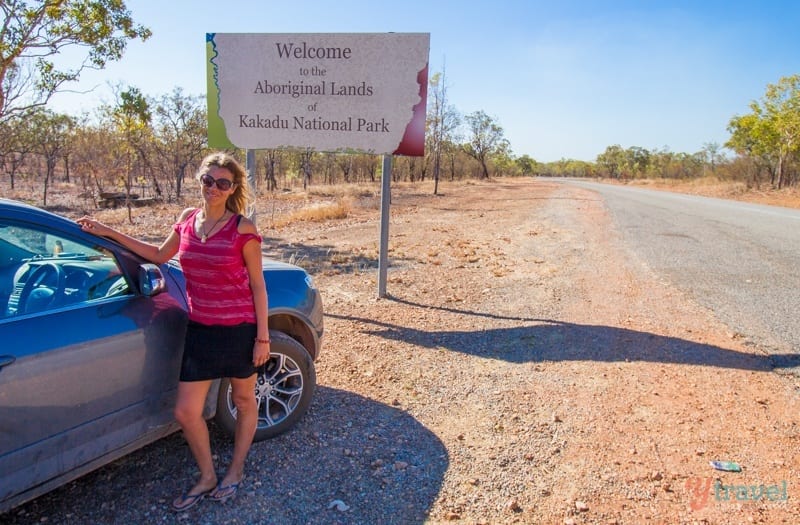
As we had arrived from Katherine Gorge, so Cooinda in the Southern part of the park was a great first base for us. From here, you are perfectly based to explore the following attractions in Kakadu National Park…
1. Yellow Water Billabong Cruise: A Journey Through Kakadu’s Wetlands
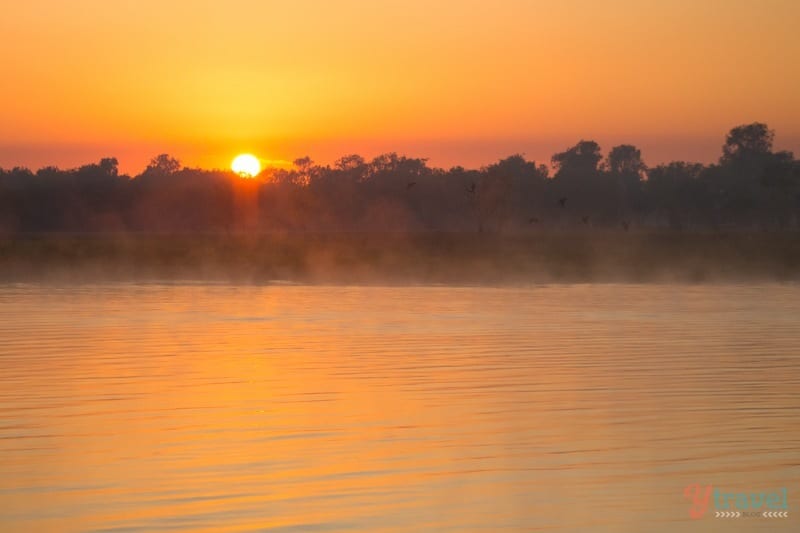
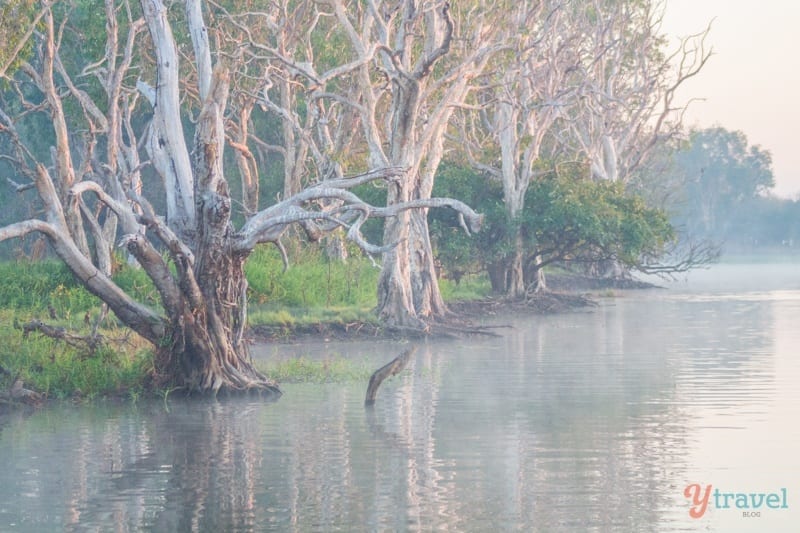
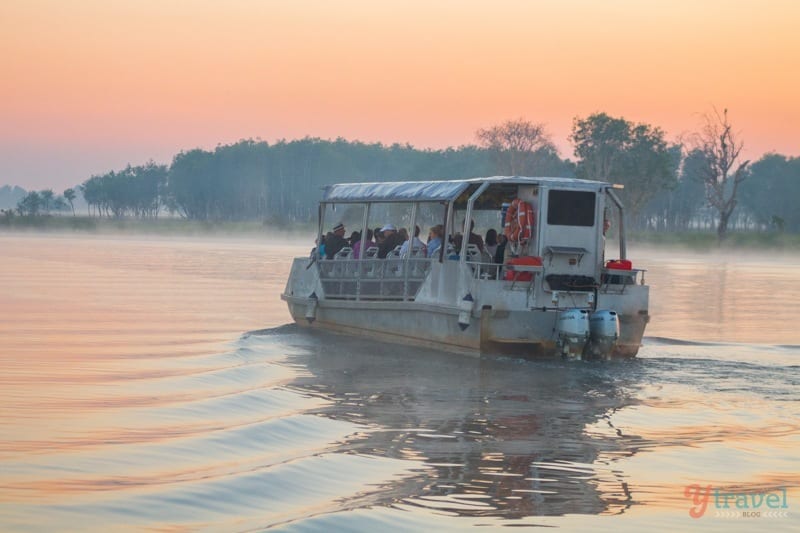
The mist floats above the water as the sun gently rises casting a soft yellow and pink glow over the billabong. Slowly it wakens, flocks of egrets soar above, and magpie geese come into land, sea eagles perch above looking for their morning feed, while all eyes in the boat actively seek out the ancient example of perfect evolution.
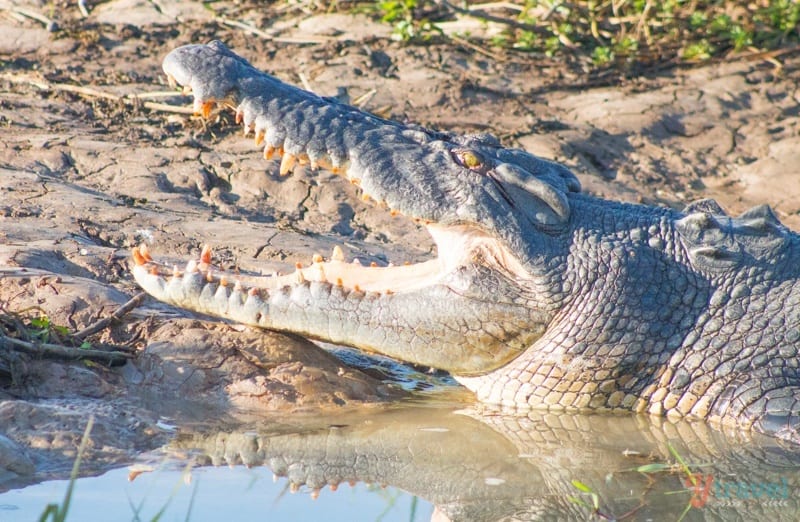
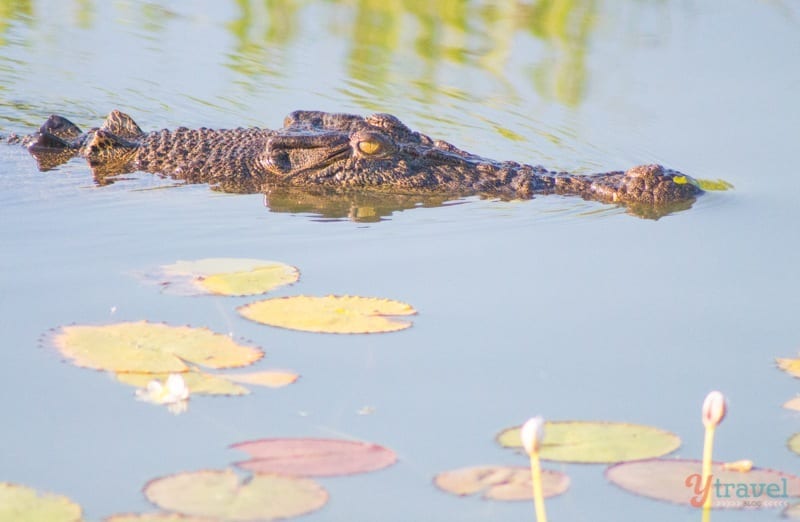
Our guide points ahead to a one-metre tail swaying back and forth barely making a ripple in the water. This is what most of us have been waiting to see in the Kakadu wetlands – a croc stealthily hunting for his breakfast.
We’re sure to keep our hands and heads inside the boat knowing that they’ve survived for millions of years because they are master predators.
We see this later when our boat glides past the pink lotus flowers and water lilies, and we’re startled by a sudden snap. We turn and only just see the hungry monster slide back into the water with its barramundi breakfast.
The Yellow Water Cruise was one of our favourite experiences in Kakadu. We highly recommend visiting at sunrise when the air is still and the weather pleasant.
The billabong is abundant with wildlife and sunrise is when you see it wake up. I was surprised by how much I enjoyed seeing and learning about all the birdlife.
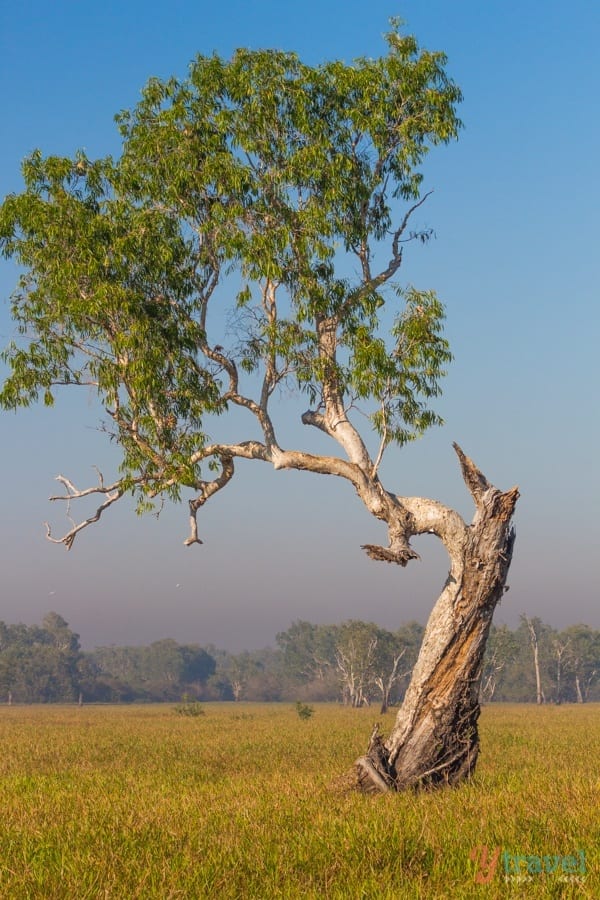
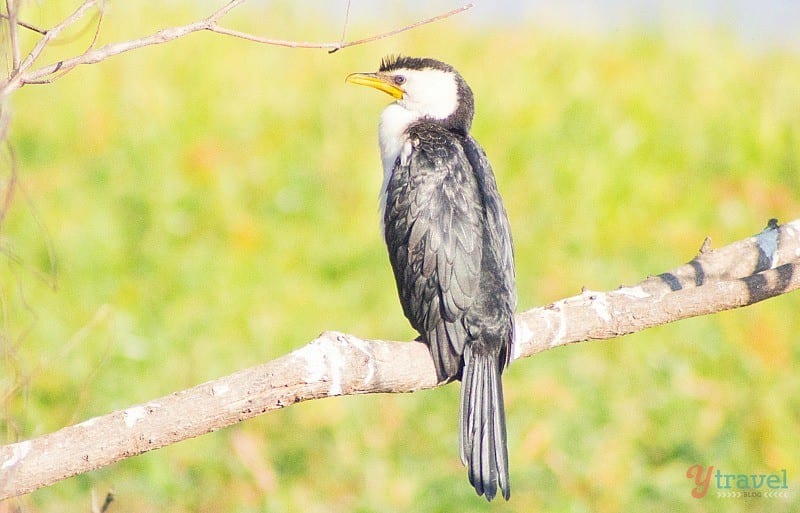
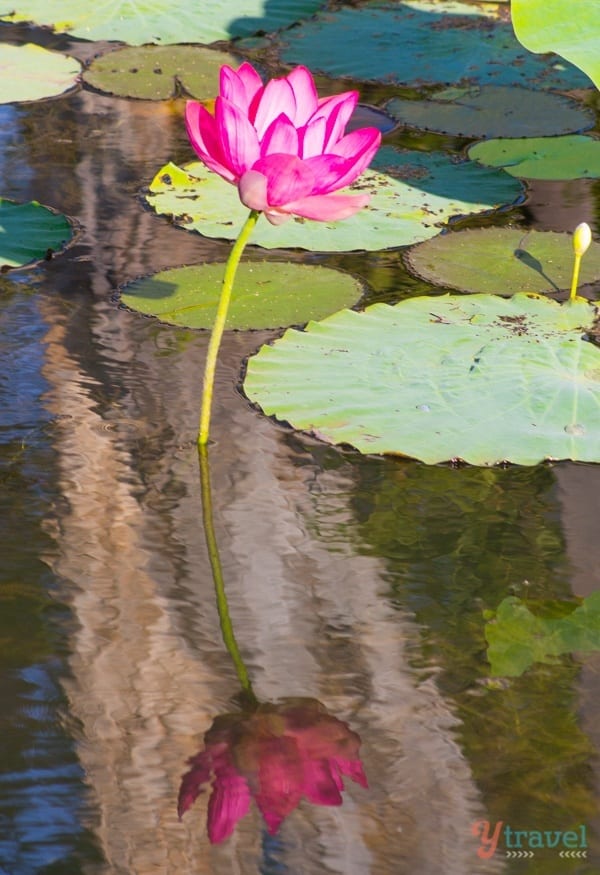
I would love to do the Paul Arnold sunset photography tour – the perfect place to learn how to improve your nature photography.
Yellow Waters Billabong Cruise is featured and run by Gagudji Dreaming, which is based at the Cooinda Lodge. They also offer a range of other tours such as fishing on Yellow Water and cruises under the stars. You can also camp here or stay at the lodge.
2. Swim in the Gunlom Falls plunge pools
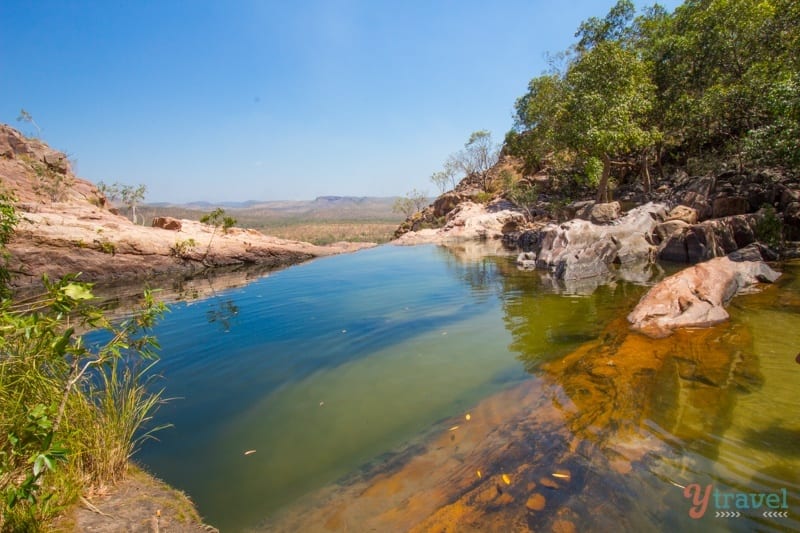
Gunlom Falls was one of my favourite places in Kakadu, if not one of my favorite places in the world. It became famous after it was featured in the Crocodile Dundee movies, and was closed for six years but I am pleased to say it’s reopened again now!
The road there in was a little rough in places, but we managed it in our Ford Territory. We drove through grass fires to get there so were a little nervous as the area was closed only days before because of fires.
There’s a steep walk up to Gunlom Falls from the car park, but the kids managed it okay. It’s well worth going up there, even if you have to carry your young children. The sweeping views out to the valley are just spectacular, which can be appreciated straight from nature’s best infinity pool.
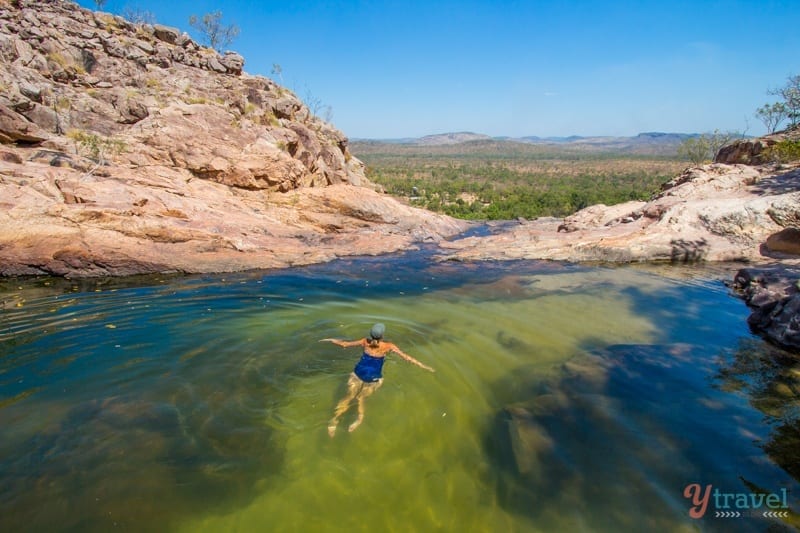
The waterhole is surrounded by shady gums and perfect for a refreshing swim (yes, you can swim in Kakadu National Park), and a spot of lunch.
I just felt like I was an angel standing at the edge of the world from up here. It was such a serene and magical place. It’s by far my favourite waterhole in Australia and possibly my favourite view.
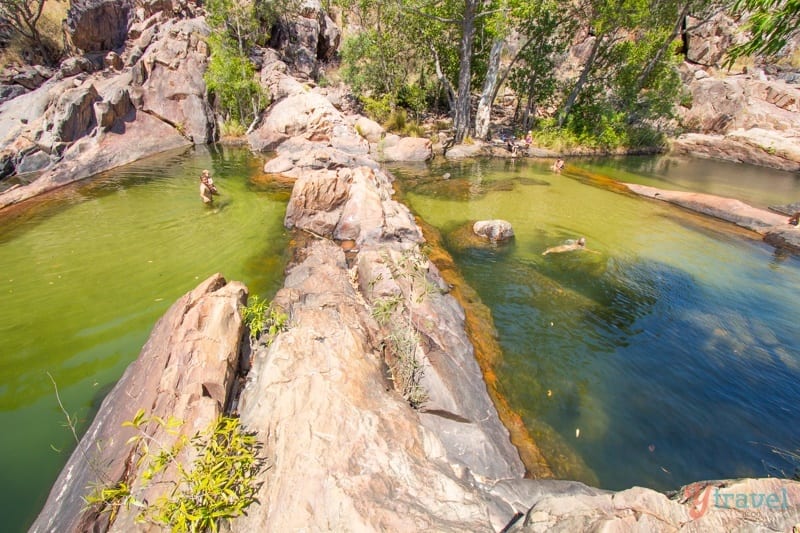
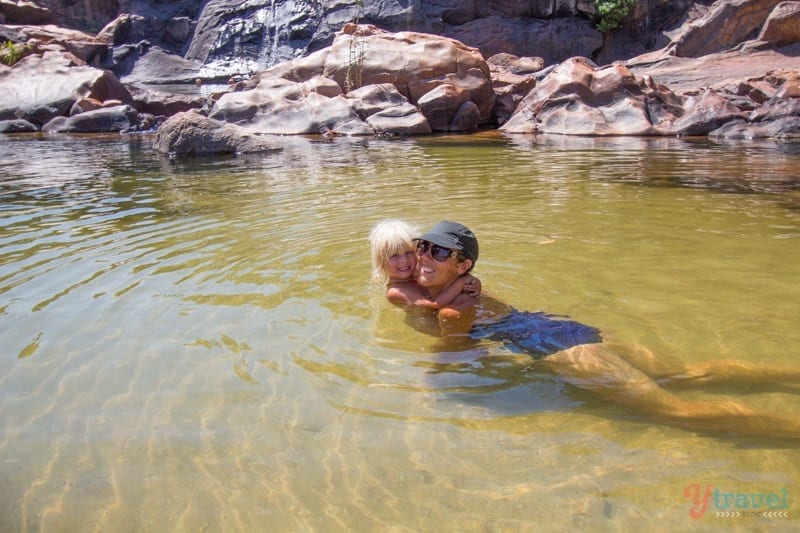
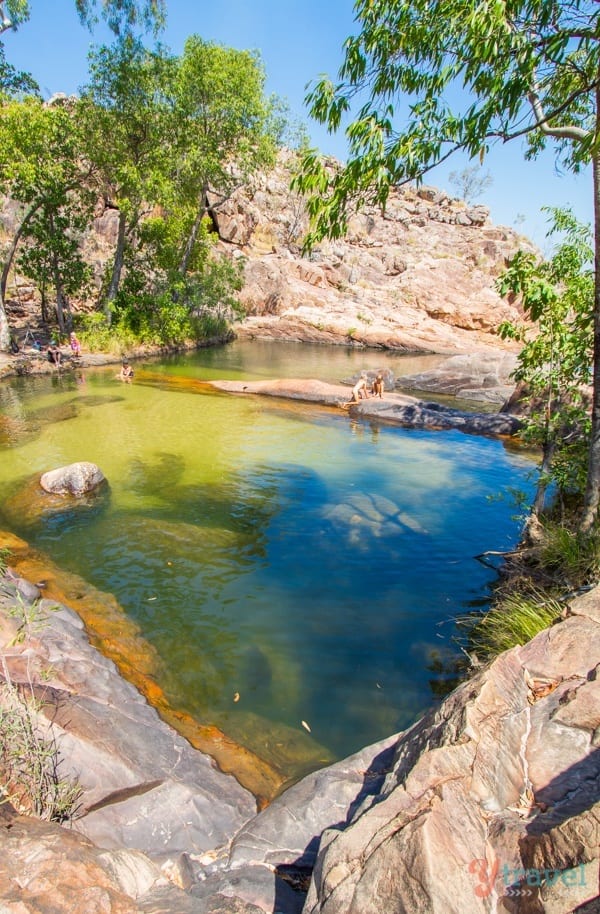
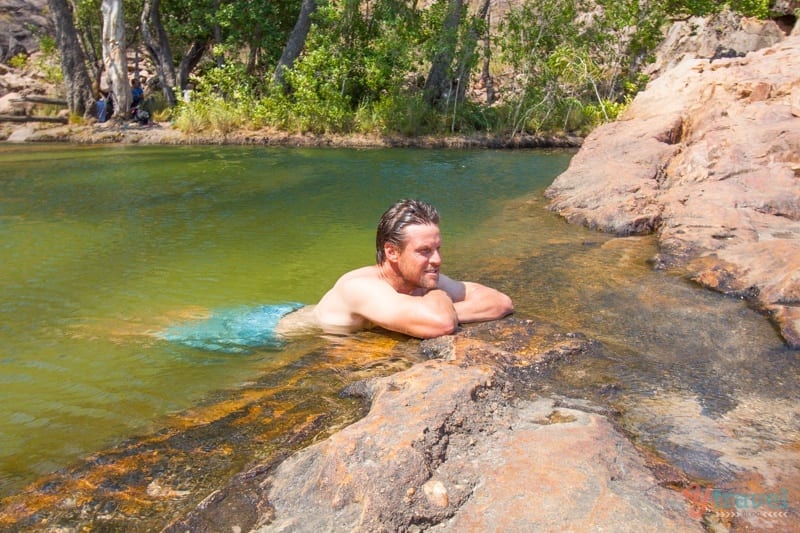
The kids had a ball swimming here with their friends Jack and Scarlett. I can still hear their squeals of joy now! There is a plunge pool at the base of the falls, but that was closed with a croc warning sign, so I’d just stick to taking the walk up the top for your swim!
3. Swim in Maguk (Barramundi Gorge)
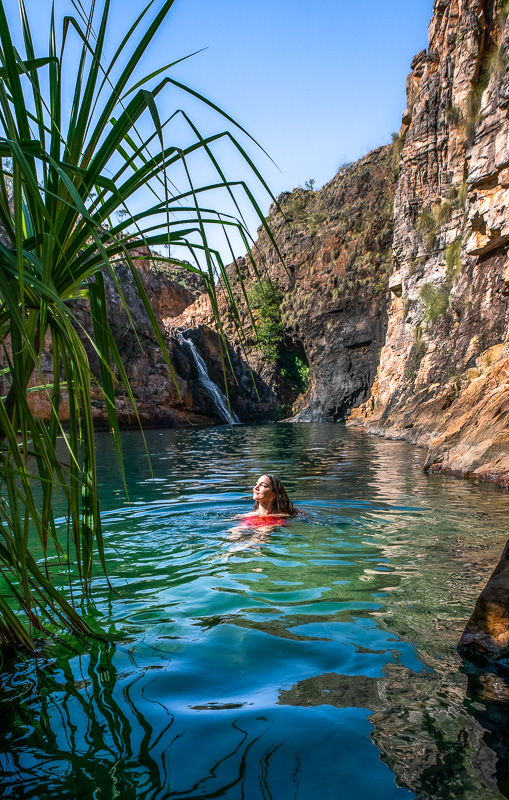
Maguk, formerly Barramundi Gorge, is a pristine natural waterfall and plunge pool at the base of steep gorge walls. It’s accessed by a 14km four-wheel drive track off the Kakadu Highway, followed by a one kilometre walk through monsoon forests, crossing Barramundi Creek.
We did our very best to get to this waterhole late in the afternoon after our huge day doing the wetlands cruise and Gunlom. Our friend Laurence from Finding the Universe who drove 60,000 kilometres around Australia said Maguk was his favourite swimming hole in the country.
Unfortunately, for us we got bogged halfway in on the 150-metre soft sand section. Our car doesn’t have high clearance. You need a high clearance 4WD to access Maguk.
By the time we dug ourselves out, looking like a bad science experiment gone wrong, it was too late to try again using the hard bush road beside the sandy bit. Yeah, we had no idea this was there until a local in his beat up commodore came driving by and inquired why we did not just use that road instead!
4. Visit Warradjan Cultural Centre
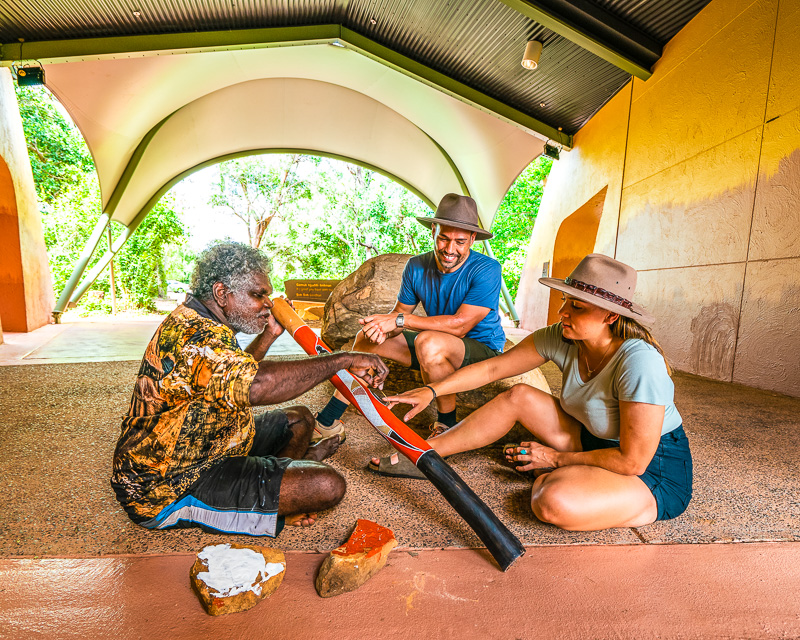
A great place to learn about the aboriginal culture and the tribes who live in the park, the Bininj and Mungguy people, is to visit the Warradjan Aboriginal Cultural Centre.
It has a really fascinating free museum that tells the story of all the aboriginal people who have lived here for thousands of years, making them the oldest living culture int he world. As well as some historic changes that have taken place more recently.
An extensive exhibit explains the complicated kinship laws, read traditional owners stories of growing up in Kakadu and see tools, message sticks, artworks and live demonstrations from local artists. Around the centre are a few short walks you can do too.
Things to do in Northern / Eastern Kakadu NP
When visiting the North or Eastern side of Kakadu, you should base yourself in Jabiru. From here, it’s an easy drive to many of the top things to do in Kakadu National Park on the northeast edge.
Jabiru is the main town within Kakadu National Park. You’ll find services such as a supermarket, post office, and bank. Jabiru doesn’t have as much accommodation as Cooinda, but there are still some great campsites and lodges you can choose from.
5. Bowali Visitor Centre
If you stay at Jabiru campground, I recommend riding along the 4-kilometer return nature trail to Bowali Visitor Centre. The visitor centre is beautifully designed and hosts extensive displays and information about Kakadu. It’s a great first stop to help you plan your stay in Kakadu.
Kalyra and I enjoyed an afternoon bike out here winding through the woodlands. It starts opposite the Mercure Kakadu Crocodile Hotel. You will find many other walking trails near the visitor center too.
6. Explore The East Alligator River Area, Kakadu
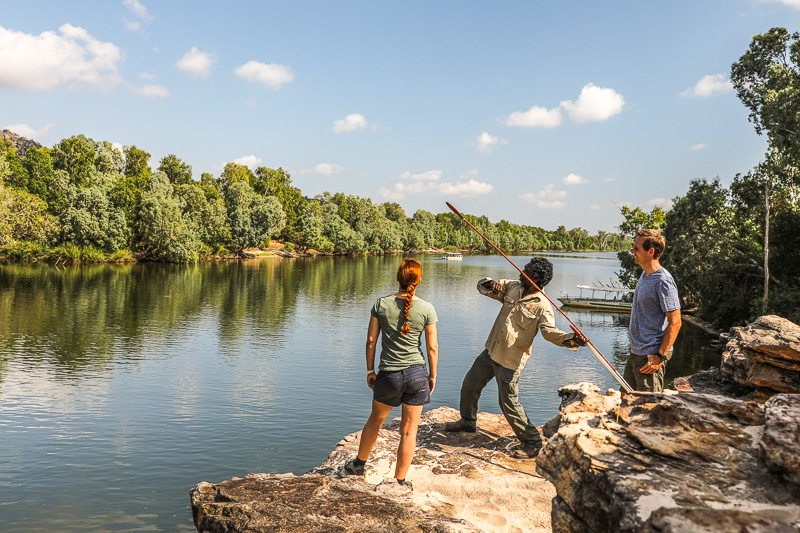
The East Alligator River area takes you to the border of Kakadu and Arnhem Land. Take some time to stand at Cahill’s Crossing and watch the cars cross the Alligator River with saltwater crocodiles swimming up and down nearby.
There were several people standing near the edge of the river fishing. No thanks! If you drive across, you have to time the tides right to get across this river.
7. Visit the Manbiyarra Border Store

Just down the road from Cahills Crossing is the Manbiyarra (Border Store) which is open from late May to October. Here you can browse Indigenous-owned Injalak Arts, and see paintings on bark and paper, as well as weavings, sculptures, and hand-printed fabrics.
Check the Kakadu event guide as sometimes there are talks and art sessions at the border store.
We sat with two Aboriginal men one afternoon as they painted their artworks. It was a great experience for the kids to see and we loved talking to the men to hear their stories and traditions.
8. Check out Ubirr Rock Art
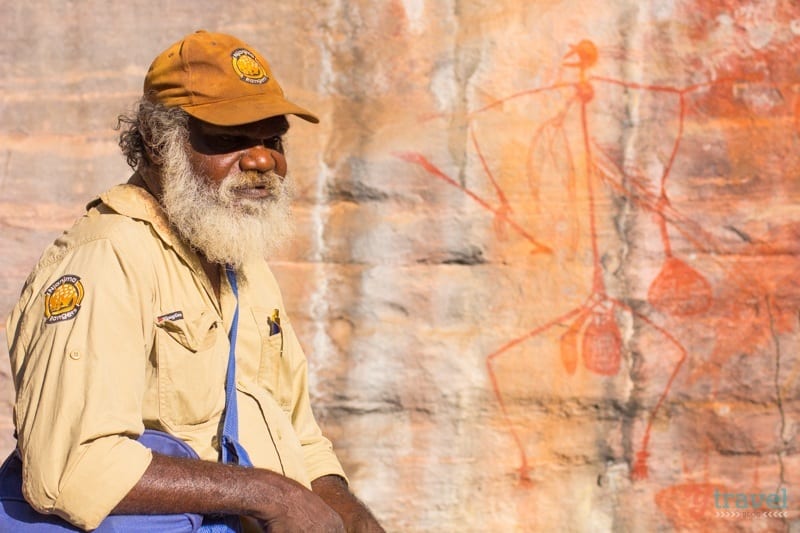
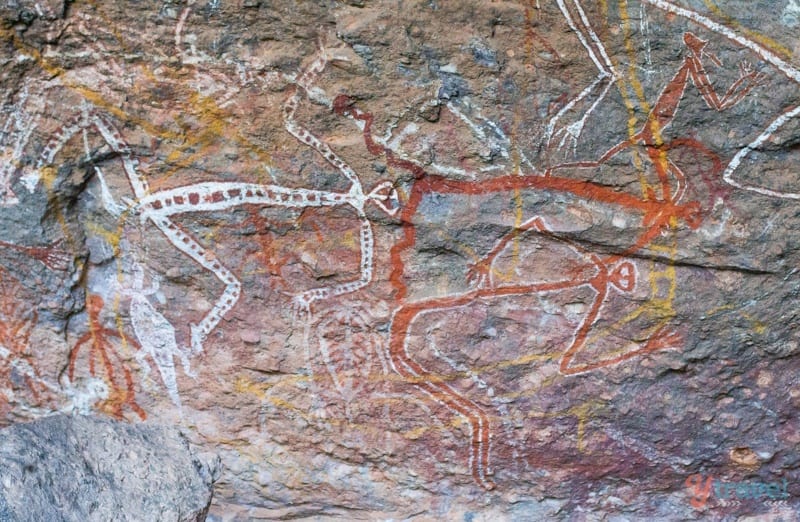
If you want to see some ancient rock art galleries, then you’ll find the best aboriginal rock art sites in Ubirr.
Guided talks on local Aboriginal culture and Kakadu’s rock art often run over an afternoon through the Ubirr rock art gallery. An Aboriginal ranger will tell you many of the stories behind the paintings on the wall of the 1km circular walk.
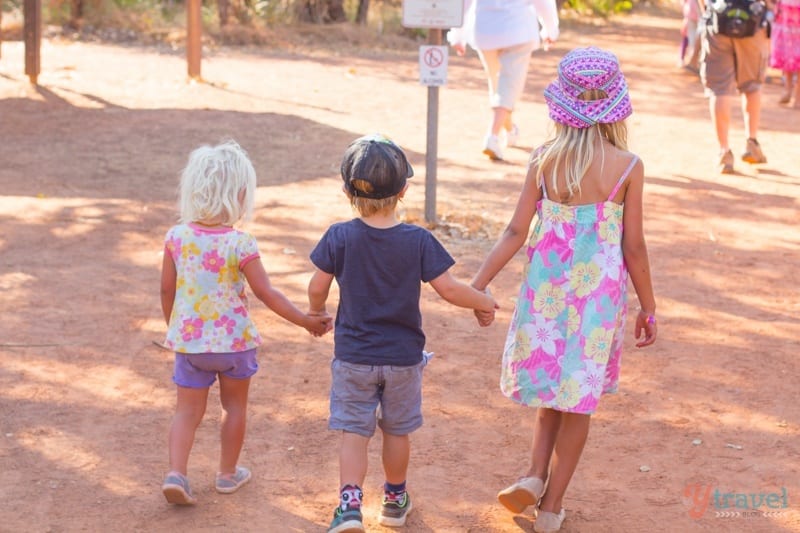
One of the most iconic paintings is the Rainbow Serpent gallery, which is one of the oldest pieces of rock art and an important piece to the park’s traditional owners. It even inspired the logo for the national park.
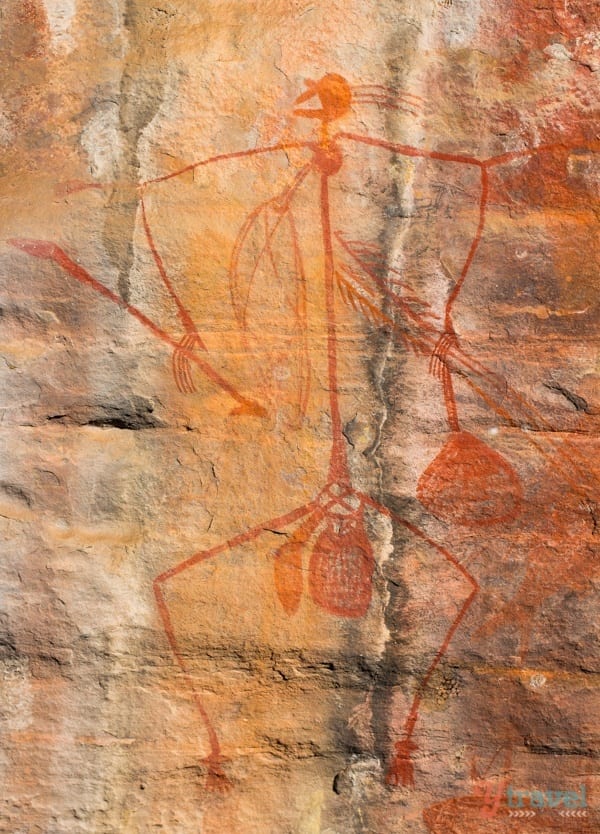
These tours can be quite popular and we found it difficult to hear the softly spoken guide. It was also a challenge having to manage the kids at the same time. They did love seeing the rock art though!
9. Witness the spectacular sunset over the Nardarb Floodplains
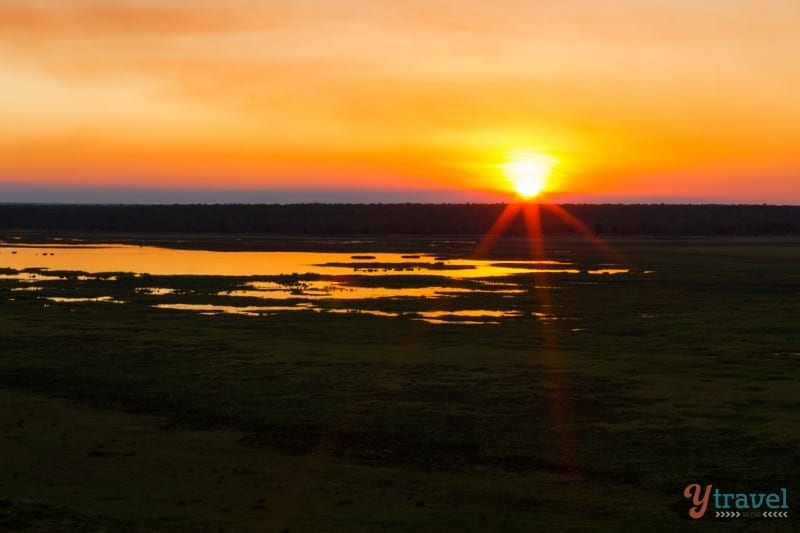
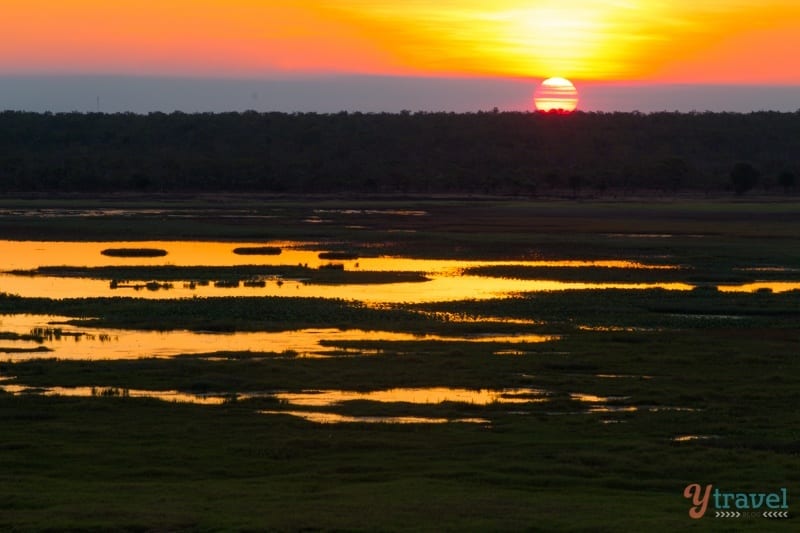
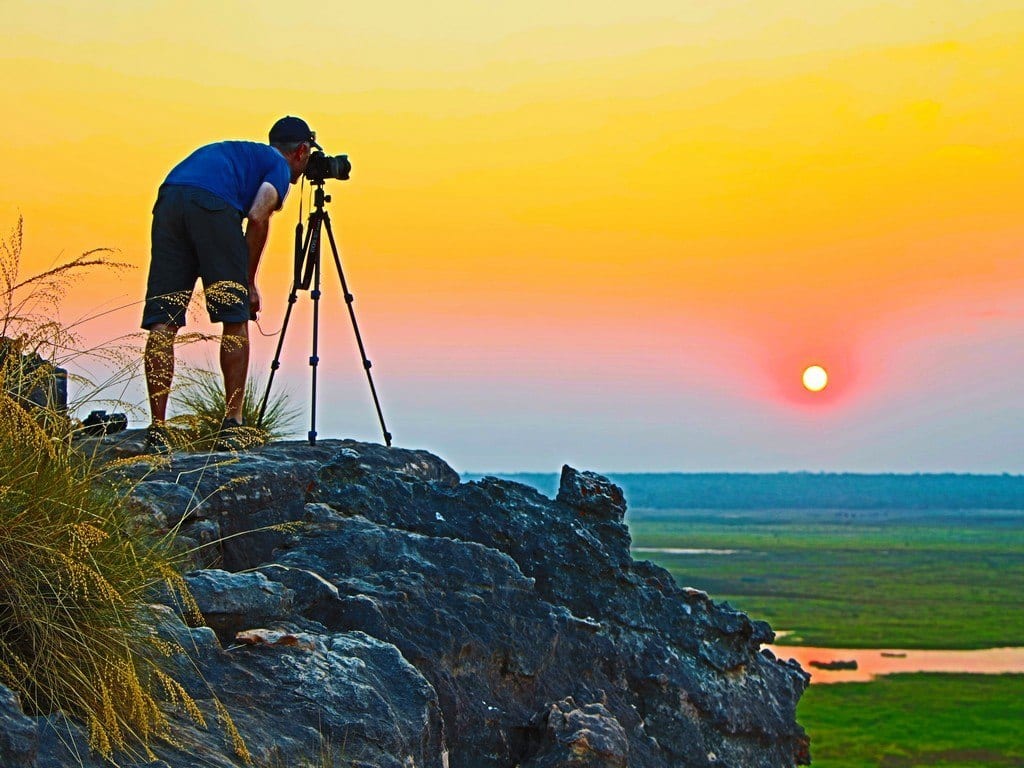
Time your tour at the Ubirr rock art for the afternoon so you can then head straight up to the top of the rock for one of the most beautiful sunsets you could hope to see over the Nadarb floodplains and Arnhem Land. This is one of the best things to do in Kakadu, so don’t miss it.
Your hair will stand on end as you sense the great spiritual essence that exists here and has been untouched for millions of years.
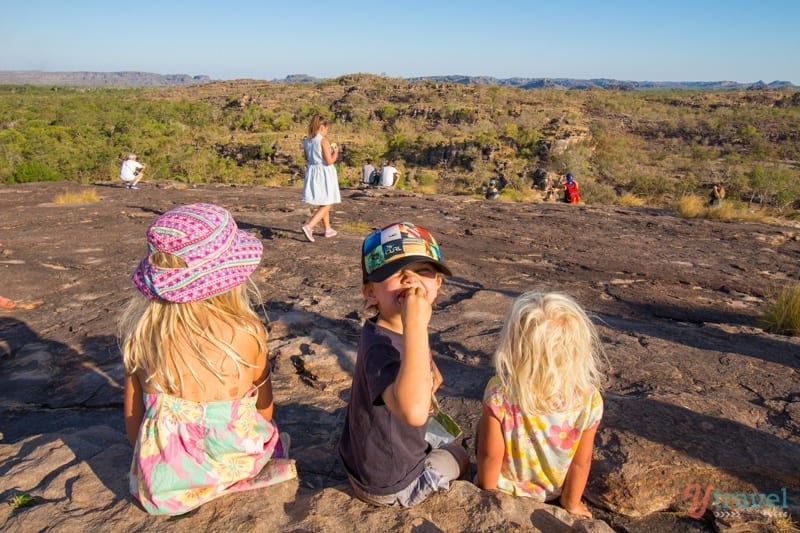
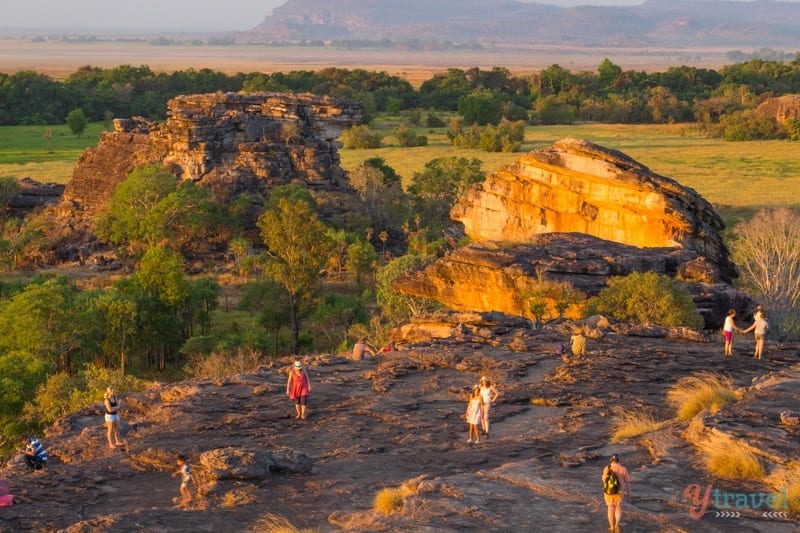
If you have kids they will love this chance to run around or even just rest for awhile and soak up the beauty.
Things to do in Kakadu’s Nourlangie Area
Head to the Nourlangie region for more exciting attractions in Kakadu. See rock art, walk around the Billabong, and then enjoy the sunset.
10. Take a Nourlangie Rock Art Tour
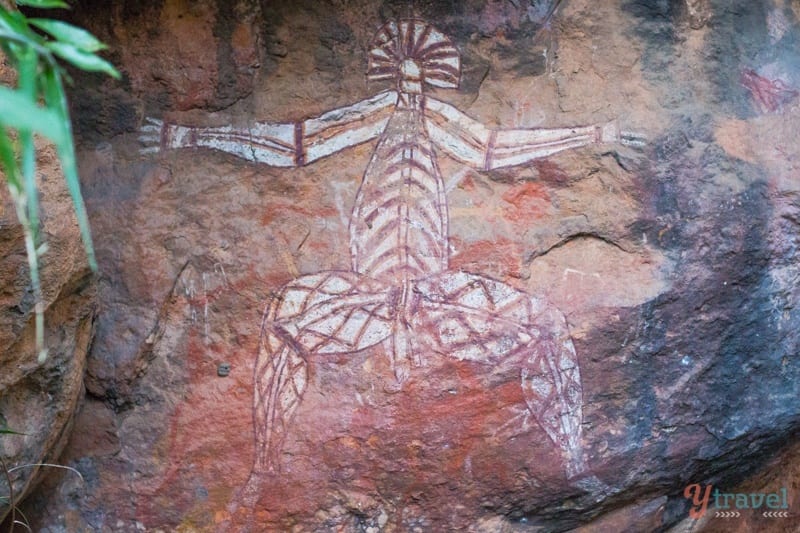
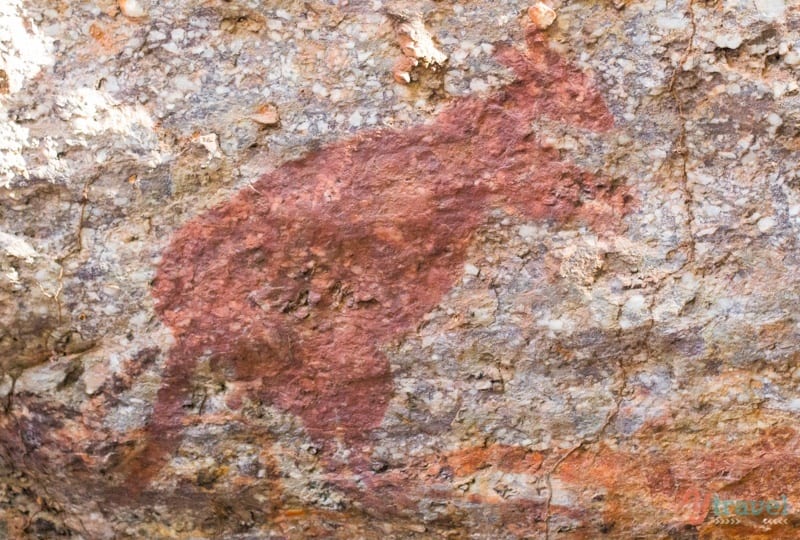
There was nobody else in this incredible rock art gallery when we visited. The art sites and Aboriginal shelter can be explored along a 1.5km loop walk. It also takes you to Gunwarrddehwardde Lookout viewing platform with spectacular views of the escarpment.
We loved the painting and story of Nabulwinjbilwinj, a dangerous spirit who likes to bang females on the head with a yam and then eat them.
Another important piece of rock art at Nourlangue is Namarrkon, a picture depicting the creation ancestor named Namarrkon, who the aborigines believe is responsible for the lightning storms that occur every tropical summer.
11. Catch the Sunset at Nawurlandja Lookout
Another impressive sunset, without the crowds, is at Nawurlandja. It’s a short 600-metre climb and gives views over Nourlangie, the escarpments of Arnhem Land, and the Anbangbang Billabong, which is popular to walk around.
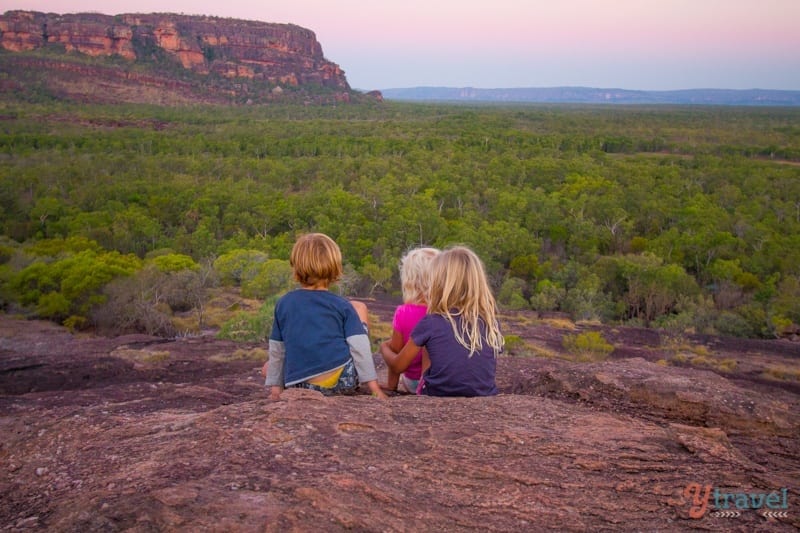
The sunset is not as striking as Nadarb, as you are looking away from the setting sun, but just as serene and beautiful. The kids had a ball playing hide and seek here with Jack and Scarlett.
12. Birdwatch at Mamukala Wetlands
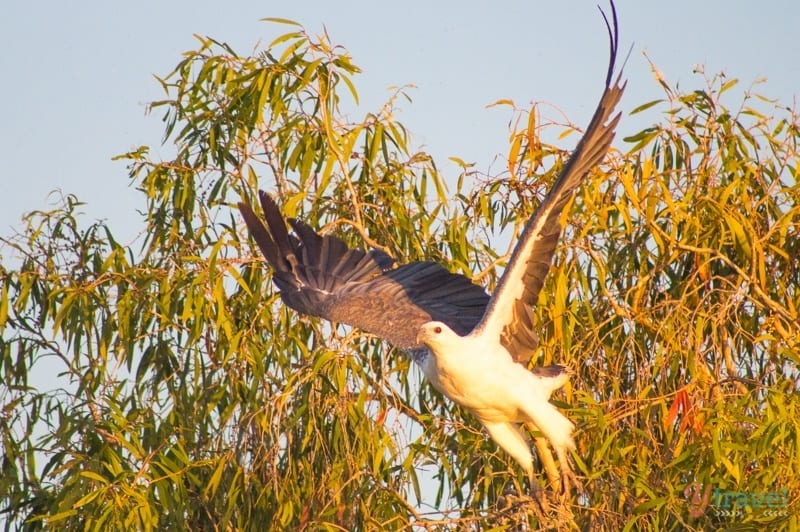
On the way out of Kakadu, heading towards Darwin, the Mamukala Wetlands is meant to be a great short 3km walk to explore the wetlands. It’s said to be spectacular during the dry season with an influx of migratory birds.
There is an easy walk to an observation platform in the paperbarks at Mamukala wetlands and is one of the best places to go bird watching.
You can see many of Australia’s bird species from here, including kites, comb-crested jacanas, cormorants, purple swamp hens, finches, and kingfishers.
13. See Jim Jim Falls, Kakadu
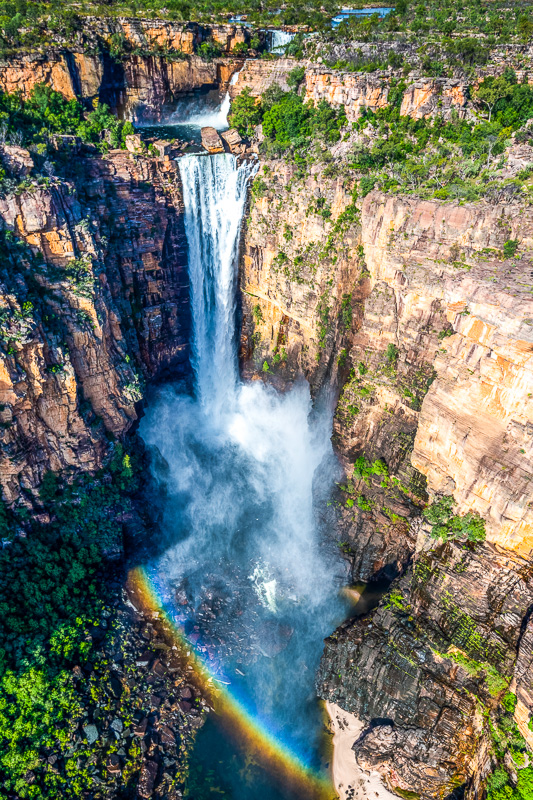
Jim Jim Falls is said to be one of the most spectacular waterfalls in Kakadu. It has a deep plunge pool and is surrounded by 150 metre high cliffs. Check with the visitor centre as the falls will probably have dried up by the end of the dry season. During the wet, the road becomes impassable so you’ll have to see it via a scenic flight.
14. See Twin Falls
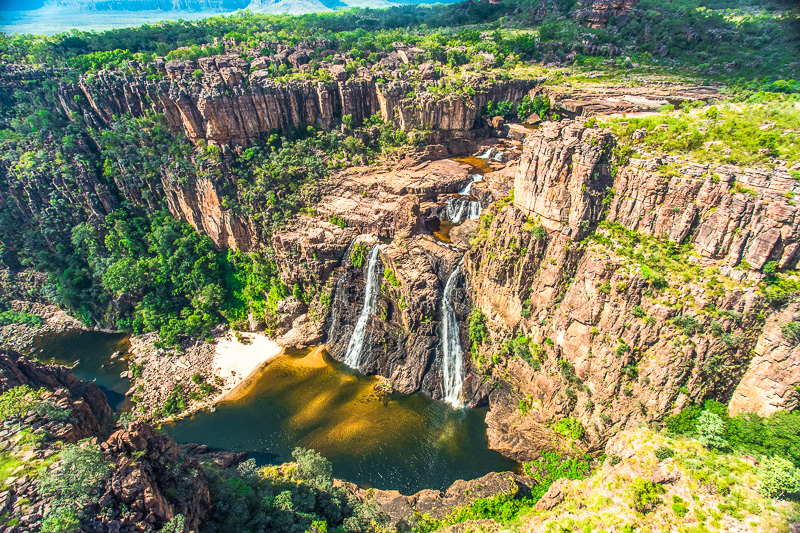
10km further on from Jim Jim Falls is Twin Falls, accessed through a deep creek crossing (croc beware). You can walk (6km) up to the plateau above Twin Falls, and enjoy some beautiful views. You can bush camp out in this area.
15. Check out Koolpin Gorge (Jarrangbarnmi)
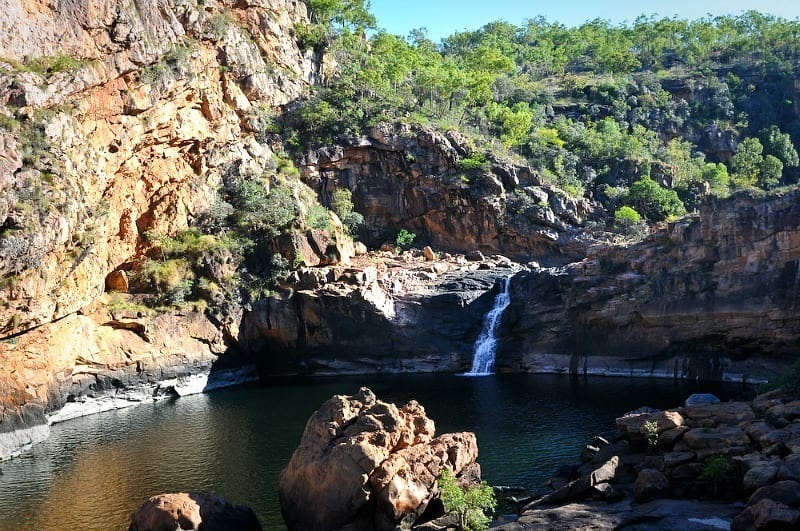
Everyone raves about Koolpin Gorge (Aboriginal name Jarrangbarnmi,) and it’s easy to see why. The gorge, which is the handiwork of the Koolpin Creek over thousands of years, is also known as the Giant’s Staircase.
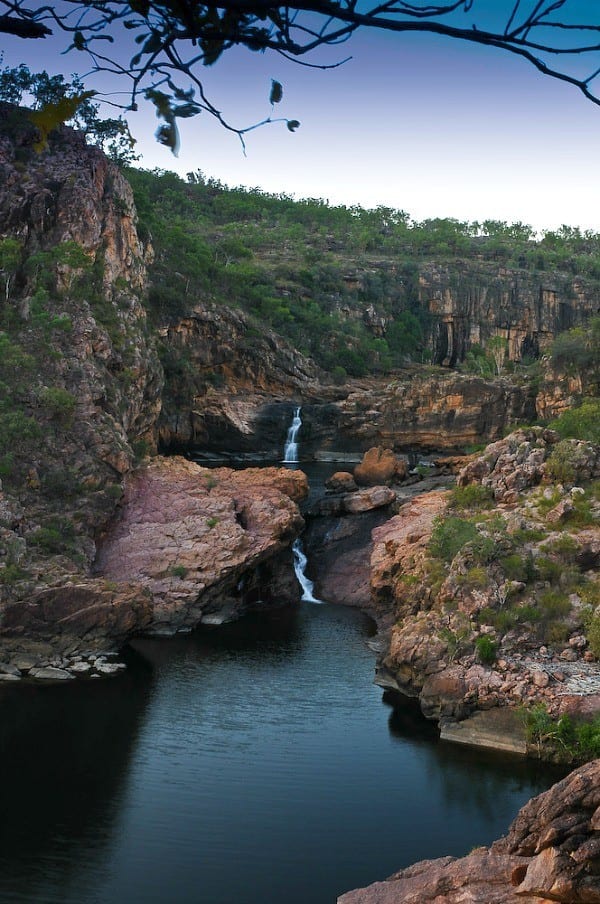
Access is seasonal and requires a permit and a high clearance 4WD. It’s real wilderness camping and hiking, but if you’re up for it, you’ll almost have the waterfalls and swimming holes to yourself!
Tips for visiting Kakadu National Park
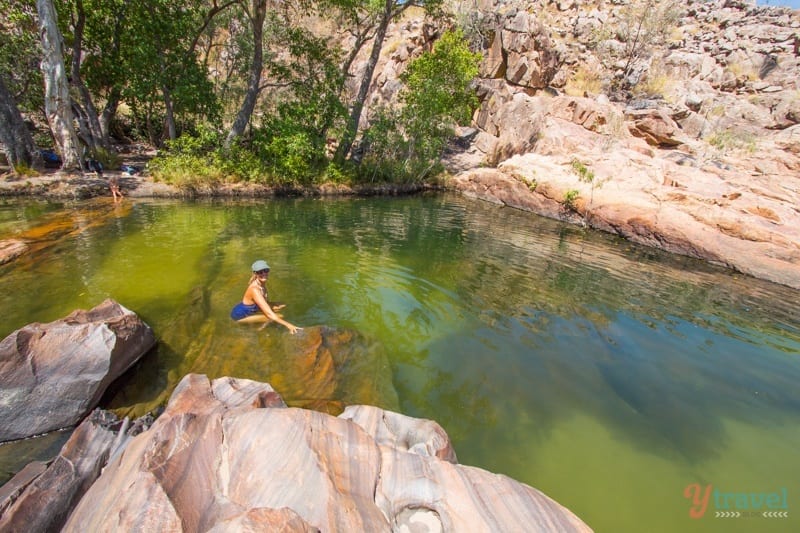
Kakadu National Park is a 3 hour drive from Darwin, and there are many tours that take you into Kakadu from there. However, to really make the most of your experience, I suggest you skip the tour, grab a bunch of friends, and split the costs of hiring a car and go yourself.
Once you’re in Kakadu, besides your camping and entrance fees, your costs are minimal as it’s just nature you’re exploring.
Here are some other top tips for making the most of your trip:
- Camp in the park in one of the several campsites. Sleep under the stars and let the sounds of nature lul you to sleep. We camped for five nights at Kakadu Lodge and Caravan Park in Jabiru, the main town.
- Drive it yourself. Don’t bother with a tour, they will drive past some of the most beautiful landscapes. To make sure you don’t miss anything, do it yourself.
- Take a scenic flight. Once you have explored the park on the ground, you can really appreciate its size and magnitude by taking a scenic flight and seeing it from above.
- Get a 4WD vehicle as there are some areas you cannot access without one.
- Make sure you visit both Cooinda and Jabiru separately and stay in each town for a couple nights. Both give you access to different parts of the park and will save driving long distances to get to the various sites to explore.
- Take mosquito repellent. It was only one night we noticed they were particularly vicious.
- If you have kids, check out our tips for hiking with kids.
- Rest during the heat of the day and walk/explore during the morning and evening.
- Pack plenty of snacks, water, and food.
IMPORTANT: It’s essential you speak to the Kakadu rangers and pay attention to ALL signs in Kakadu. Crocs can be found in all rivers and most waterholes. Don’t risk it.
Getting there
We arrived from Katherine and so entered the park from the Southern section at Pine Creek (150 km from Katherine) If coming from Darwin, you can enter from the northern section of the park from the Arnhem Hwy (240 km from Darwin) Unleaded and diesel fuel is available from Kakadu Resort (at South Alligator), Jabiru, Cooinda, and Goymarr Tourist Park.
Opening hours and entrance fees
You need to purchase a parks pass to enter Kakadu National Park, and fees vary depending on whether you visit in the dry or wet season. Each Park Pass grants you entrance for 7 days, and can be purchased online.
Kakadu National Park is open all year round, but some road close due to weather conditions. You can check closures here.
Where to stay in Kakadu National Park
Where you stay depends on whether you are visiting the North or South of the park.
Cooinda Lodge is in the heart of Kakadu and has a lodge and camping accommodation. The resort offers daily activities, which may include bush-tucker talks, stargazing, bush walks, bird-watching tours, slide shows, and bingo nights.
Camping prices depend on whether you book a powered site or a non-powered site. You can also book a lodge if you don’t want to camp. Most campsites are pretty well equipped with hot showers, toilets and WiFi.
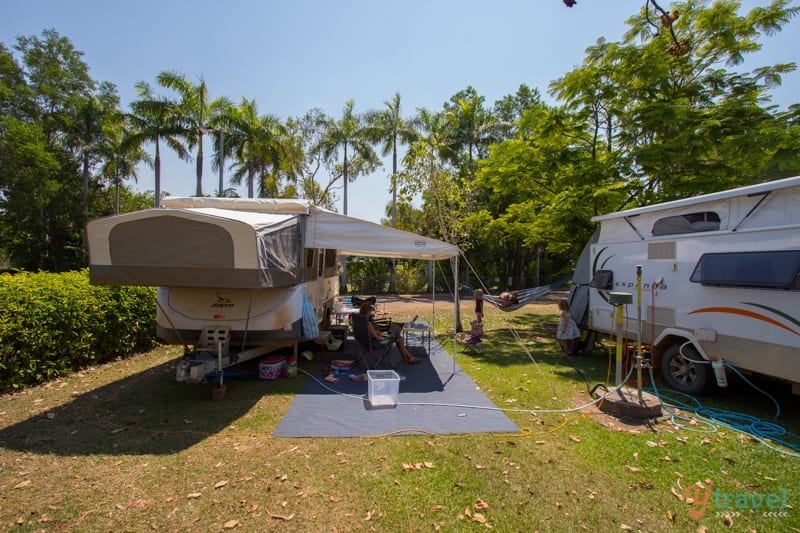
In the Northern side of Kakadu, the Aurora Kakadu Lodge and Caravan Park is one of the most popular places to stay. This is a great place to camp to explore Ubirr and Nourlangie. The Kakadu Lodge and campground here often has evening ranger talks and a great restaurant and pool.
You can browse more accommodation options in Kakadu National Park in the following interactive map:
Final thoughts
After traveling around Australia for 18 months, Kakadu was in my top highlights.
Where else in the world can you come and see towering red rugged escarpments, impressive gorges, floodplains, art galleries thousands of years old, pockets of lush rainforests, billabongs dotted with lotus flowers in the mangroves and lurking crocs, waterfalls cascading into plunge pools?
Whether you’re looking to see wildlife, learn about aboriginal culture and rock art, or run around pretending to be in a Crocodile Dundee movie, you’ll find it all here. Kakadu is a truly special place in Australia and deserves to be explored wholeheartedly.
More Northern Territory Travel Tips
Are you visiting other parts of the Northern Territory? Then you may find the following guides useful:
Pin To Save It On Pinterest
Are you planning on visiting Kakadu National Park? What are you most excited for? Let us know in the comments!


