
The Lycian Way is Turkey’s most iconic long-distance hiking trail, stretching roughly 520 kilometers along the Mediterranean coast between Fethiye and Antalya Province. I’ve walked sections of it myself, and it’s one of those trails that quietly resets your idea of what hiking in Turkey looks like—ancient ruins underfoot, goat paths linking villages, sea views that never quite disappear, and just enough challenge to make every cold drink at the end of the day feel earned.
This guide breaks down what the Lycian Way actually involves today: where it goes, who it’s best for, what you’ll see along the route, the best time of year to hike it, and how to plan a realistic, rewarding experience without over-romanticizing or underestimating the trail. Whether you’re tackling a short section or dreaming about the full route, this is a practical, on-the-ground guide to hiking the Lycian Way in Turkey.
Some people are very energetic. I want to point out that it’s not me, but some people are, and if that’s you, I commend you. Your energetic nature means you get to go out there and see more. If you’re in Turkey, that energetic side will undoubtedly reward you, especially when it comes to hiking the Lycian Way.
Turkey isn’t all about shopping and chilling on the beach. Those are perfect things to do, of course, but there’s so much more to it than that. Turkey is a very outdoorsy country, and if you have a good pair of hiking boots, you’ll find some amazing trails.
One of those is the world-famous Lycian Way, a 520km/323-mile long-distance trail that will show you some of the most spectacular sights along with a hefty dose of history along the way.
So, if you’re feeling the need to experience a little adrenaline, keep reading!
Skip Ahead To My Advice Here!
What Is The Lycian Way? Turkey’s Most Famous Long-Distance Hiking Trail
| Key Fact | Details |
|---|---|
| Total Length | Approximately 520 km |
| Region | Southwestern Turkey (Mediterranean Coast) |
| Typical Duration | 29–45 days (full route) |
| Best Seasons | April–May, September–October |
| Trail Marking | Red and white GR markings |
| Highest Elevations | Mount Tahtalı and inland mountain sections |
Along the south Turkish coastline, you’ll find the Lycian Way, a 520 kilometer (323-mile) long footpath that is a true gem for outdoor enthusiasts and history lovers alike.
The Lycian Way, or Likya Yolu in Turkish, traces its origins back to ancient times. Named after the Lycian civilization that once thrived in this region, the path meanders through jaw-dropping coastal scenery, charming villages, and numerous archaeological sites. Dating as far back as the 3rd century BCE, Lycia’s rich history is evident in the fascinating ruins left behind by the Lycians.
Reviving forgotten trails and ancient paths, the Lycian Way was created in 1999 by a woman named Kate Clow, a British writer and explorer who sought to showcase the beauty and heritage of this remarkable area. This ambitious project not only became Turkey’s first long distance footpath but also one of the most renowned walking trails in the world. Today, the Lycian Way attracts adventurers from all corners of the globe, eager to immerse themselves in the magic of this historical and natural wonderland.
The trail takes you through diverse landscapes, ranging from rugged coastal cliffs to untamed forests and idyllic sandy beaches. You’ll find magnificent vistas, crystal-clear turquoise waters, and fragrant pine forests that stretch as far as the eye can see.
The trail also winds through stunning geological formations, such as the Chimera flames, ancient rock tombs, and the awe-inspiring Mount Tahtalı (also known as the Lycian Mount Olympos).
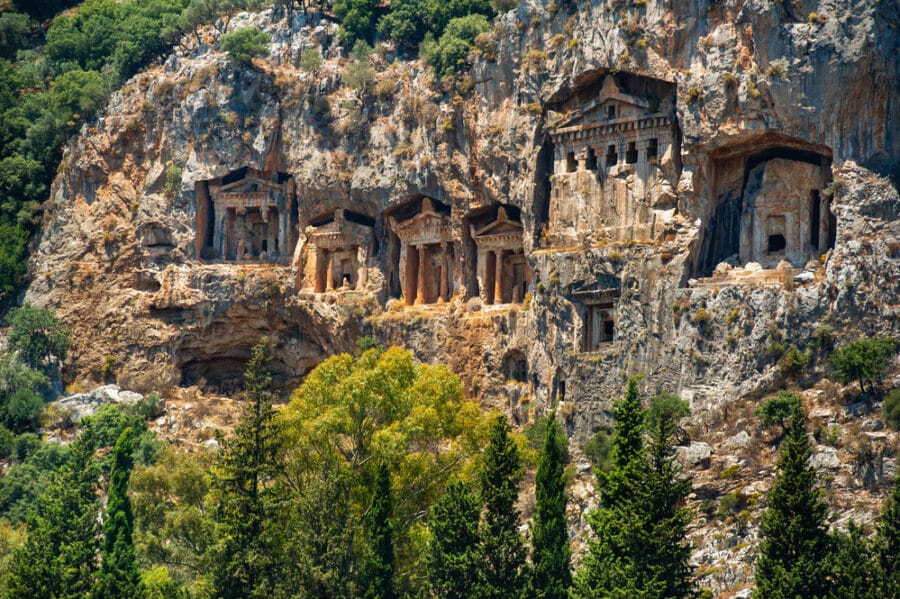
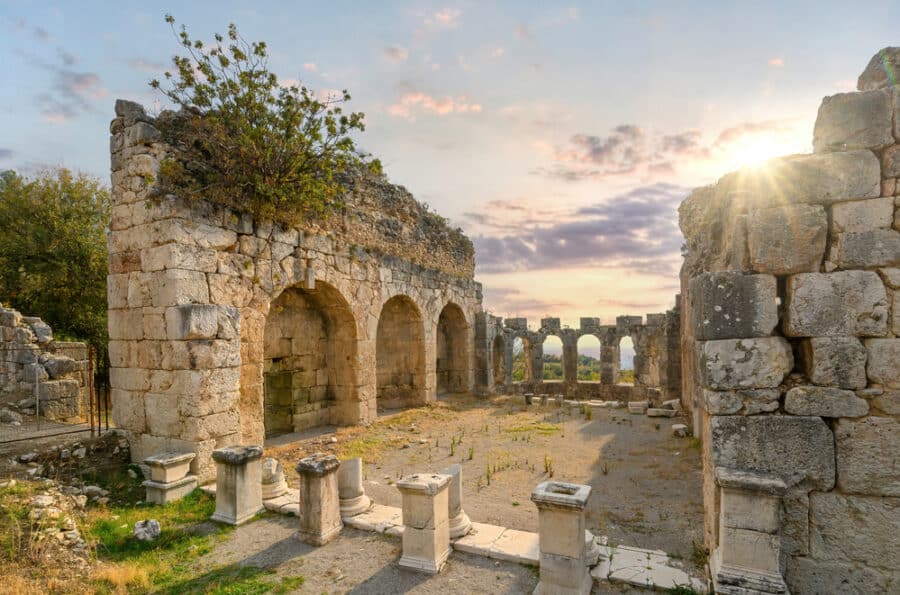
If you’re into history, you’re in luck. Along the route, you will encounter well-preserved Lycian ruins, including Xanthos, Patara, and Myra. Marvel at the grandeur of the ancient cities, witness intricate rock-cut tombs, and stroll through the remnants of amphitheaters and fortresses that once stood as a testament to Lycian civilization’s prowess.
Who Should Hike The Lycian Way? Fitness Levels And Experience
This scenic route is suitable for a wide range of adventurers, from seasoned trekkers looking for a challenge to casual hikers seeking a leisurely escape from nature. While certain sections of the trail can be demanding due to steep ascents and descents, there are also more relaxed portions that offer gentle pathways and tranquil surroundings. Basically, the Lycian Way caters to individuals with different fitness levels and hiking preferences.
Of course, you don’t have to hike all of it either. You can head to the starting point in Oludeniz, walk a short distance until you get tired, and then go back. Then, you can say that you walked some of the Lycian Way! You can probably guess that’s precisely what I did the first time before choosing to be a bit more adventurous after that.
Lycian Way Route: Towns, Villages, And Key Stops
As you travel across Turkey’s stunning Mediterranean coastline between Fethiye to Antalya, the Lycian Way passes through various towns and villages, each offering its own unique charm and cultural heritage.
Here are some notable towns and villages you may encounter along the Lycian Way route:
Ölüdeniz, Fethiye
This is one of the most popular access points to the trail. Fethiye is a vibrant coastal town known for its beautiful harbor, lively markets, ancient ruins like the Lycian rock tombs, and the famous Oludeniz Beach.
One commonly used access point to the trail is near Ovacık, above Ölüdeniz, close to the Babadağ area, famous for paragliding.
Kayaköy

This ghost town is an abandoned Greek village from the early 20th century, featuring ruins listed on UNESCO’s Tentative World Heritage List and a hauntingly beautiful atmosphere. I’d highly recommend stopping here to check out the sights.
Village Of Faralya
Perched atop high cliffs, Faralya offers breathtaking panoramic views of the Mediterranean Sea. It’s an excellent spot for observing butterfly migrations and enjoying the tranquillity of nature.
Kabak
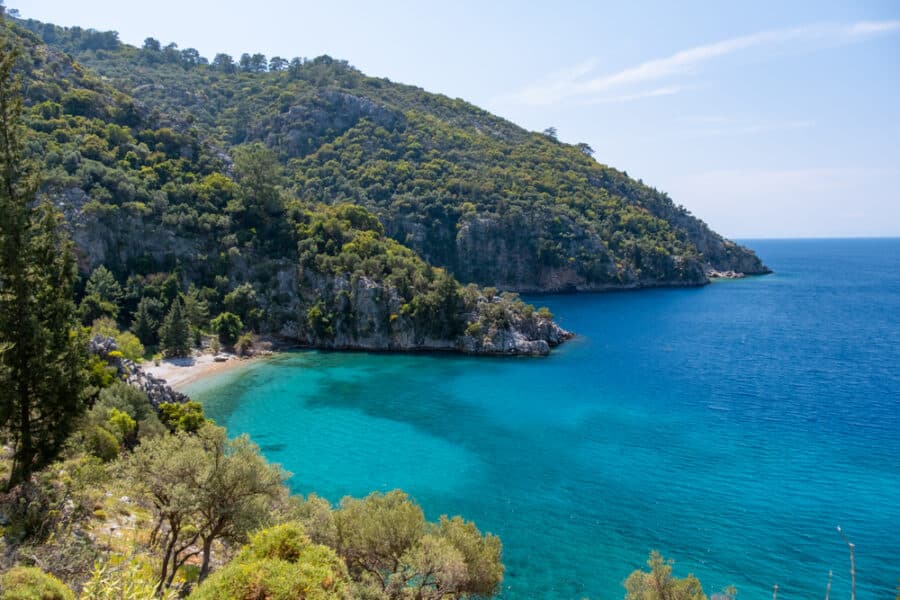
Hidden among lush greenery and turquoise coves, Kabak is known for its pristine beaches, camping spots, and laid-back hippie vibe.
Patara
The ancient city of Patara boasts an impressive 18-kilometer-long sandy beach, well-preserved Roman ruins, and a nesting ground for endangered loggerhead sea turtles.
Kalkan
A charming coastal town, Kalkan is famous for its narrow streets, colorful houses, rooftop restaurants, and lovely marina.
Kaş
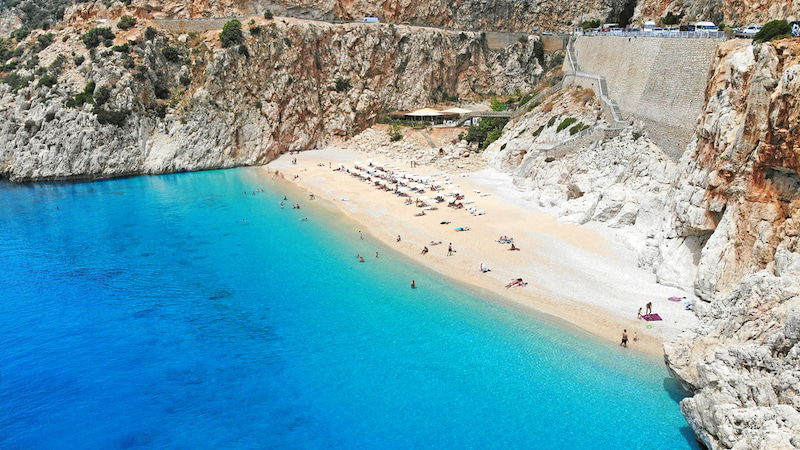
Kaş is a picturesque town offering a mix of historical sites, stunning diving opportunities, boat trips to nearby islands, and vibrant nightlife. Here, you will find world-famous Kaputas Beach, where I definitely recommend stopping for a swim.
Demre
Demre is home to the well-preserved ancient city of Myra, with its famous Lycian rock-cut tombs and the Church of St. Nicholas, the original inspiration for Santa Claus.
Antalya
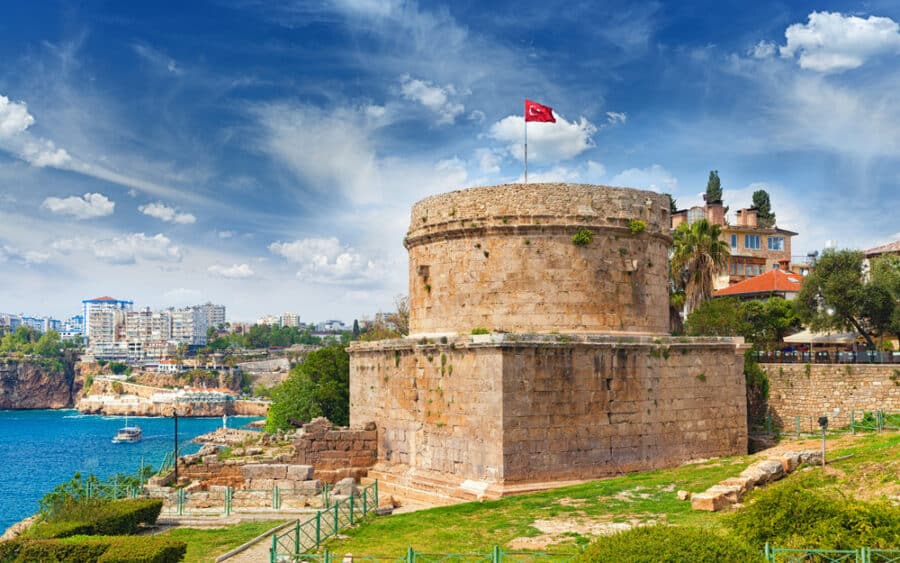
Near Antalya, traditionally ending in the Geyikbayırı or Hisarçandır area of Antalya Province is a bustling city with a rich history, beautiful beaches, a charming old town (Kaleiçi), and plenty of vibrant shopping and dining options.
The trail winds its way through ancient Lycian cities, Roman ruins, Byzantine churches, and remote villages. From the spectacular views of the turquoise Mediterranean Sea to the awe-inspiring landscapes of soaring cliffs, pine forests, and idyllic beaches, this trail showcases nature’s beauty in all its glory.
You can expect a variety of surfaces, including loose rocks, narrow pathways, and occasional muddy sections during wetter seasons. While some stages might require surefootedness and a good level of physical fitness, there are also parts where you can relax and enjoy more accessible trails.
It’s important to note that the Lycian Way is not a manicured or heavily maintained route, which adds to its adventurous appeal.
The good news is that the trail is well-marked with signposts, wooden trail markers, and helpful guidebooks to assist you along the way. Several campsites, guesthouses, and small villages are also available where you can find accommodations and replenish supplies. It’s a good idea to carry enough water and snacks for the day, as well as a sturdy backpack to carry personal belongings.
Overall, the Lycian Way offers a range of experiences, from day hikes to multi-day treks. It’s a versatile trail that can be enjoyed by solo hikers, couples, families, or groups of friends.
Brands We Use And Trust
Best Sights And Landmarks Along The Lycian Way
For me, the best thing about the Lycian Way is the freedom it gives you. You don’t necessarily have to race from sight to sight because the whole thing is a sight in itself. The panoramic views and countryside you move through are enough to give you plenty of photo opportunities and wow moments.
However, there are some notable things you should have on your visit list. Here are my recommendations:
Patara Beach

A couple of hours on Patara Beach is a must-do. This is an approximately 18-kilometer stretch of pristine shoreline. With its golden sand and crystal-clear turquoise waters, it’s the perfect spot to relax and soak up the sun.
Ancient City Of Xanthos
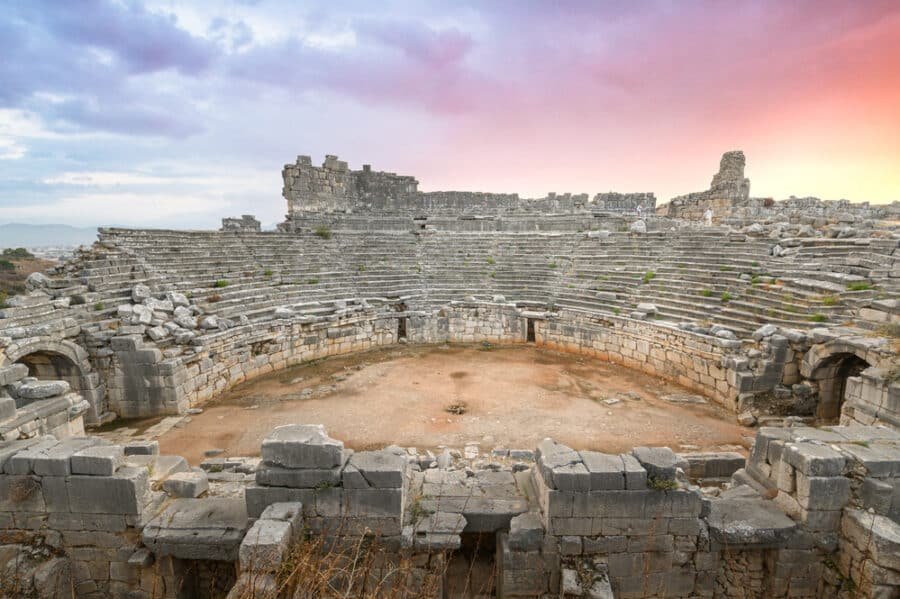
As you wander along the Lycian Way, make sure to explore the ancient city of Xanthos. This UNESCO World Heritage Site is brimming with history, featuring ruins of grand amphitheaters, necropolises, and elaborate tombs. Imagine the stories that unfolded within these ancient walls.
Saklikent Gorge
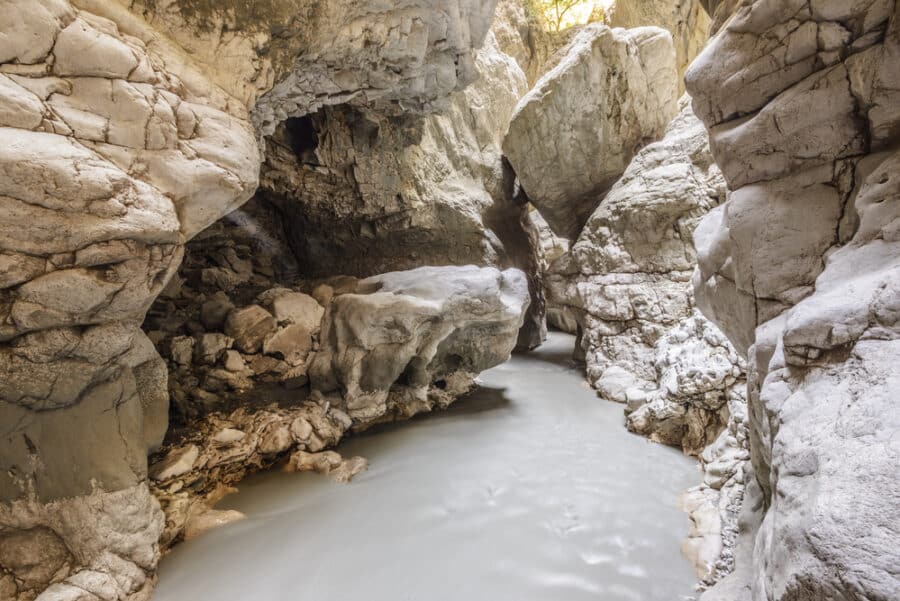
This impressive natural wonder is one of Turkey’s deepest canyons, offering stunning views of towering cliffs and the rushing waters of the Esen River. It’s also probably the coolest place to be during the summer months, for which you’ll probably be grateful. Be sure to bring your camera to capture the sheer beauty of this place!
Butterfly Valley
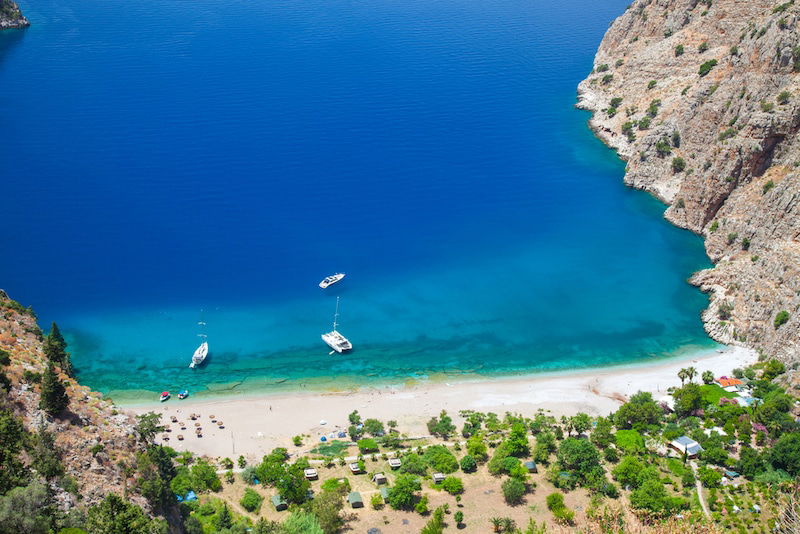
Nestled between two towering cliffs, Butterfly Valley is a hidden gem along the Lycian Way. This tranquil paradise is home to over 80 butterfly species, making it a must-visit spot for nature enthusiasts. Take a leisurely swim in the crystal-clear waters or unwind while surrounded by the lush greenery and cascading waterfalls.
Ancient City Of Myra
No visit to the Lycian Way is complete without a stop at the ancient city of Myra. Explore the well-preserved Roman theatre, rock-cut tombs, and the magnificent Church of Saint Nicholas. Whether you’re a history buff or intrigued by ancient civilizations, this archaeological site will leave you in awe.
Olympos
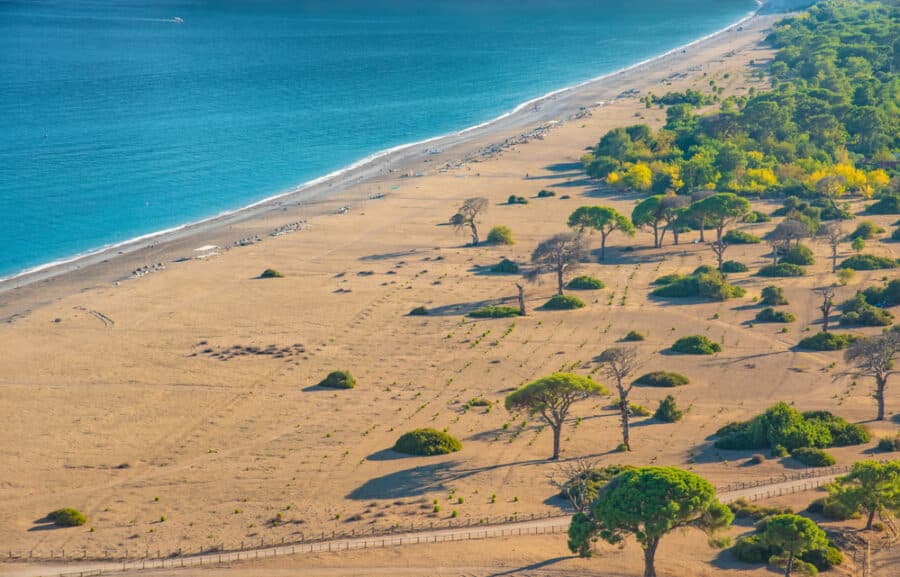
As you approach the end of your journey, make sure to pass by the famed Olympos. This ancient city boasts a unique blend of historical ruins and beautiful beaches. Take a detour to explore the Roman ruins, hike up to ancient tombs overlooking the sea (if you have any energy left), or relax on the picturesque beach.
Remember, the Lycian Way has countless other hidden gems along its path. As you embark on your adventure, embrace the unexpected surprises that come your way.
Where To Stay Along The Lycian Way
It’s essential to plan your accommodation carefully when hiking the entire route, especially during the warmer weather months when the trail can be busy. Luckily, there are a variety of unique and exciting options available.
Traditional Guesthouses
You’ll come across several quaint villages that provide traditional Turkish guesthouses known as “pansiyons.” These accommodations are usually family-run and offer cozy rooms, warm hospitality, and delicious homemade meals. Staying in a traditional guesthouse allows you to immerse yourself in local culture, interact with friendly locals, and experience authentic Turkish life.
A few of my recommendations include:
- The Olive Tree Inn: Nestled amidst a beautiful olive grove, The Olive Tree Inn offers cozy accommodations to rest your head and feet. With its traditional stone architecture and wooden interiors, this guesthouse provides a charming and rustic experience.
- The Lycian Lodge: Situated in a picturesque village, The Lycian Lodge is known for its authentic Lycian atmosphere. The guesthouse features traditional wooden rooms with spectacular mountain views.
- The Mountain View Retreat: As the name suggests, The Mountain View Retreat offers sensational views of the Lycian Mountains. The guesthouse combines traditional architecture with modern amenities to provide a comfortable stay.
Of course, there are countless more, but these are three good options to get you started and give you an idea of what to expect from Lycian Way accommodation.
Camping
If you’re seeking a closer connection with nature, camping is a popular option along the Lycian Way. The trail provides plenty of camping spots, both designated and wild, where you can pitch your tent and enjoy starry nights under the open sky.
Homestays
If you’re seeking an authentic and immersive cultural experience, homestays are an excellent choice. In some villages along the Lycian Way, locals open their homes to travelers, offering a chance to stay with a Turkish family, share meals, and learn about local traditions.
Food & Drink
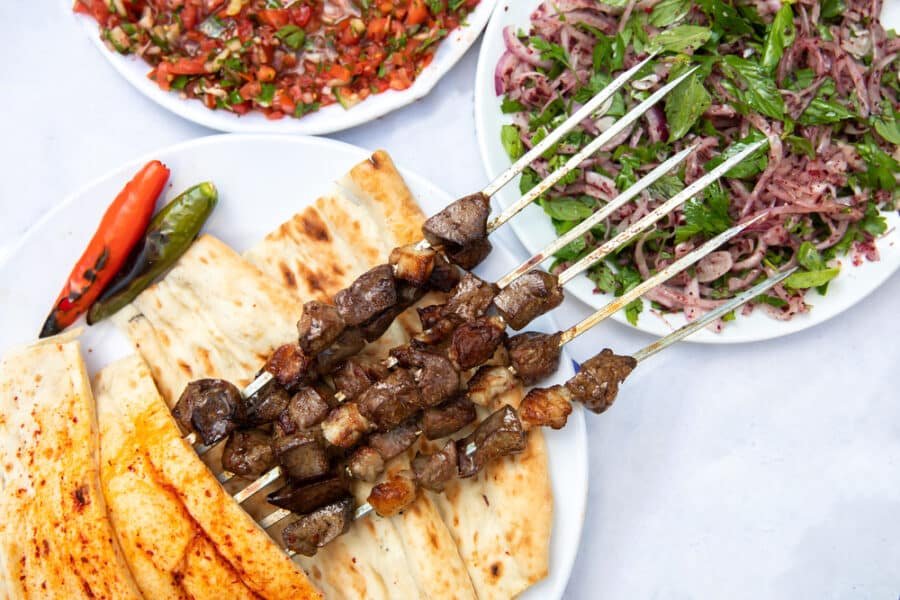
There are many food and drink options along the Lycian Way. Along the way, you can indulge in delicious kebabs, flavorful mezes (appetizers), freshly caught seafood, and delectable baklava for dessert. Don’t forget to try the refreshing ayran, a traditional yogurt-based drink, or the solid and aromatic Turkish tea.
Along the trail, you will encounter charming villages that offer authentic, hearty homemade meals. The warm hospitality of the locals will make your dining experience even more enjoyable.
You’ll also find numerous roadside stalls and bustling markets. Here, you can grab a fresh and juicy orange to quench your thirst or try a gözleme, a traditional Turkish flatbread filled with savory goodness like cheese, spinach, or minced meat. For those who need an extra energy boost, you can find a variety of nuts, dried fruits, and homemade energy bars that are perfect for on-the-go snacking.
There are also several small shops where you can replenish your supplies, but all of this is a lot more accessible during the warmer months.
If you choose to hike the Lycian Way during the winter, you will find far less in the way of food and drink options, so remember to pack accordingly and stock up when you come across a town or village.
Best Time Of Year To Hike The Lycian Way
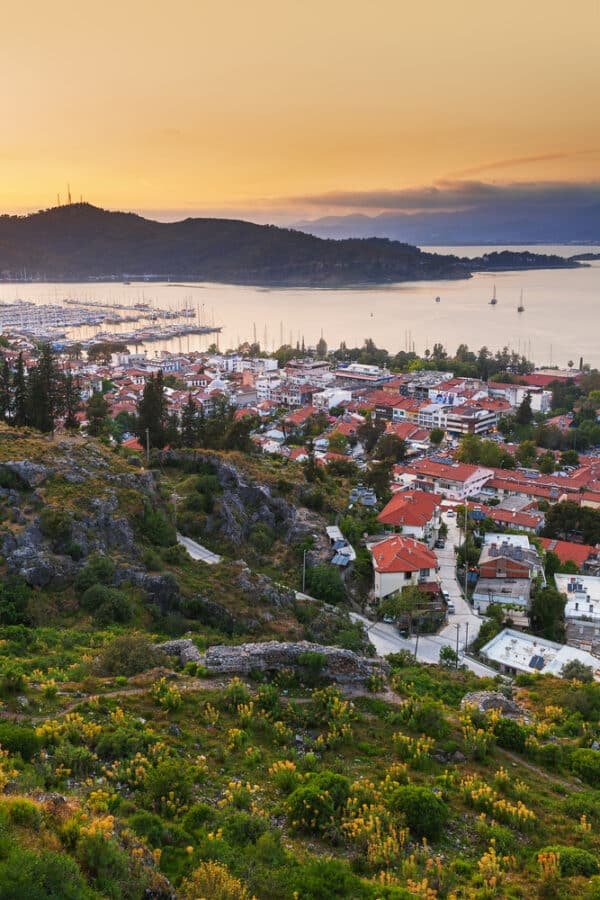
Spring
Springtime, from April to May, is an excellent opportunity to hike the Lycian Way, and this is the time I recommend the most. During this period, temperatures are quite pleasant, ranging from mild to warm, making it comfortable for extensive hiking. You can expect averages in the low to mid-20s during the day, but evenings do drop quite chilly.
At this time, the Lycian coast bursts into life with vibrant wildflowers, so it’s an excellent time for photography. Of course, springtime ensures lower visitor numbers compared to the summer months, so you can fully appreciate the tranquil beauty of the landscape without having to move out of someone’s way every five minutes.
Summer
On the other hand, if you prefer warmer weather and the chance to take a refreshing dip in the turquoise waters, hiking the Lycian Way in the summer, specifically from June to August, might be your ideal choice. However, it’s important to note that temperatures can soar during these months, reaching highs of 40°C. Personally, I’d avoid these hottest months; yes, the weather is fantastic, but it’s incredibly tiring.
If you decide on a summer trip, starting your hikes early in the morning or late in the afternoon will help you avoid the scorching midday heat.
Additionally, summer is the peak tourist season, so be prepared for larger crowds and potentially busier trails. Also, there isn’t a whole lot of shade along the trail, so definitely take a hat and plenty of water.
Autumn
Autumn, from September to October, offers a middle ground if you’re seeking a balance between favorable weather conditions and fewer tourists. The temperatures start to cool down, providing a comfortable climate for long days of hiking—you can expect mid to low 20s as the months roll on.
The summer crowds begin to disperse, allowing you to explore the trail at a more leisurely pace, immerse yourself in the surroundings, and interact with locals along the way. Another advantage of hiking in autumn is the stunning transformation of the trees as they gradually transition into vivid shades of golden orange and fiery red.
Winter
If you are a more adventurous hiker and enjoy a unique experience, tackling the Lycian Way during the winter months, from November to March, could be your cup of tea. However, it is essential to note that winter brings cooler temperatures, occasional rainfall, and even some snowfall in the higher elevations. Trails might be muddy and slippery, so proper gear, including waterproof shoes and warm clothing, is essential.
For sure, hiking during this time offers solitude and a chance to witness the landscape in a different light. The crisp air and snow-covered mountain peaks will provide a magical touch to your journey. However, there may be a lot less availability in terms of accommodation and food, so plan ahead very carefully. I’d say that winter hiking is really only for the very experienced.

No spam. Unsubscribe at any time.
Essential Tips For Hiking The Lycian Way

Before you don your hiking boots and set off along the Lycian Way, here are my top ten tips:
1. Plan And Prepare
Before embarking on the Lycian Way, research the route thoroughly, understand the difficulty level of the trail sections, and gather all necessary equipment, such as sturdy hiking boots, clothing layers, a map, a compass, and enough food and water for the duration of your hike. You can never be too prepared!
2. Start With Shorter Sections
If you’re new to hiking or have limited abilities, consider beginning with shorter and more manageable sections of the Lycian Way. This way, you can gradually acclimate to the trail and assess your comfort level before committing to longer portions.
3. Listen To Your Body
Pay attention to how your body feels during the hike. If you’re feeling tired or experiencing pain, it’s important to rest and take breaks as needed. Pushing yourself too hard can lead to exhaustion or injuries, which can ruin your hiking experience.
4. Pace Yourself
The Lycian Way hike in Turkey offers a variety of terrains, from steeply ascents to rocky descents. It’s essential to pace yourself accordingly, especially during uphill sections. Take small steps, maintain a steady rhythm, and don’t be afraid to take breaks to catch your breath.
5. Use Trekking Poles
Trekking poles can provide stability and support while hiking, especially on uneven terrains. They help distribute your body weight and lessen the strain on your knees and joints, allowing you to hike more comfortably and with reduced risk of injury.
6. Carry Emergency Supplies
Safety should be a priority. Pack a basic first aid kit, a whistle, a headlamp, a lighter, and a fully charged phone in case of emergencies. It’s always better to be prepared for the unexpected.
7. Stay Hydrated And Refuel
Remember to drink enough water during your hike to stay adequately hydrated, especially in hot weather. Carry extra water bottles or a water filtration system to ensure a continuous supply. Also, pack energizing snacks like nuts, dried fruits, and energy bars to keep your energy levels up.
8. Protect Yourself From The Sun
The Lycian Way offers stunning coastal views but also has very little shade. Protect your skin by wearing a hat, sunglasses, and sunscreen with a high SPF. Additionally, consider wearing lightweight, breathable clothing that covers your arms and legs to minimize sunburn and heatstroke risks.
9. Respect The Environment
The Lycian Way is known for its pristine beauty, and it’s essential to keep it that way. Follow the principles of Leave No Trace, which include packing out all your garbage, sticking to established trails, and avoiding disturbing wildlife or plants.
10. Enjoy The Journey
Last but not least, remember that hiking the Lycian Way is not just about reaching the destination. Take your time, connect with nature, and truly enjoy the journey.
Lycian Way FAQs
LYCIAN WAY FAQS
What is the Lycian Way?
The Lycian Way is a long-distance hiking trail in southwestern Turkey that follows ancient paths through the historic region of Lycia. It runs along the Mediterranean coast and passes through archaeological sites, mountain landscapes, and small villages.
How long is the Lycian Way?
The Lycian Way is approximately 520 kilometers long, depending on route variations and detours.
How long does it take to hike the Lycian Way?
Most hikers take between 29 and 45 days to complete the full trail, depending on pace, rest days, and side trips.
Do you have to hike the entire Lycian Way?
No. Many hikers choose to walk only selected sections of the trail, using towns like Ölüdeniz, Kaş, or Demre as entry and exit points.
Is the Lycian Way well marked?
Yes. The trail is marked with red-and-white waymarks following the international GR hiking standard.
When is the best time to hike the Lycian Way?
The best conditions are typically in spring (April–May) and autumn (September–October), when temperatures are moderate and services along the route are more widely available.
Is hiking experience required?
Prior hiking experience is helpful but not essential. Some sections are demanding, while others are suitable for relatively casual hikers.
Are there accommodations along the Lycian Way?
Yes. Accommodation options include village guesthouses, small pensions, campsites, and occasional homestays, depending on the section and season.
Can you hike the Lycian Way independently?
Yes. Most hikers complete the Lycian Way independently using trail markings, guidebooks, or GPS tracks.
Is camping allowed along the Lycian Way?
Camping is common along the trail, particularly outside towns and villages. Facilities vary by location.
MORE RELATED TRAVEL BLOGS