Last Updated on February 23, 2026
When I first became a digital nomad over 15 years ago, the landscape was wildly different. There were no digital nomad visas, co-working spaces were rare oddities, and explaining to a border agent that I worked online usually resulted in a confused stare. All I needed was a WiFi connection and my laptop, and I could literally work from anywhere.
Fast forward to today, and while the world has become more accessible, the logistics of moving my family across borders have become much more complex. It’s not just about me and my backpack anymore. Now, I have to consider school curriculums, reliable pediatric healthcare, my husband’s work time zone, and finding a home base with a community and kid-friendly activities.
If you are dreaming of making 2026 the year your family finally hit the road, you need a system. Over the last 15 years, I have tested dozens of platforms, apps, and services. Here are the 20 resources that actually power our life as a digital nomad family, and exactly why I trust them.

The Engine: Remote Work & Security
Securing a remote income is the fuel for this lifestyle. We’re both very lucky to have fully remote jobs that allow us to work from anywhere – I’ve been a travel writer and blogger for the last 15 years, and my husband is a software engineer who works for a Dutch company. He worked as a programmer for at least 10 years before finding one that was happy to let him work 100% remote.
1. WeWorkRemotely.com
If you’re on the search for a remote job, I recommend checking out We Work Remotely, the biggest search engine for remote jobs. Unlike standard job sites that list remote jobs that actually require you to live in a specific state, WWR focuses on truly location-independent roles. The vetting is high quality; I’ve found that companies posting here understand the nomad culture and don’t micromanage.
2. FlexJobs
I hate paying for job boards, but FlexJobs is the exception. I paid the subscription fee when I was transitioning my career because their team manually screens every single listing. When you are a busy parent, you don’t have time to sift through scams or multi-level marketing schemes disguised as “jobs.” If you are looking for part-time or flexible hours to work around childcare, this is the safest place to look.

3. LinkedIn (The “Remote” Filter)
It sounds obvious, but most people use LinkedIn incorrectly. Many editors found me on Linkedin and I’ve been commissioned for a lot of writing projects on this platform. Make sure your Linkedin profile is updated and optimize it to be remote capable. To find remote jobs on Linkedin, use the specific “Remote” filter in the jobs section. I use the platform to network with other travel writers and see who they are working for. Often, the best way to find a nomad-friendly company is to see where other nomads are already employed.

4. Upwork
This is where many freelancers start building their portfolio. I use Upwork to hire designers when I need help with my media kit, or virtual assistants to work on my blog.. If you are a writer, virtual assistant, or graphic designer, you can start here today.
My tip: Don’t compete on price. Compete on being the most reliable person in the room.

5. World Time Buddy
This simple tool has saved my reputation more times than I can count. When you are in Vietnam, your client is in New York, and your developer is in London, scheduling a Zoom call requires mental gymnastics. World Time Buddy visualizes the overlap. I use it to protect my family time — I can clearly see that a 4 PM call for my client is 4 AM for me, allowing me to set boundaries and say “no” before I accidentally commit to a sleepless night.

6. Moonlock
Our laptops are our livelihood; if it goes down, we don’t eat. We use Moonlock, a great antivirus for Mac. When we are hopping between Airbnbs and cafes, connecting to random, unsecured Wi-Fi networks is a huge risk. Moonlock scans for malware or vulnerabilities.

The Planning & Logistics Phase
Before we book a single flight, I spend weeks in the research phase. I need to know that we can afford the destination and, more importantly, that we are legally allowed to be there.
7. Numbeo
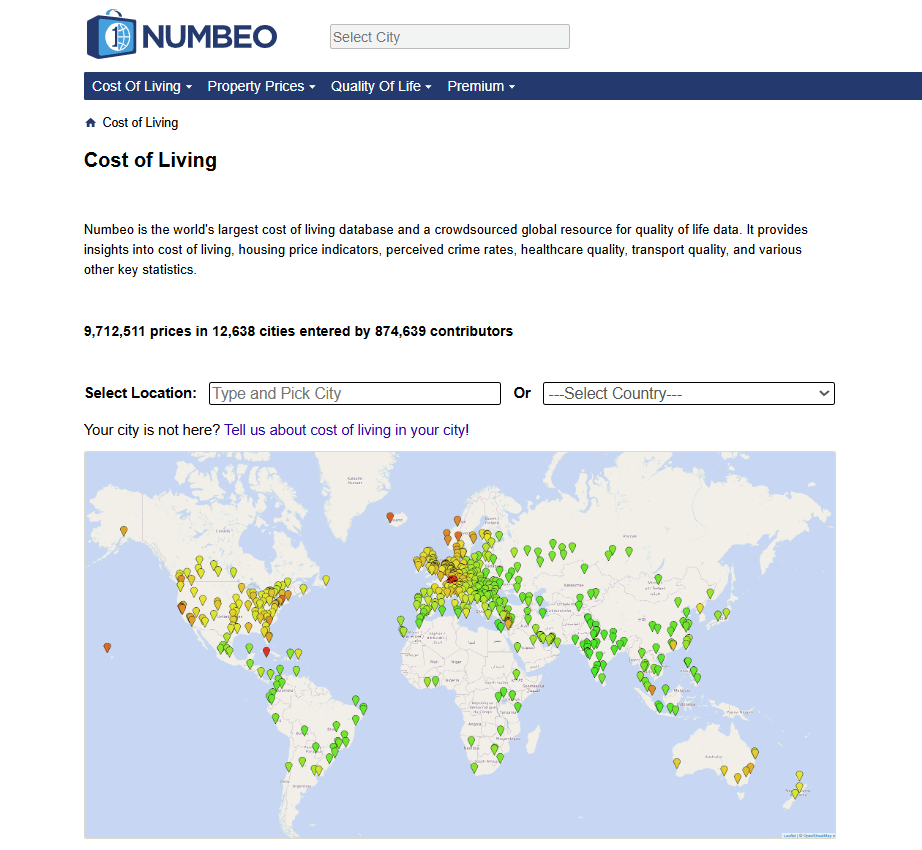
To decide where we’ll set up our next homebase, I use Numbeo because it provides hard data. When we moved from Mexico to South Africa, I ran a side-by-side comparison. I look specifically at the “Market” section to see the price of a liter of milk, a loaf of bread, and a month of high-speed internet. As a parent, I also make sure to check the “Health Care” and “Safety” indices. Knowing the crime stats of a specific city gives me the peace of mind to book that one-way ticket.
8. VisaList.io
The post-covid travel world is a labyrinth of red tape. I used to spend hours cross-referencing embassy websites, but VisaList visualizes everything. I simply put in my passport information, and it color-codes the world map. It’s been a lifesaver for planning where we can go for at least 6 months and how long we can stay at each place.

9. Wise
If you are still using your home bank card abroad, you are likely hemorrhaging money on hidden fees. I’ve been using Wise for years to hold multiple currencies simultaneously. I have a Euro account, a USD account, and a British Pound account all in one app. When I get paid by a client in the US, I receive it in dollars and convert it to the local currency at the real exchange rate, not the inflated bank rate. It saves us hundreds of dollars a year — money that goes toward family experiences rather than bank fees.

10. Bookaway
If you’ve ever tried to negotiate a bus ticket in Senegal or figure out which bus to take in Uzbekistan using only hand signals, you know the stress of local transit. With a child in tow, we no longer just show up to a bus station only to find the seats are sold out. I use Bookaway to book ground transportation — buses, ferries, and private vans — in advance. Having a digital ticket on my phone beats haggling with a tour operator any day.

Schooling & Education
The fear of neglecting our daughter’s education was our biggest hurdle. But we found that worldschooling, combined with the right digital tools, actually offers a richer education than a four-walled classroom.
11. International Schools Database
There are seasons where we want to stay put for a year, and in those times, we opt for traditional schooling. International Schools DB has a great database of international schools. I can filter by city — be it Lisbon, Cape Town, or Mexico City — and see tuition fees, curriculum types (IB, British, American), and location maps. It’s vital for budgeting, as international school fees can range from affordable to astronomical.

12. Maevious
We currently use Maevious to homeschool our daughter.It’s one of the top UK-based online schools, and it has been a game-changer for us. It offers live lessons with real teachers, which gives our daughter the structure she needs. I love it because it removes the pressure from me to be the teacher. Her classmates stay the same whether we are in Cape Town or Addis Ababa.

13. Outschool
While Maevious handles the core curriculum, we use Outschool for the fun stuff. It’s a marketplace of live online classes for kids. My daughter has taken marine biology classes and coding workshops. It’s a great way to let her pursue niche interests that a traditional school might not offer, and it buys me an hour of quiet focus time to get work done.

Community & Sanity
Isolation is the number one reason nomad families quit. You cannot do this alone. We prioritize finding community just as much as we prioritize finding Wi-Fi.
14. WorldSchooly.com
Before we choose a destination, I check WorldSchooly. It’s a massive directory of worldschooling hubs and communities. I look for the “Hubs” — cities where families congregate. If a destination doesn’t have a listing here, we usually skip it. This site helps us land in places where playdates are built-in, rather than having to hunt for them.

15. Worldschool Pop-Up Hubs
If you are new to worldschooling and are afraid of your kids not socializing, book one of these. A Pop-up Hub is a structured gathering of families in a specific location for 4-6 weeks. You pay a fee, and the organizers handle the itinerary, field trips, and teen hangouts. It eliminates the awkwardness of trying to make friends at a playground because everyone is there for the same reason.

Housing: Living Like a Local
Airbnb has become prohibitively expensive for monthly stays. To make this lifestyle sustainable, I’ve learned to use the platforms the locals use.
16. Idealista (Europe)
For those planning to move to Southern Europe (Spain, Portugal, Italy), I recommend using Idealista to find long-term rentals. It’s the leading real estate site in the region. I use the map feature to draw the exact neighborhood I want.
Pro Tip: I look for listings that have been sitting for a while and contact the agent via WhatsApp. Even if they ask for a one-year lease, I’ve found many landlords are willing to do 1-6 months during the off-season if I offer to pay upfront.

17. Property24 (Africa)
We’re currently living in Cape Town, and we found our apartment on Property24. When browsing for homes in Cape Town, I specifically look for “Security Estates” or complexes. This platform lets me filter for safety features, which is non-negotiable for us in that region. They usually rent out properties for a minimum of 6 or 12 months.

18. Lamudi (Asia & Latin America)
In developing markets like the Philippines, Indonesia, or Mexico, housing can be chaotic. Lamudi brings some order to the chaos. Even if I don’t book through the site, I use it for “price discovery.” I check what a local pays for a 2-bedroom apartment in Mexico City so that when I negotiate on Facebook Marketplace or Airbnb, I know if I’m being “gringo-priced.”

19. TrustedHousesitters
If you’re experienced in petsitting, TrustedHousesitters allows you to stay in incredible homes for free in exchange for caring for pets. We’ve stayed in villas that we could never afford to rent, just by caring for a dog. For families, it’s amazing because you step into a fully functional home with toys, a kitchen, and a yard, rather than a sterile hotel room.

Connectivity & Health
Finally, the two things that can ruin a trip faster than anything else: bad internet and bad health.
20. Airalo
I am done with the stress of hunting for a SIM card kiosk at the airport while my child is melting down from jet lag. I now use Airalo to buy eSIMs before we even take off. I install the eSIM while I’m on the plane, and the moment we land, I have data. It allows me to call an Uber and check Google Maps immediately. It’s slightly more expensive than a local SIM, but the convenience is worth every penny.

Bonus: SafetyWing
I couldn’t finish this list without mentioning insurance. Traditional travel insurance often doesn’t cover you if you don’t have a “return ticket” or a permanent home. SafetyWing was built by nomads for nomads. It doesn’t matter what nationality you hold, you are covered for as long as your trip lasts. I have the Nomad plan, an annual insurance plan where I pay just $70/month and can get covered for all trip cancellations, delays, loss of luggage or emergencies. Knowing my family is covered no matter where we are is the ultimate safety net.
Is 2026 Your Year?
People often tell me I’m brave for living this way. I’m not brave; I’m just well-prepared. The difference between a chaotic trip and a life-changing lifestyle is simply having the right resources in your pocket.

Further Reading
Thanks so much for reading this far! These are my go-to resources for digital nomad families, tools and guides that make living, working, and traveling abroad with kids easier and more practical. I hope our experiences have given you useful insights and maybe even inspired your own adventure.
Which of these resources have you tried or heard about? Which ones do you think you would use the most? Share your thoughts in the comments and I’ll be happy to answer any questions.
If you want to learn more about the digital nomad lifestyle with your family, you might enjoy these articles:
Inspired? Pin It!