The Tower of London isn’t just another historic landmark in central London. The first thing that struck me when I walked through the gates was how enclosed it felt, as if the noise of the city had been left outside the walls.
I visited with a friend, expecting to see the Crown Jewels and tick off another famous attraction. Instead, I found myself standing on Tower Green quietly reading about Anne Boleyn’s execution and realising how much of Britain’s history unfolded within these stone walls.
I’ve visited quite a few royal sites across the UK, but the Tower feels different. It’s not polished palace elegance. It’s fortress walls, political drama, imprisonment, and ceremony all layered together.
If you’re wondering whether it’s worth adding to your London itinerary, my honest answer is yes, but only if you give it the time it deserves.
Let me walk you through what it’s actually like to visit and how to make the most of it.
🏰 TOWER OF LONDON AT A GLANCE
👍🏼 Is it worth visiting? Yes, especially if you’re interested in British royal history and the Crown Jewels.
⏰ How long do you need? 3 to 4 hours to explore properly.
⏳ Best time to visit: Arrive at opening time to avoid longer queues for the Crown Jewels.
✨ Main highlights:
- The Crown Jewels
- The White Tower and royal armour
- Tower Green execution site
- The Bloody Tower and the Princes in the Tower
- The resident ravens
🎟️ Do you need a tour? Yes! join a Yeoman Warder tour for context. Recommended, especially during weekends and school holidays. Check ticket availability here.
Is the Tower of London Worth Visiting?
Yes, and I don’t say that lightly.
London is full of historic attractions. Some are beautiful. Some are iconic. Some are worth a quick photo and little more. The Tower of London sits in a different category.

It’s not just a landmark. It’s where power was enforced, challenged, and sometimes violently removed.
Walking through the complex, you’re not moving from room to room like you would in a palace. You’re stepping through centuries of political tension. The Norman fortress. The Tudor prison. The execution site. The armoury. The Crown Jewels vault. Each layer builds on the last.
What makes it compelling isn’t just age. It’s continuity.
The monarchy still exists. The Crown Jewels you see inside are still used in coronations. The Yeoman Warders still guard the site. The ravens are still protected under royal decree.
That connection between medieval history and modern Britain gives the Tower a weight that feels different from other attractions.
When I visited, I didn’t just feel like I was learning about history. I felt like I was standing inside decisions that shaped the country.
That’s why it’s worth visiting.
It’s immersive. It’s atmospheric. And if you give yourself time to explore properly, it’s one of the most historically significant experiences you can have in London.
That said, it does require time and energy. This isn’t a light wander. It’s a place where you pause, read, absorb, and reflect.
If you’re building a London itinerary and want one site that delivers depth, scale, and genuine historical context — this is it.
What It’s Actually Like Inside the Tower
The first thing to understand is that the Tower of London isn’t one building.
It’s a fortress complex.
Once you’re through the entrance, you’re inside walls that date back nearly 1,000 years. Stone towers rise around you. Narrow staircases wind upward. The River Thames sits just beyond the battlements.
It feels enclosed, but not cramped.
You move between spaces rather than through corridors. Courtyards open up unexpectedly. One minute you’re reading about medieval armour inside the White Tower. Next, you’re standing outdoors on Tower Green, where executions once took place.
That contrast stays with you.
What surprised me most was how much ground there is to cover. From the outside, it looks compact. Inside, it unfolds slowly.
You’ll find:
- The White Tower with royal armour and weaponry.
- The Crown Jewels inside the secure Jewel House.
- Medieval palace rooms.
- Tower Green and the execution memorial.
- Walkable battlements with views toward Tower Bridge.
- The resident ravens are moving freely around the grounds.
It’s not linear. You choose your route.
And because of that, it doesn’t feel like a staged museum experience. It feels layered and self-paced.
If you enjoy wandering and discovering details at your own rhythm, you’ll appreciate this. If you prefer a structured walk-through, joining a Yeoman Warder tour at the start helps anchor everything.
You could easily spend three hours here without realising it.
Seeing the Crown Jewels in Person
For many visitors, the Crown Jewels are the emotional and historical centre of the Tower of London.
When I visited, we waited around 10 to 15 minutes before entering the Jewel House. It wasn’t a long queue, but once inside, the atmosphere shifts immediately.
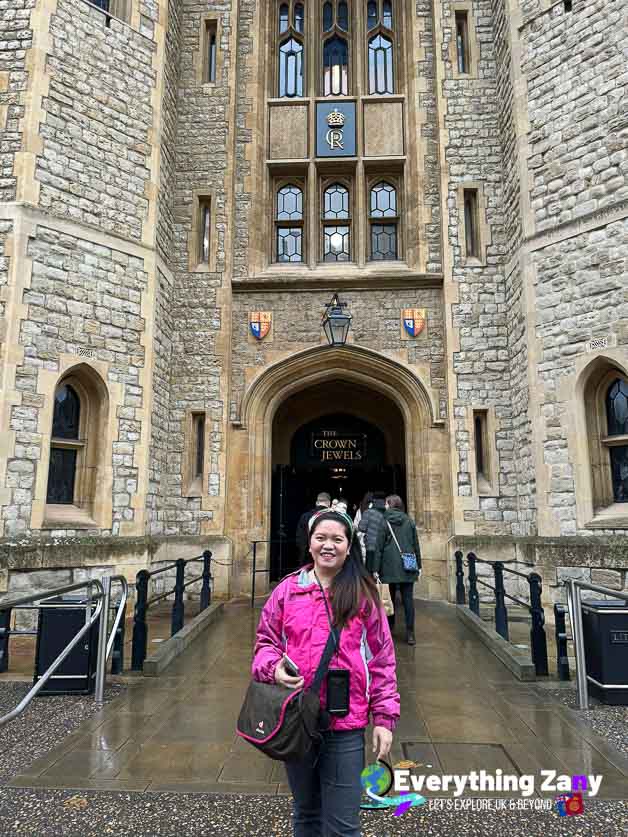
The lighting is dim. The space feels enclosed. The crowd moves slowly in near silence. You’re guided through an exhibition that explains not just what the regalia is, but what it represents — sovereignty, faith, authority, and constitutional continuity.
This isn’t decorative treasure.
It’s state symbolism.

Sir Robert Viner, 1st Baronet, Public domain, via Wikimedia Commons
By the time you reach the central vault, you’ve already read about coronation rituals and the role each piece plays. Then you see them in person.
The Imperial State Crown.
The Sovereign’s Orb.
The Sovereign’s Sceptre with Cross, set with the Cullinan I diamond — the largest clear-cut diamond in the world.
The Cullinan diamonds were discovered in South Africa in 1905 and later presented to King Edward VII. The Koh-i-Noor, now set in Queen Elizabeth The Queen Mother’s Crown, carries an even longer and more complex history tied to India and the expansion of the British Empire.
These stones are not neutral objects. They sit within conversations about empire, colonialism, and power. Seeing them in person forces you to confront that layered history — both the grandeur and the controversy.
Read More: St. Edward’s Crown: A Symbol of British Royalty, Grandeur and Regal Tradition
Living in the UK as a naturalised citizen, I experience that duality personally. I deeply appreciate British history and the monarchy’s constitutional role today. At the same time, I’m aware that the regalia reflects centuries of global entanglement.
Standing there, reading the provenance of each gemstone, I didn’t feel like I was just looking at royal treasure. I felt like I was looking at a timeline of Britain’s relationship with the world.
That weight became even more real after watching the coronation of King Charles III on television. For my generation, it was the first coronation we witnessed firsthand. Seeing those same crowns and sceptres used in Westminster Abbey — then standing metres away from them at the Tower — creates a powerful continuity.
These aren’t relics from a closed chapter of history. They were used in 2023. They remain part of the constitutional framework of the United Kingdom today.
The central display moves visitors along a slow walkway. It can feel intense because the room is dark and often crowded. You want to linger longer than you can. You can’t take photos.
But perhaps that’s appropriate.
It forces you to absorb the moment properly.
Whether you admire the monarchy, analyse it critically, or simply appreciate the craftsmanship, seeing the Crown Jewels in person is undeniably powerful.
For me, it was one of the most thought-provoking parts of the entire visit.
If seeing the Crown Jewels is your priority, booking an early timed entry helps avoid the heaviest queues.
Join the Yeoman Warder Tour First
If there is one practical decision I’d strongly recommend at the Tower of London, it’s this:
Join a Yeoman Warder tour as soon as you enter.
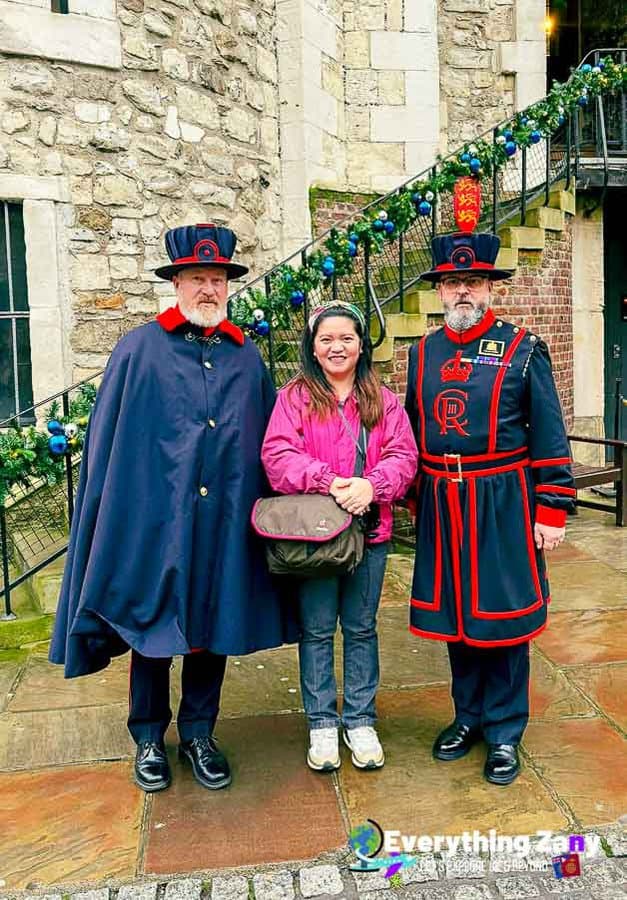
The Yeoman Warder, often called Beefeaters, aren’t just guides. They are serving or former members of the British Armed Forces with decades of service. That detail alone changes the tone of the storytelling.
You’re not listening to scripted theatre.
You’re listening to someone who understands the institution from the inside.
Our tour began near the main entrance courtyard. Within minutes, the Warder had the entire group laughing — then suddenly silent — as he moved between humour and the brutal realities of Tudor justice.
He pointed toward Tower Green and described the executions of Anne Boleyn and Lady Jane Grey with a mix of gravity and dry wit. It never felt sensationalised. It felt contextual.
That balance is what makes the tour worth it.
Without the tour, you can absolutely explore independently. But you’d miss the narrative thread that ties the White Tower, the prison cells, and the execution site together.
The Warders don’t just tell stories. They frame the Tower as a living institution.
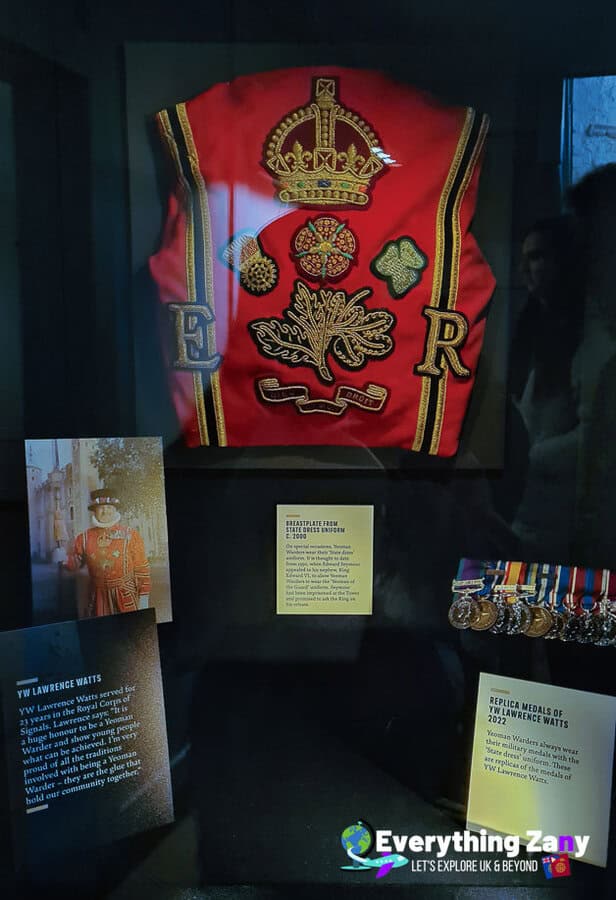
You begin to see it not only as a medieval fortress, but as a symbol of state power that still functions today — including its ceremonial role in safeguarding the Crown Jewels.
Tours run regularly throughout the day and are included in your admission ticket. They last around 45 to 60 minutes.
If you prefer structure before wandering on your own, this is the perfect starting point.
The Beefeaters are also known for participating in ceremonial events like the Ceremony of the Keys. This is a tradition dating back over 700 years! Every night, the Tower is secured in a ceremonial locking up, a ritual that you can witness, a real treat for anyone fascinated by history and pageantry.
If you fancy witnessing this great tradition, you can book your Tower of London after-hours and Key Ceremony tour in advance via Get Your Guide here.
Exploring the Different Towers and Historic Spaces
The White Tower

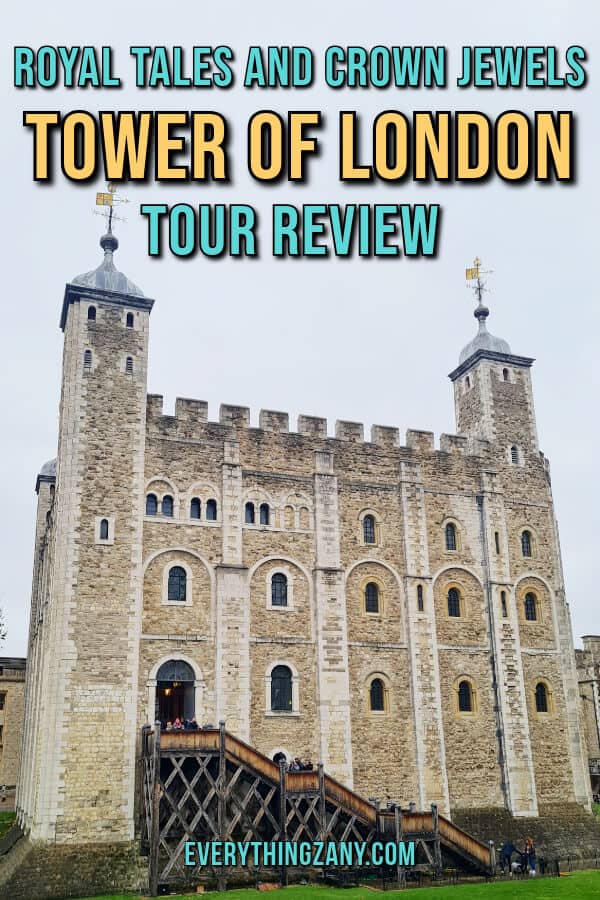
The White Tower is the original heart of the fortress, built by William the Conqueror in the 11th century to assert Norman control over London.
From the outside, it feels imposing. Thick stone walls. Narrow defensive windows. Elevated and dominant.
It wasn’t designed to be beautiful. It was designed to send a message.

Inside, the scale surprises you. You climb worn stone staircases that feel steep and defensive rather than grand. The rooms hold displays of royal armour, including pieces associated with Henry VIII. Seeing the size and structure of that armour makes Tudor history feel physical rather than distant.
But what fascinated me most wasn’t just the weaponry.
It was the medieval reality.
You can still see the garderobes — toilets built directly into the stone walls. There was no sanitation system as we know it. Waste dropped into pits below or directly into the moat. It’s a small architectural detail, but it shifts your perception immediately.

We often imagine castles as romantic or regal. Standing inside the White Tower reminds you they were functional fortresses first. Comfort was secondary. Survival and control came first.
The White Tower represents authority and conquest.
But to understand the cost of that authority, you don’t have to walk far.
Tower Green
Just beyond the White Tower lies Tower Green, the private execution site reserved for high-ranking prisoners.
This wasn’t where ordinary traitors were executed. Public executions took place on Tower Hill, outside the fortress walls. Tower Green was used for nobility — where discretion mattered.
This is where Anne Boleyn was executed in 1536.
Catherine Howard.
Lady Jane Grey.
Standing there, the space feels surprisingly modest. A simple glass memorial marks the site. No dramatic staging. Just open grass and quiet.
What makes it powerful is the restraint.
You’re not overwhelmed by spectacle. You’re left with stillness — and that stillness allows the history to sink in.
It’s difficult not to imagine the tension of that morning in May 1536 when Anne Boleyn, once crowned Queen of England, walked toward the scaffold.
Her journey to that moment began days earlier.

She entered the Tower through Traitors’ Gate, the riverside entrance from the River Thames. Prisoners accused of treason were often transported by boat beneath the archway, directly into the fortress.
Seeing Traitors’ Gate in person changes your understanding of imprisonment here. It’s one thing to read that someone was “sent to the Tower.” It’s another to stand by the water and imagine arriving by river, knowing your fate was uncertain.
That physical route — from the Thames to imprisonment, and for some, to Tower Green — connects the space emotionally.
The Tower isn’t just a collection of historic buildings.
It’s a stage where power shifted abruptly.

Walking between Traitors’ Gate and Tower Green, you begin to understand how close proximity shaped destiny. Within these walls, elevation and downfall were separated by metres.
That contrast — authority inside the White Tower, imprisonment at Traitors’ Gate, execution on Tower Green — is what makes the Tower feel layered rather than theatrical.
The Bloody Tower
The Bloody Tower is one of the most talked-about buildings inside the Tower complex — and for good reason.
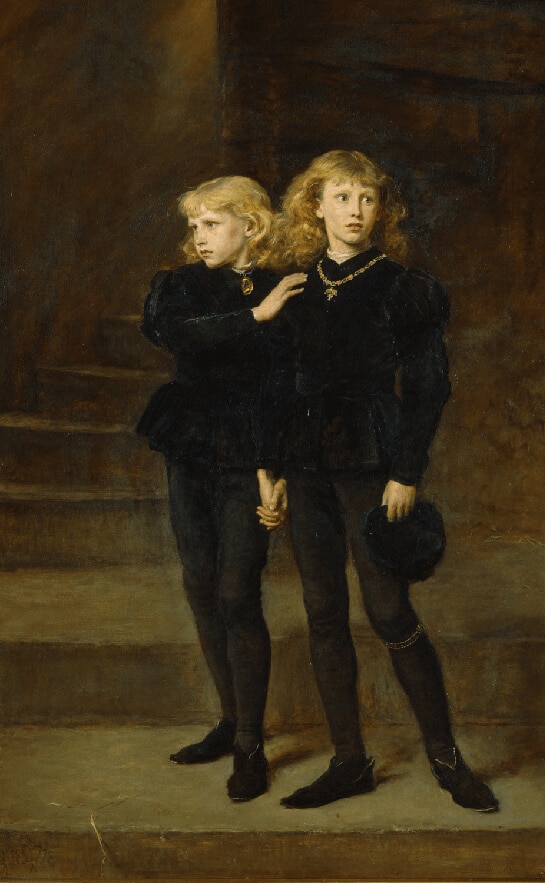
The Princes in the Tower by John Everett Millais,
Public domain, via Wikimedia Commons
This is traditionally associated with the disappearance of the “Princes in the Tower” — Edward V and his younger brother Richard, Duke of York — who were lodged here in 1483 after their father, Edward IV, died.
They were never seen in public again.
Standing inside the rooms attributed to their imprisonment feels different from the White Tower. It’s quieter. Smaller. More enclosed. You’re aware that history here is unresolved.
Unlike Tower Green, where events are documented and memorialised, the Bloody Tower carries uncertainty. The boys’ uncle, Richard III, has long been suspected of ordering their deaths, though historians continue to debate the evidence.
Reading the panels while standing in the actual space adds tension to the story. You’re not just absorbing a Tudor narrative — you’re inside the physical setting where power shifted behind closed doors.
The ill-fated lives of the young princes were still shrouded in mysteries. Only in 1674, two skeletons were found hidden under the staircase leading from the Royal Apartments to the Chapel in the White Tower.

People speculated that these were the remains of the missing young princes. Their remains were laid to rest in Westminster Abbey. Then, in 1933, their skeletons were forensically re-examined, and it was concluded that they belonged to two boys aged 10 and 12.
Same age as the young princes Edward V and Richard of Shrewsbury when they disappeared.
As someone who loves royal history, this section lingered with me longer than I expected. It’s one thing to read about the Princes in a history book. It’s another to stand where they likely waited, unaware of what was unfolding outside those walls.
The Bloody Tower represents the uncertainty of monarchy, where succession, ambition, and silence can alter a dynasty.
It adds another layer to the Tower’s narrative: not just execution and ceremony, but mystery.
The Royal Menagerie
One part of the Tower of London that often surprises visitors is its history as a royal zoo.

The Royal Menagerie was established in the 13th century, when exotic animals began arriving at the Tower as diplomatic gifts. These weren’t random curiosities. They were symbols of international influence and royal prestige.
Lions. Leopards. Even a polar bear at one point.
Yes, a polar bear.
The bear, gifted by the King of Norway in the 1200s, was reportedly allowed to fish in the River Thames while tethered to a long rope. It’s an image that sounds almost fictional — but it reflects how medieval monarchs projected authority through spectacle.
Keeping exotic animals was a way of demonstrating global reach. If a king could command lions, he could command nations.
Walking through the area where the menagerie once stood, I found myself reflecting on how differently power was expressed in the medieval world. Today, diplomacy looks very different. But back then, gifting rare animals signalled alliances, dominance, and access to far-reaching territories.
The Tower wasn’t just a prison or fortress. It was also a stage for royal image-making.

Eventually, concerns about conditions and safety led to the animals being relocated. In 1835, the remaining animals were transferred to what would become the London Zoo.
That transition says something too.
The Tower evolved from a medieval power display into a historic institution. And the fact that it once housed lions and a polar bear adds yet another layer to its story.
It’s easy to focus only on executions and crowns when visiting. But the Royal Menagerie reminds you that monarchy has always been about symbolism — sometimes dramatic, sometimes unsettling, always intentional.
The Ravens
One of the most enduring legends at the Tower of London centres not on kings or queens, but on ravens.

Photo Credit: Arlene Wilson
According to tradition, if the ravens ever leave the Tower, the kingdom — and the monarchy — will fall.
The story is often linked to the reign of King Charles II in the 17th century. During the Restoration period, he was reportedly warned that the Tower would crumble and the kingdom would collapse if the ravens disappeared. Rather than dismiss the superstition, he ordered that at least six ravens must always remain at the Tower.
To this day, that practice continues.
There are typically six resident ravens, plus one additional bird as a precaution. They are cared for by a designated Ravenmaster — one of the Yeoman Warder — and each bird is given a name.
When I visited, seeing them up close felt slightly surreal. They move freely around the lawns and battlements, confidently weaving between visitors as if they understand their importance.
Their wings are partially clipped to prevent them from flying too far, but they are not caged. They are very much part of the Tower’s daily life.
It would be easy to treat this as medieval folklore preserved for tourism. But the fact that the institution continues to uphold the tradition suggests something deeper.
The ravens represent a fusion of superstition and statecraft.
Even in a modern constitutional monarchy, centuries-old beliefs are acknowledged rather than erased. It’s a reminder that British royal history is not purely administrative or ceremonial — it is layered with symbolism, myth, and continuity.
Walking through a site that has witnessed conquest, imprisonment, coronations and political upheaval — and then seeing the ravens still present — reinforces that sense of survival.
The Tower adapts.
The monarchy adapts.
And the ravens remain.
The Medieval Palace
It’s easy to forget that the Tower of London wasn’t only a fortress and prison.
For centuries, it was also a royal residence.

The Medieval Palace rooms inside the complex reveal a different side of life here — one that feels quieter and more intimate. These were the living quarters used by monarchs and their households during the 13th century, particularly under Henry III and Edward I.
Walking through these reconstructed spaces shifts the tone of your visit.
Instead of armour and imprisonment, you see fireplaces, painted chambers, decorative details, and evidence of how the monarchy tried to create comfort inside defensive walls.
It’s still fortified. The windows are narrow. The stone dominates. But you begin to understand that this wasn’t only a place of fear. It was also a functioning royal court.
What stood out to me was how transitional it feels.
The Tower was once central to royal life. Over time, the monarchy moved toward more elaborate and purpose-built palaces like Westminster and later Buckingham Palace. Standing inside the Medieval Palace rooms feels like witnessing that evolution in real time.
It reminds you that monarchy adapts.
The Tower was never static. It changed roles depending on what the crown needed — fortress, residence, prison, treasury.
That adaptability is part of its story.
The Royal Mint
For over 500 years, the Royal Mint operated within the Tower walls.

This part of the history is less dramatic, but arguably just as powerful. If you control the coinage, you control the economy.
The Mint’s presence inside the Tower wasn’t accidental. Currency production required security, oversight, and royal authority. Housing it within a fortified complex reinforced the message that money flowed under the crown’s supervision.
Walking through the exhibits about coin-making, you start to see the monarchy from another angle.
Not just a ceremony. Not just power struggles. But infrastructure.
Coins minted here circulated across Britain and beyond. They funded wars, trade, expansion, and governance.
The Tower wasn’t only where authority was displayed. It was where it was manufactured — literally stamped into metal.
That layer often gets overlooked, but it completes the picture. The monarchy wasn’t symbolic alone. It was administrative and economic.
And once again, you see how many roles this fortress has played over the centuries.
Tickets, Accessibility and How to Get There
Tickets – Book in Advance
The Tower of London is one of London’s most visited attractions, so I strongly recommend booking in advance.
Buying tickets online:
- Secures your preferred date and time
- Helps avoid long ticket queues on the day
- Allows you to plan your itinerary properly
If you’re visiting during school holidays, weekends, or summer, pre-booking is essential.
Accessibility – What to Expect
It’s important to know that much of the Tower complex involves stairs.
Many of the towers — including the White Tower and the Bloody Tower — require climbing narrow, historic staircases. Floors are uneven in places, and surfaces are mostly stone or cobbled.
However:
- The Crown Jewels display is step-free
- There are accessible routes around much of the outer grounds
- Accessible toilets are available on-site
- Mobility scooters and wheelchairs are permitted in many areas
Historic Royal Palaces provides detailed accessibility maps on their website, which I’d recommend reviewing before visiting if mobility is a concern.
Because this is a medieval fortress, full accessibility across every tower isn’t possible — but significant parts of the complex can still be enjoyed.
How to Get to the Tower of London
The Tower is located in central London beside the River Thames, making it easy to reach.
By Tube
The nearest Underground stations are:
- Tower Hill tube station – District and Circle lines (2-minute walk)
- Tower Gateway DLR station – DLR services
- London Bridge station – Jubilee and Northern lines (around 15 minutes’ walk across Tower Bridge)
Tower Hill is the most convenient option.
By River
You can also arrive by Thames river service. The nearby pier is:
Services operated by Uber Boat by Thames Clippers stop here.
Arriving by river adds a different perspective. Seeing the Tower rise from the Thames gives you a sense of how prisoners once approached via Traitors’ Gate.
It’s slower than the Tube but far more atmospheric.
By Bus
Several bus routes stop near Tower Hill and Tower Bridge, including routes 15, 42, 78, and 100.
Map of Tower of London:
HOW TO USE THIS MAP TO BOOK YOUR RESERVATIONS:
CLICK the YELLOW MARKER OR THE DROP DOWN MENU next to the title to see the various things to do and point of interest in this guide and CHOOSE your desired preview of the map, whether HOTELS & RENTALS, EXPERIENCES, RESTAURANTS OR OTHERS. Feel free to use the filters, number of guests, and your preferred dates. You can see more information about the different attractions (the GREEN MARKERS) when you click the icons, as well as finding your perfect accommodation that will suit your budget and location. You could also book your guided tours and restaurants using the map.
After spending hours inside the Tower of London, what stayed with me wasn’t just one highlight.
It was the layering.
Conquest inside the White Tower.
Mystery in the Bloody Tower.
Execution on Tower Green.
Ceremony inside the Jewel House.
Superstition in the presence of the ravens.
Economic power in the Royal Mint.
Few places in London hold that many dimensions within one complex.
As someone who loves British history and is proud to call the UK home, I find the Tower particularly meaningful. It doesn’t sanitise the past. It presents monarchy in its full spectrum of authority, controversy, ritual, and survival.
Watching the coronation of King Charles III on television made that continuity feel immediate. Seeing the Crown Jewels used in Westminster Abbey and then standing metres away from them at the Tower connects past and present in a way few sites can.
Whether you admire the monarchy, analyse it critically, or simply appreciate history, the Tower offers something substantial.
It’s not just a photo stop.
It’s a place where British history unfolded — and in many ways, continues to unfold.
If you’re building a London itinerary and want one attraction that delivers depth, symbolism, and genuine historical weight, the Tower of London earns its place.
Give it time. Walk slowly. Read the panels. Let it sink in.
More Posts About London, UK:
ABOUT THE AUTHOR

Everything Zany
Travel Blog
Everything Zany Travel Blog exploring the UK and beyond. Sharing travel guides, tips, history, and culture. Our travel media brand is founded by travel and hotel industry expert – Ryazan Tristram, a Dual Citizen (British–Filipina) based in Birmingham, UK. Everything Zany is a reputable and award-winning travel blog. Our work and contributions have been featured in the Huffington Post, CNBC, Discovery Channel, GMA, Readers Digest, and Lonely Planet. Our mission is to build a great travel community and resource of travel tips, visas, and travel guides for travelers. Join us as we travel around the UK and beyond with a mission to share the best of the world.